
Please note: this Bulletin is being put on the website one month after publication. Alternatively you can receive the Bulletin by email as soon as it is published, by becoming a member of the Lewes History Group, and renewing your membership annually
1. Next meeting: 12 May 2025, Debby Matthews, ‘The Station Street Story’
2. Lewes Conservation Area Advisory Group (by David Attwood)
3. Volunteer Archivist needed, Chailey Heritage (by Sharon Attfield-Davis)
4. Mystery House identified (by Douglas Dodds)
5. Did the arrival of the Railway benefit Lewes? (by Chris Grove)
6. Drowned in the Ouse (by Sue Berry)
7. Postcards of Landport (from Charlie Freeman)
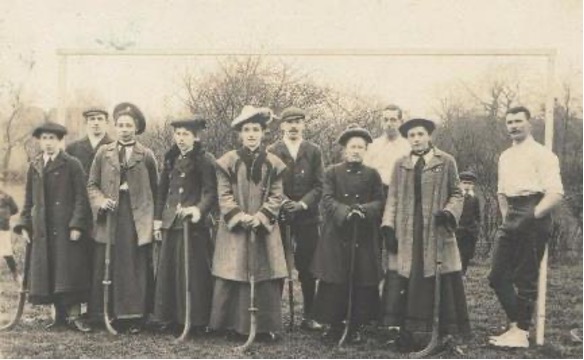
8. Ladies Hockey
9. Lewes Tennis Club at the Priory
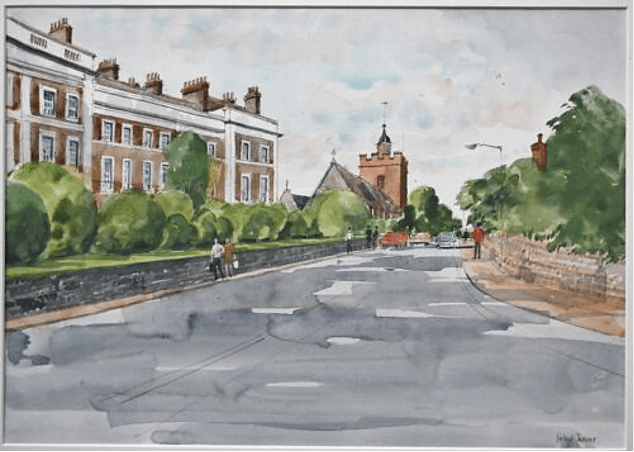
10. Priory Crescent by Robert Taverner
11. Lewes Borough Council’s response to the new NHS
1. Next Meeting 7.30 p.m. King’s Church Monday 12 May 2025 Debby Matthews The Station Street Story
At this talk Debby will share some of the information she has found out on this street, one of the main thoroughfares through the middle of Lewes. She will paint a picture of a thousand years of what was originally St Mary’s Lane, and given the name Station Street only on the arrival of the Victorian railway station at the bottom of the hill. Debby’s book on Station Street in the Lewes Street Stories series is scheduled for publication later this year.
The book and the talk will provide an insight into the many shops, businesses, public institutions, manufacturers and social changes as they were experienced in this part of Lewes. They give us a picture of how ordinary people lived and worked over the years. This is a culmination of research begun over 15 years ago with a series of public exhibitions. Debby, who lives in the street, is grateful to all the many people who have helped by sharing their photos and stories.
Admission is free for members and there is no need to reserve your place. Everyone is very welcome, but there is an entry charge of £4 for non-members, with tickets available in advance via Ticketsource.co.uk/lhg.
The talk by Ruth Thomson on ‘Grown in Lewes’ that had to be cancelled in March has been rescheduled for 7.30 pm on Tuesday 3 June, and will be held at King’s Church. We apologise for the change of day, but the venue is not available for another Monday at this notice.
2. Lewes Conservation Area Advisory Group (by David Attwood)
The Lewes Conservation Area Advisory Group (CAAG) is looking for one or two new members. It was founded in 2009 to help protect and enhance the town, with a special focus on its two Conservation Areas. Our volunteer members include people with professional architecture, surveying and town-planning experience, as well as from heritage groups like the Georgian Group and the Victorian Society. CAAG’s core activity is meeting monthly to discuss and advise on new planning applications. If you have relevant interests or experience and would like more details about what we do, please contact the Chair, David Attwood on mail@davidattwood.plus.com.
3. Volunteer Archivist needed, Chailey Heritage (by Sharon Attfield-Davis)
The Chailey Heritage Foundation, founded in 1903 by the visionary and dedicated Grace Kimmins, is seeking to recruit a volunteer archivist.
With a rich and inspiring history, the charity has been a pioneer in supporting disabled young people, developing innovative fundraising methods, and even caring for injured soldiers during both World Wars. Our legacy also includes strong connections with the Royal Family and a lasting impact on the community. If you have a passion for local history, storytelling, and organisation, this could be the perfect role for you!
What You’ll Do:
- Organise and catalogue important charity records, documents, and photos
- Help digitize materials to make our history more accessible
- Preserve the stories of the people and projects that have made an impact
- Work closely with our team to ensure our history is celebrated and remembered
This is a flexible role that can be fitted in around work or other commitments. The archiving will be mainly on site but much can also be done from home. It may sometimes be helpful to visit the Keep in Brighton. If you would like to arrange a visit and find out more about volunteering at Chailey Heritage Foundation, please contact the Volunteer Coordinator on 01825 724444 ext 402 or 07909 234187. Email volunteering@chf.org.uk
4. Mystery House identified (by Douglas Dodds)
The mystery house shown in Bulletin No.175 seems to be 59 The Avenue, Lewes – see the image below from Google Street View. At some point someone has demolished part of the garden wall to insert a small shed where the original front gate was. They’ve relocated the entrance pillars and reduced the length of the wall as a result. The postcard even shows the beginning of the flint garden wall of the house next door, still visible on Street View. The house itself looks much the same – you can still see details such as the slightly fancy chimneys, the top of the downpipe and the tiles above the bay window. The tree on the postcard obscures the archway over the front door, but that’s just about visible too.

Postcard View
Google Street View
5. Did the arrival of the Railway benefit Lewes? (by Chris Grove)
LHG Bulletin no.177, in referring to the Victorian & Edwardian Lewes course, concluded that there is “very clear evidence that the arrival of the railway did not lead to the growth and increased prosperity of Lewes that was seen in many other communities, locally and nationally. Indeed, the rapid growth of Georgian Lewes was curtailed once the railway arrived.” My own research presents a less black and white picture as the following graph, which shows the percentage change in population between each census for both Lewes and Brighton, indicates:
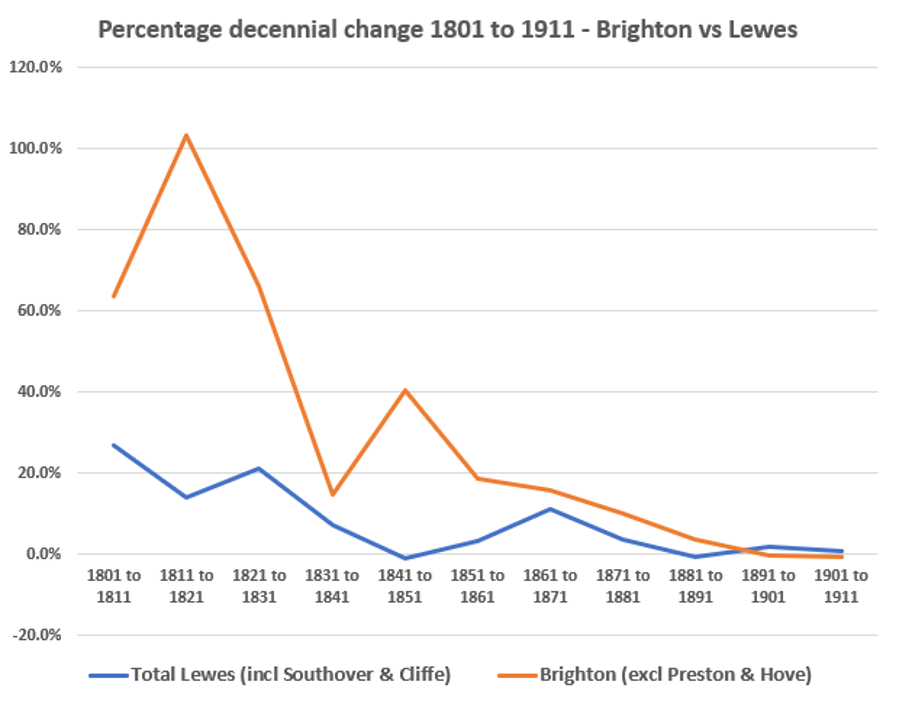
As can be seen, both towns flourished in the early nineteenth century with Brighton’s royal patronage and, being a seaside resort, allowed its growth to far outstrip the population growth in Lewes. However it is evident that the rate of population growth declined in both towns and had stagnated by the start of the twentieth century. The rate of growth for Brighton more than doubled between 1841 and 1851, the decade following the arrival of the railway, but then again slowed. For Lewes, the railway network that centred on the town, was constructed over a 12 year period from 1846. The graph shows that the rate of growth in Lewes’s population accelerated over this period before also declining from 1871.
What is clear is that both towns were expanding in terms of accommodation (for example, the number of inhabited properties in Lewes grew by 70% between 1841 and 1911) but population was growing far more slowly (for Lewes, the population grew by just 20% between 1841 and 1911). While both towns were expanding in terms of property, something was causing a slowdown in population growth. I would argue that it was increased prosperity that was causing this slowdown in population growth. As the residents of Brighton and Lewes became more affluent, along with rest of Victorian England, they wished to live more comfortably:
- Residents wanted more space and were less inclined to sublet spare rooms (in Lewes, the number of households per property, including those for lodgers, fell by 18% over the 60 years to 1901);
- Residents were less inclined to employ live-in domestic staff (in Lewes, the number of domestic staff per household fell by a third over the 60 years to 1901 as more day staff were employed);
- As mortality rates improved, particularly for children, residents reduced the number of children they would have;
- Shopkeepers and merchants were less inclined to live at their places of business and purchased more comfortable properties elsewhere in town.
The impact of these trends is best evidenced by comparing the average number of residents per property in Lewes in 1841 of 5.6 persons per property to 4.4 persons per property by 1901. It is also interesting to examine the rate of population growth in Lewes by parish. The following graph compares the growth rate in Brighton with a selection of the parishes of Lewes.
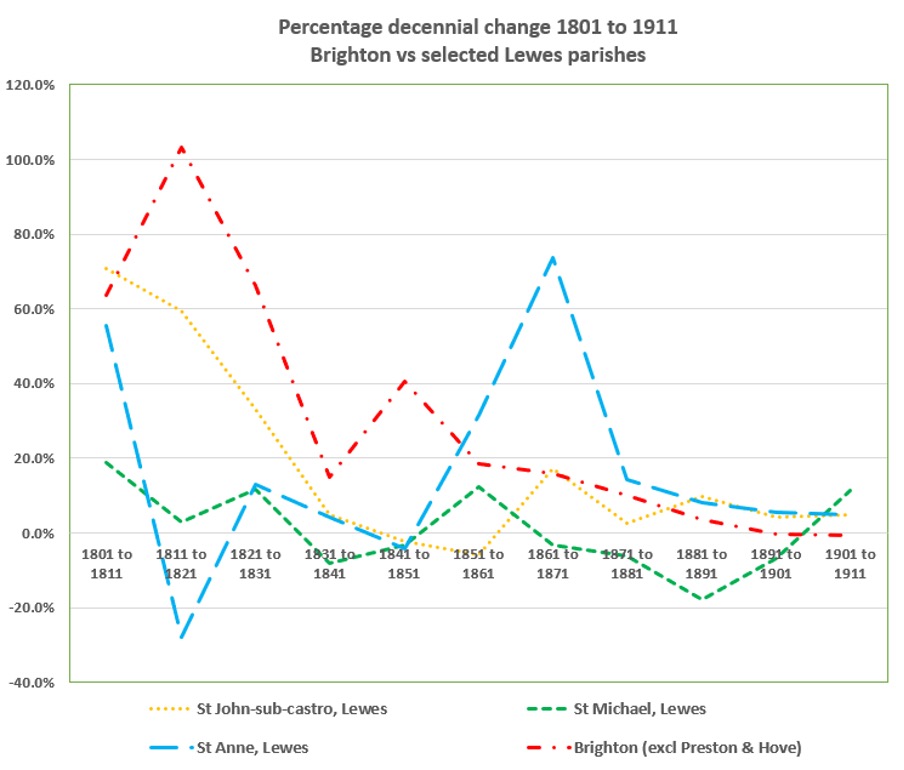
What is most striking is the rate of population change in the parish of St Anne which, by 1871, was growing four times faster than the rate of growth in Brighton. More modest growth can be seen for St John-sub-Castro but its growth was matching and then out-pacing the rate of growth for Brighton at that time.
The parish of St Michael is also interesting as its population fell by 14% over the 60 years to 1901 when the number of inhabited properties in the parish barely changed and then grew again between 1901 and 1911. The explanation is that there was no new building with the small parish of St Michael until a large meadow was sold for development and became St Swithun’s Terrace in the first decade of the twentieth century.
I would conclude that there is evidence that the coming of the railway to Lewes did contribute to growth in terms of population and the construction of houses but only where expansion was possible. However, I accept that there is less evidence of the railway bringing new businesses to Lewes but there is some (e.g. Russell & Bromley). There is also clear evidence that the building of new properties in Lewes is constrained by a number of other factors:
- Parishes such as All Saints and St Michael are relatively small with limited scope for new building other than demolition and rebuilding or until green spaces are sold for development;
- The Downs and flood plains constrain development in Southover and Cliffe;
- There are historical sites throughout Lewes where, even in Victorian times, restrictive covenants prevented construction;
- In contrast to the above constraining factors, the largest parishes of St Anne and St John-sub-Castro expanded rapidly to the west and less rapidly to the north as the town grew.
The following is an annotated (additional white text) version of the 1831 Lewes Borough boundary change map showing the parish boundaries:

6. Drowned in the Ouse (by Sue Berry)
A coroner’s inquest held on 24 July 1801 found that James Lempriere, going into the Ouse at South Malling to bathe, was drowned accidentally. As the inquest was so close to Lewes the coroner charged only the basic fee of £1. For inquests held further afield he also charged travelling expenses.
Drownings in the Ouse and other bodies of water occur regularly in the coroners’ records, and not all of them were accidental.
Source: East Sussex Coroners’ Records 1688-1838, Sussex Record Society volume 89 (2005), edited by R.F. Hunnisett, case 130.
7. Postcards of Landport (images from Charlie Freeman)
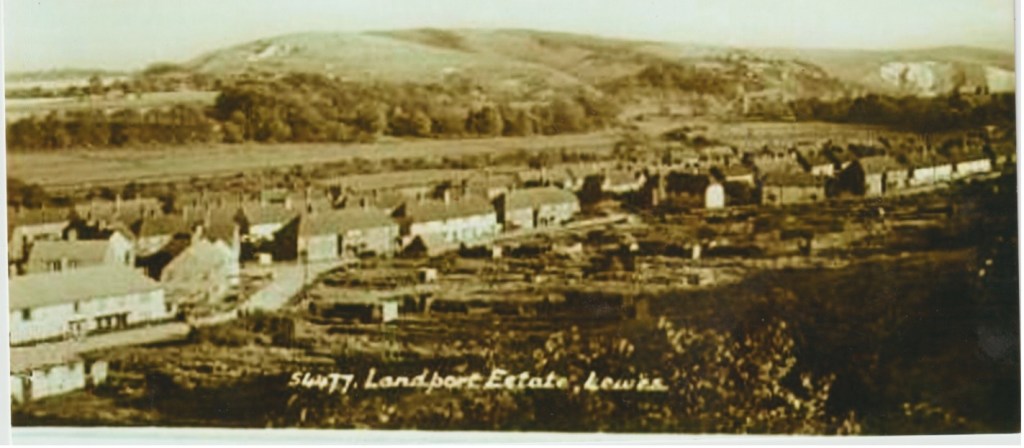
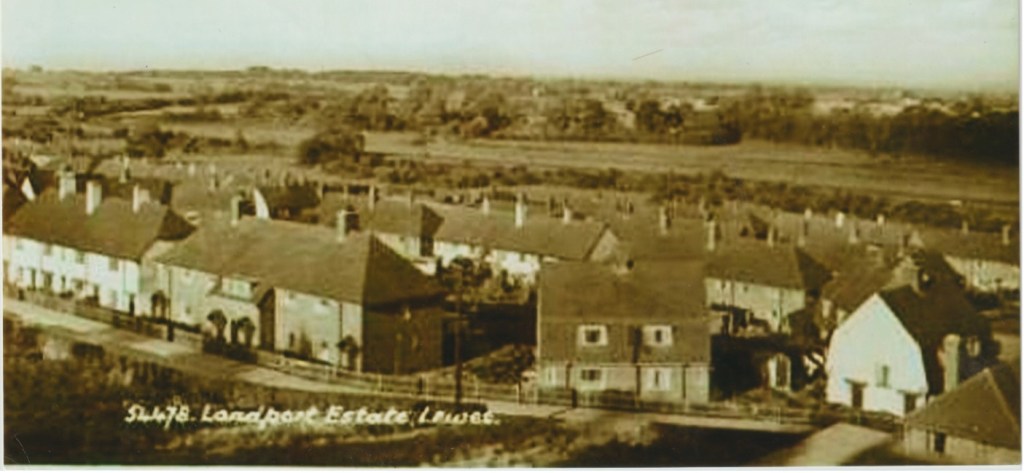
The three images below are photographic copies of three postcards of the Landport Estate that appear to have been taken after the completion of the pre-war phase 1 but before the addition of the prefabs soon after the end of the war. I have cropped most of the sky from the images below. Bob Cairns has identified the publisher as Kent photographer E.A. Sweatman.

8. Ladies’ Hockey
This postcard by an anonymous publisher featuring a ladies’ hockey team was mailed from Lewes to Miss F. Kenward, Hamsey Place, Hamsey, in March 1904. It was offered for sale on ebay.
9. Lewes Tennis Club at the Priory
This postcard by an anonymous publisher shows a busy afternoon at the Lewes Tennis Club, down by the Priory. The two older ladies in the foreground appear engaged in a game of croquet. Hats were worn for both games.

10. Priory Crescent by Robert Taverner
This 45 x 30 cm watercolour of Priory Crescent, with Southover church in the middle distance, was painted, probably in the 1980s, by Robert Taverner (1920-2004). Born in London, he taught for over 25 years at Eastbourne College of Art and Design, retiring as vice-principal in 1980. He was a regular exhibitor at the Royal Academy and at Glyndebourne. A retrospective exhibition of his work was held in Eastbourne in 2010. This painting is believed to date from the 1980s. It was recently offered for sale at £245 (or best offer) by a private seller on ebay.
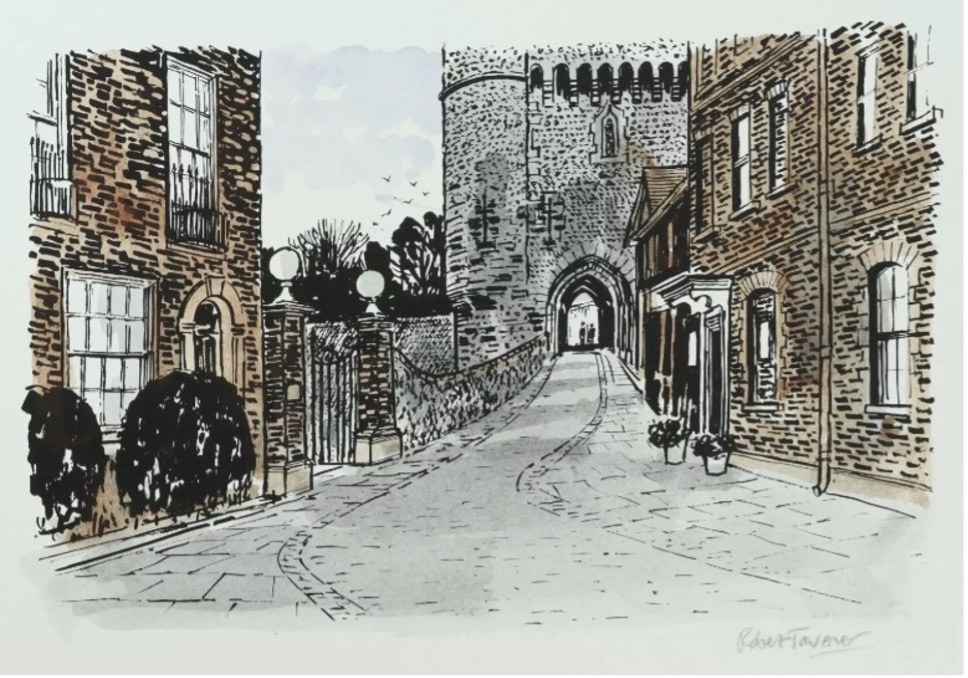
Also offered on ebay at £75 by the same seller, whose stock includes a number of the artist’s works, was this hand-coloured lithograph by the same artist of the view up to the Castle barbican.
11. Lewes Borough Council’s response to the new NHS
In February 1944 the wartime coalition government announced, in Command Paper 6502, their intention to establish a comprehensive, ‘free for all’ National Health Service. The service was to be designed to cover the whole field of medical advice, including attention at home, in the consulting room, hospital or sanitorium for everything from minor ailments to major diseases. It was to include the ancillary services of nursing, midwifery and, ultimately it was hoped extended to dentistry, ophthalmology and mental health treatment. The cost of the new Health Service was to be borne partly from central funds, partly from local rates and partly by the contributions of the public from a new scheme of social insurance.
Lewes Borough Council had already established a Post-War Development and Housing Sub-Committee to plan the post-war future of the town. Its initial plans, published in June 1944 (the same month as D-Day), included:
- the provision of the right amount of high-quality housing to remedy the shortage that had arisen from the cessation of building operations during the war, which they estimated at 1,800 new homes in the decade after the war;
- improved sewers and surface water drainage;
- new, brighter, streetlights;
- new public conveniences at the Market Tower, Westgate Street, Nevill Crescent and Western Road;
- demolishing the Fitzroy Library, and replacing it by a modern library building of twice the size on the same site;
- the creation of a new public abattoir;
- road improvements including the demolition of most of the north side of the High Street to create a new A27 dual carriageway that would leave St Michael’s church on an island between the two carriageways;
- the provision of over 100 acres of new public open space; and
- the acquisition of Southover Grange gardens to accommodate a new swimming bath and additional car parking.
Their report included detailed designs and specifications for many of these projects, and they were all fully costed.
It was left to this forward-looking body to respond to the new government proposals to establish the NHS. It had already identified as an issue “the inadequacy of proper modern maternity and child welfare and general health treatment facilities available to the townspeople of Lewes”, including the provision of a new health centre (for which they offered a detailed design) and a new maternity centre, the latter to be located on the Victoria Hospital site.
They thus warmly welcomed the coalition government’s intentions, as detailed in the White Paper. They expressed the hope, however, that individual local authorities would be consulted in the framing of the general plan for their area.
John Kay 01273 813388 johnkay56@gmail.com
Contact details for Friends of the Lewes History Group promoting local historical events
Sussex Archaeological Society: http://sussexpast.co.uk/events
Lewes Priory Trust: http://www.lewespriory.org.uk/news-listing
Lewes Archaeological group: http://lewesarchaeology.org.uk and go to ‘Lectures’
Friends of Lewes: http://friends-of-lewes.org.uk/diary/
Lewes Priory School Memorial Chapel Trust: https://www.lewesprioryschoolmemorialchapeltrust.org/
Facebook: https://www.facebook.com/LewesHistoryGroup
Twitter (X): https://twitter.com/LewesHistory



 Lewes History Group