
A live talk at King’s Church
Mary Burke: The Importance of the River Ouse for the Growth of Lewes
To open the Autumn programme, Mary Burke reveals how the Ouse played a major part in the historical development of Lewes, enabling many industrial and commercial endeavours.
Mary comments, “Lewes would not have existed if not for the River Ouse. In the past the river was used as a major highway into Sussex and from ancient times the bridging point led Lewes to become a thriving market town.”
She will look at the geography of the site of Lewes and the use of the river to import goods and export iron, timber and agricultural produce from medieval times.
In the 18th century ship building took place to aid local sea faring trade, and later Lewes saw the development of iron works, chalk quarries and grain stores. Before surfaced roads and railways, imports of coal and timber and other goods from around Britain and Europe all came by the river, which was straightened and canalised in the late 18th century to improve the journey.
Today we may be more concerned with the Ouse as a flood risk, but we value it for its recreational use as we walk along its muddy edges or stroll around the Pells and the Railway land nature reserve.
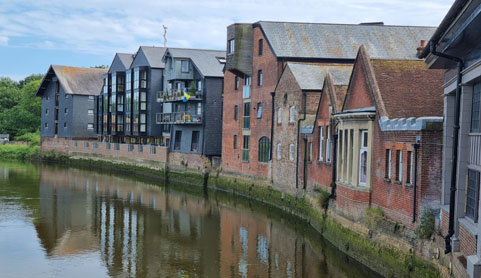
Lewes buildings from Cliffe Bridge © Neil Merchant
Venue: The King’s Church building on Brooks Road, Lewes, BN7 2BY. (Between Tesco car park and Homebase). Please don’t park in Homebase’s car park: they take deliveries in the evenings.
Entry: Entry is FREE for LHG members, and £4 for non-members. Due to limited seating, admission will be by advance ticketing only – no payments on the door. Please book in advance at https://ticketsource.co.uk/lhg. Tickets available until 5:30pm of the day of the talk. We will have lists of ticket-holders at the door and will check you in.
Covid precautions: Limited seating to allow for some spacing; no refreshments.
See the Talks page for a list of forthcoming monthly events organised by the Lewes History Group.



 Lewes History Group