In this talk, Debby will paint a picture of the thousand year history of St Mary’s Lane, re-named Station Street when the railway station opened at the bottom of the hill: its shops, businesses, public institutions and manufacturers. Using a broad range of historical sources and illustrated by a wide selection of photographs and maps, Debby presents a fascinating account of the development of Station Street. The talk will preview the publication of a new book in the Lewes Street Stories series.
Members will not need to register in advance to attend this talk.
Please arrive in good time for a prompt start at 7.30 pm. We hope you can join us.
A range of other LHG books will be on sale before and after the talk.
PS We would very much appreciate some help with putting out the chairs for the talk. We need to start doing this from 6.30 pm, and all volunteers will be welcome. Many thanks in advance.
Please note: this Bulletin is being put on the website one month after publication. Alternatively you can receive the Bulletin by email as soon as it is published, bybecoming a member of the Lewes History Group, and renewing your membership annually
1. Next meeting: 9 December 2024, on members’ Lewes Heirlooms and Possessions 2. A.G.M. Agenda 3. Infanticide in the Cliffe (by Sue Berry) 4. William Verrall at Southover Manor and the new railways (by Chris Grove) 5. Lewes images from the G.F. Burtt collection 6. A Victorian studio portrait by Daniel Blagrove 7. A Waterloo Veteran’s fate 8. A foiled burglary at Leighside 9. The Lewes Company of the Royal Garrison Artillery (by Douglas Dodds) 10. Lewes Bus Station (by Alan Green) 11. Grown in Lewes (by Ruth Thomson) 12. A.G.M. Reports (by Ian McClelland & Phil Green)
1. Next Meeting 7.30 p.m. King’s Church. Monday 9 December Marcus Taylor, Paul Nicoll, John Kay, Geoff Bridger & Bridget Millmore will make short presentations about their Lewes heirlooms and possessions.
As this is our Christmas meeting we shall be serving mulled wine and mince pies from 7.00 p.m. Please do join us. It will be preceded by a short A.G.M. This will begin at 7.30 p.m. and will be followed by five short presentations by members, under the general title “Lewes heirlooms and possessions”.
Members do not need to register in advance to attend, and non-members can buy a ticket (£4.00) from Ticketsource.co.uk/lhg
2. A.G.M. Agenda
Acceptance of Annual Reports. Please can be seen under item 12.
Appointment of officers. The following officers have so far been nominated for 2023
Chair
Treasurer: Phil Green
Secretary: Krystyna Weinstein
Executive Committee: Ann Holmes (Chair for EC meetings), John Kay (Bulletin editor), Ian McClelland (Chair for evening meetings & ‘Street Stories’ lead), Bill Kocher & Paul Yates (Website managers) & Chris Taylor (Membership).
Any other nominations, seconded and with the candidate’s consent, should be sent to info@leweshistory.org.uk by 5 December.
Membership subscription. Your Committee recommends that the annual subscription should remain at £10 p.a. per member, and that admission to evening meetings should be free for members. Admissions charges for non-members should remain at £4 per meeting.
Questions and comments.
3. Infanticide in the Cliffe (by Sue Berry)
On 11 July 1763 a Cliffe coroner’s jury of 21 inhabitants including Andrew Tasker and James Lambert heard that two days previously Sarah Young, a single woman, had given birth to a live male child “which by the laws of the kingdom was a bastard”. On the same day she “murdered him with a knife of iron and steel worth 1d which she held in her right hand, giving him a wound on the throat two inches wide and half an inch deep, of which he immediately died”.
The jury added that she had no goods or chattels and no lands or tenements in Sussex, as far as they knew, so nothing that could be confiscated. She was too ill to be prosecuted at the next assizes, so it was ordered that she should remain in the Lewes House of Correction until fit enough to be removed to the county gaol. She was committed to the gaol by Luke Spence, JP, having confessed to the murder, but when her case eventually came to trial at the East Grinstead assizes in March 1764 she pleaded not guilty. She was nevertheless convicted, and sentenced to be hanged, and then dissected and anatomised.
Source: East Sussex Coroners’ Records 1688-1838, Sussex Record Society volume 89 (2005), edited by R.F. Hunnisett, case 345.
4. William Verrall at Southover Manor and new railways (by Chris Grove)
William Verrall purchased the old Southover Manor House around 1839 and had it rebuilt to his requirements. Verrall owned Southover Brewery and its many properties within Lewes and the surrounding area. In 1844, he raised a petition against the proposed route of the Brighton, Lewes, and Hastings Railway, which would bisect his land. He owned the Southover Manor demesne which extended south of the manor house, and into the flood plain. He was joined in this petition by John Langford, brewer, William Mercer, fruiter and greengrocer, and Thomas Sheppard, MP for Frome Somerset who owned the Folkington Estate. Together they engaged William Figg as land surveyor and a railway engineer from the north west called John Collister. Figg and Collister developed alternatives to the proposed railway route which they claimed would be cheaper to construct and, most importantly, would avoid the properties of their clients.
Their proposed deviation through Lewes would have had a major impact on the town. Figg and Collister’s alternative was to approach Lewes by going north of the Winterbourne and proceed in a deep cutting along where Grange Road is today, passing close to Southover Grange and through the Grange Gardens.
Select Committees were established in the House of Commons and the House of Lords to examine the proposed Brighton, Lewes, and Hastings Railway Bill, and a competing line proposed by the South Eastern Railway Company which would have branched from the London to Dover line to Hastings, avoiding Lewes and Brighton altogether. The Committees would also examine the Figg/Collister deviations. In 1844 the Select Committee hearings sat for 17 days in the Commons and 6 days in the Lords before the Brighton, Lewes, and Hastings Railway Bill was approved without deviation and passed into law.
While William Verrall had claimed that he would be forced to move if the railway was built, in fact he remained at Southover Manor until his death towards the end of the nineteenth century.
He must have thought he was plagued by railways because twenty years later, in 1865, his house came again under threat. The South Eastern Railway Company proposed a new railway line that would provide an alternative route from London to Brighton via Westerham, East Grinstead and Lewes. That railway line would have passed so close to Verrall’s manor house in Southover that it was expected to be demolished. Apparently there was some support for this railway in Lewes. The Bill for that proposed railway was examined at Select Committee hearings in the Commons and the Lords and, to Verrall’s relief, was rejected on 25 July 1866.
5. Lewes images from the G.F. Burtt collection
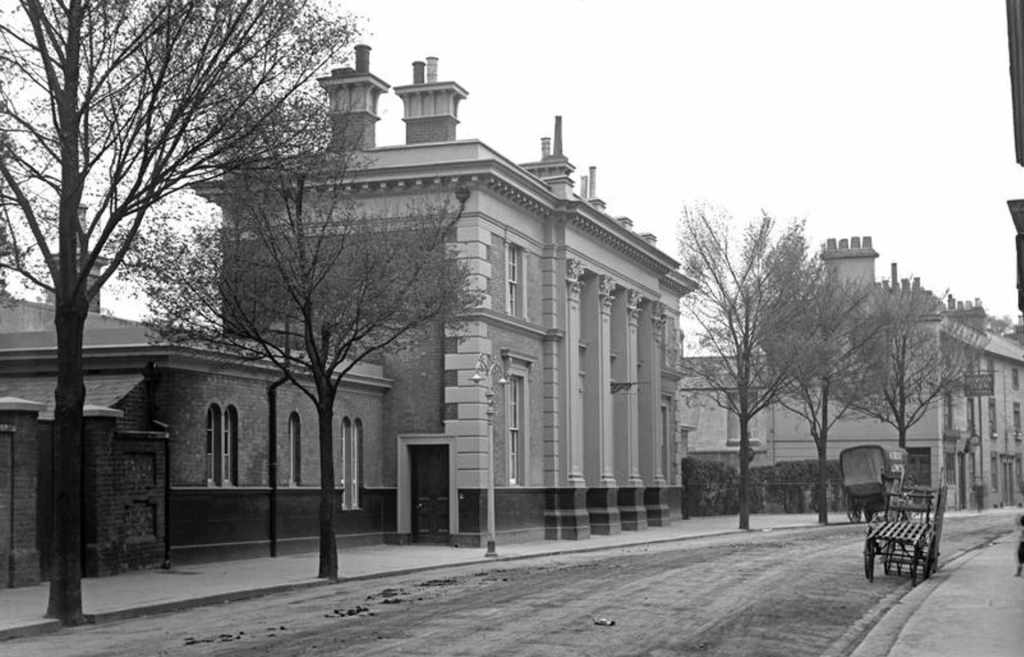
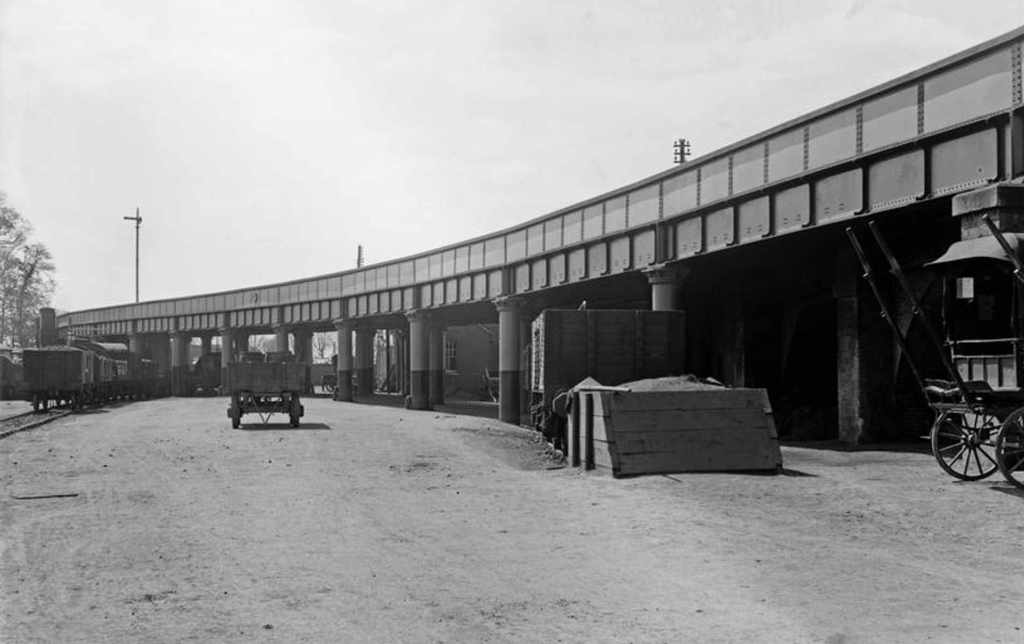
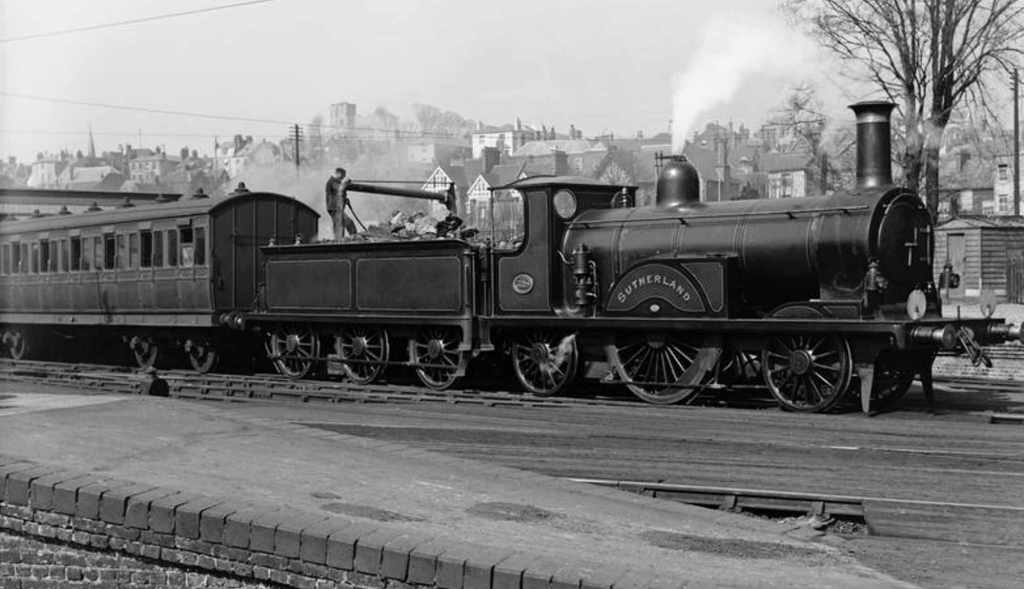
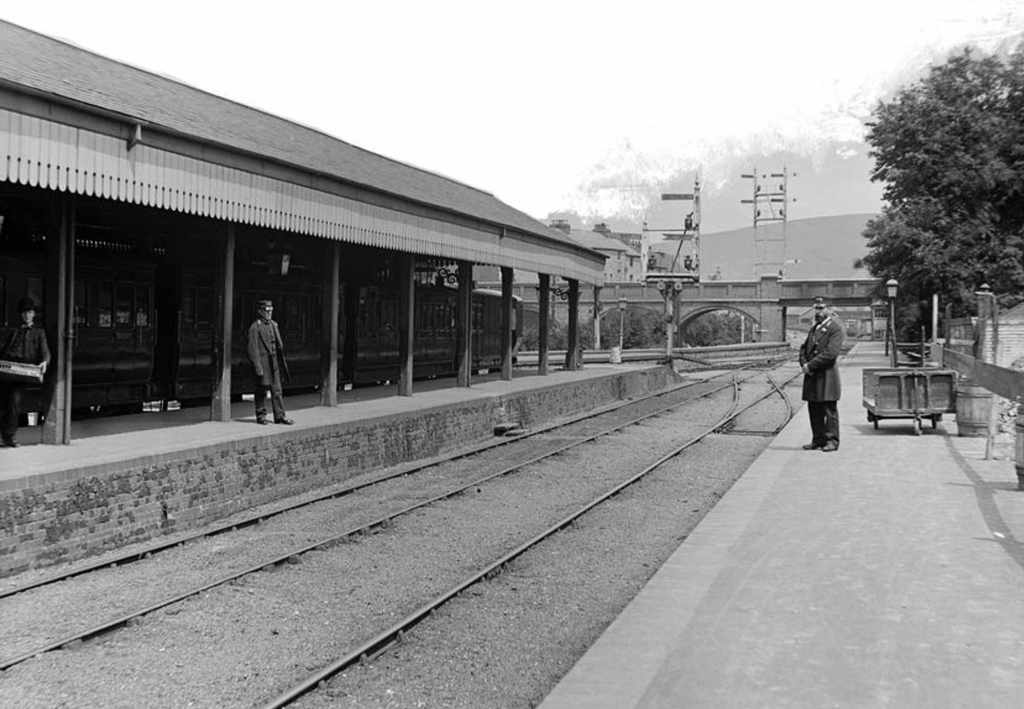
George Frank Burtt ‘s collection of railway images was acquired by the National Railway Museum, York. It contains photographic images by G.F. Burtt himself, who was employed as a photographer by the London, Brighton & South Coast Railway, but also others made by the Lewes Photographer Edward John Bedford, whose archive he had acquired. Some examples are shown below:
G.F. Burtt’s views of the first railway station in Friars Walk (above) and the Goods Yard about 1910 (below)
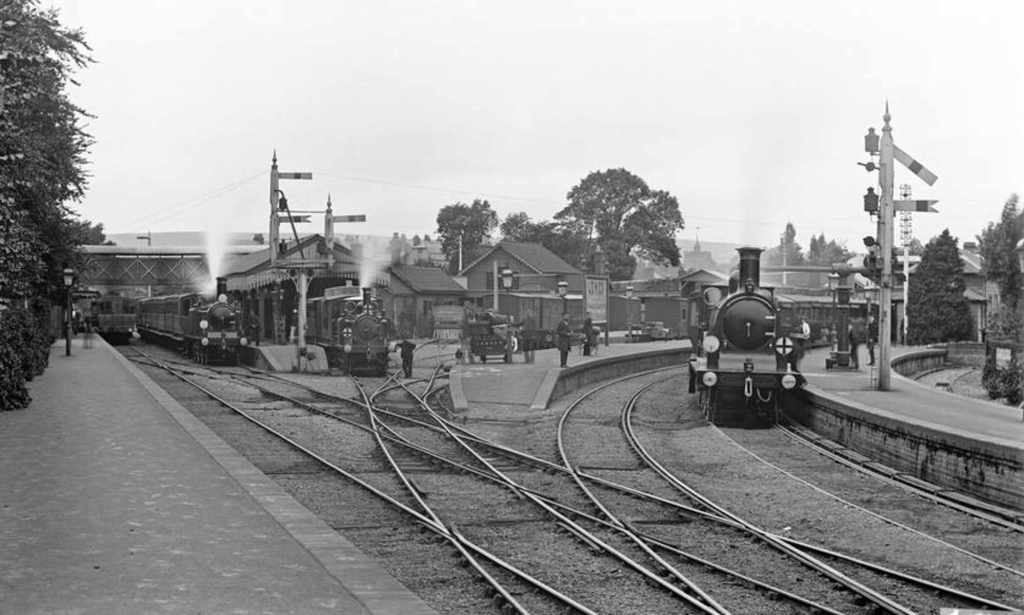
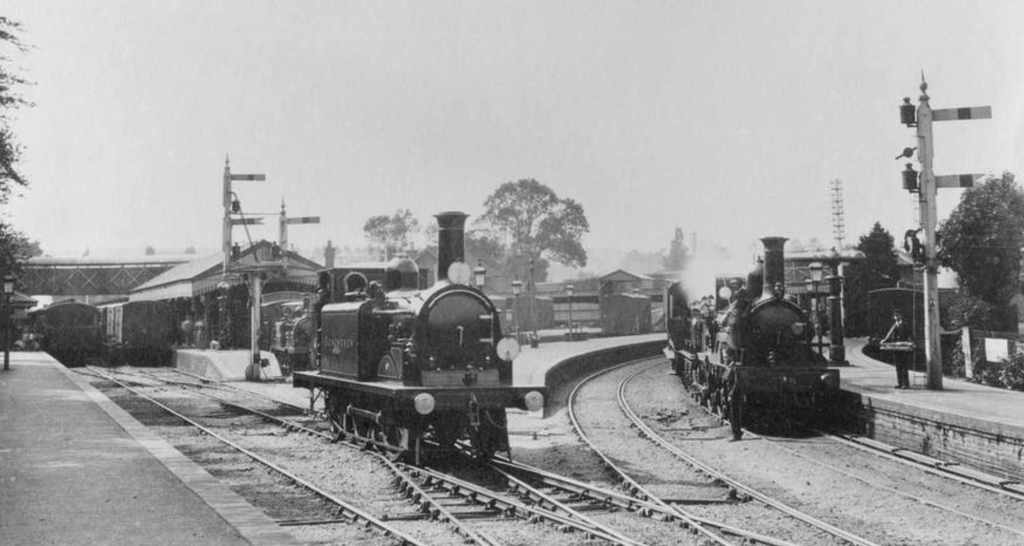
The two views below of Lewes Railway Station are both by E.J. Bedford and show the second railway station, which was replaced by the present station in 1887. Bedford, a native of Lewes, studied at the Lewes School of Science and Art in Albion Street and in 1883 became a master at the Brighton School of Art. In 1892 he became head of the Eastbourne School of Art and Design, before returning to Lewes to become head of the Lewes school at which he had studied in the 1920s. He took up photography as a hobby in the 1880s and became a Fellow of the Royal Photographic Society.
A G-class 2-2-2 locomotive at Lewes station, photographed by E.J. Bedford.This view of Lewes Railway Station by E.J. Bedford is said to date from about 1888.
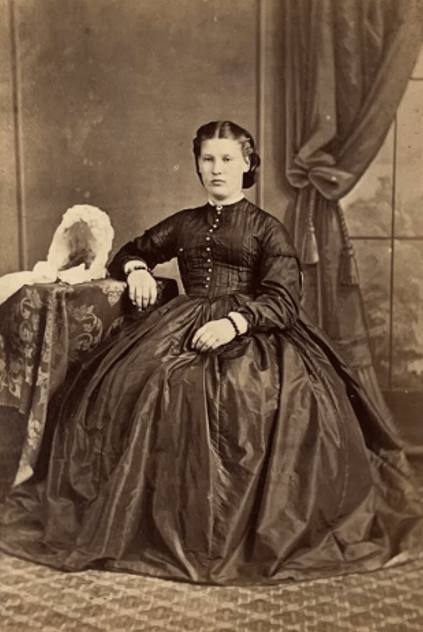
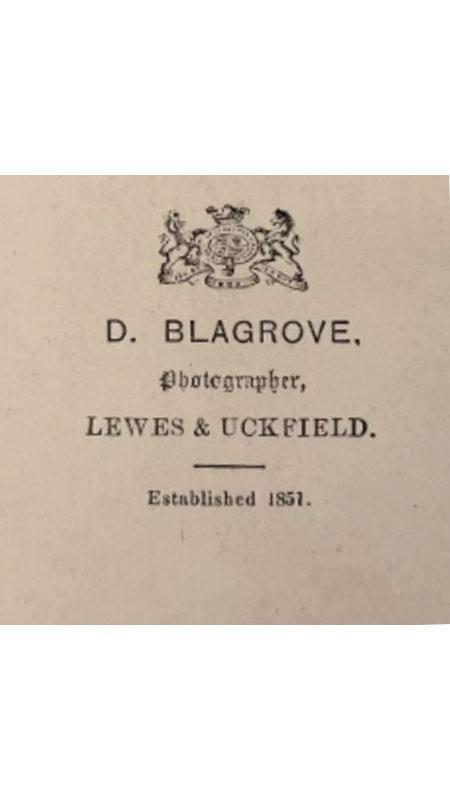
This carte de visite studio portrait of a young woman was taken by the photographer Daniel Blagrove’ who established his business in Lewes in 1851. Such portraits were commonly taken for middle class customers to mark such occasions as a 21st birthday or a forthcoming marriage. This sitter has removed her bonnet, which is carefully posed on the table next to her. Both the young woman’s clothing and the plain studio advertisement on the reverse of the card suggest that this was taken not long after Daniel Blagrove opened a short-lived second studio in Uckfield in 1867. By the 1881 the business was described as Daniel Blagrove & Son, as his eldest son, another Daniel Blagrove, had also joined the business, now again based solely in Lewes. Their late-Victorian cards have far more elaborate designs on the reverse to illustrate the artist’s skills.
7. A Waterloo Veteran’s fate
The 1 February 1849 Brighton Gazette reported that the body of the Waterloo veteran Sinnock, who had been missing since Christmas Day, was found on Friday morning in the river near Barcombe Mills. An inquest was held in the afternoon at the Cock Inn, Ringmer. The evidence given was that the deceased was last seen when leaving Lewes, very drunk, and the appearances as exhibited by a post-mortem examination were those usual in cases of drowning. As his watch and 4s 6d were found in his pockets foul play was not suspected, and a verdict of ‘Found Drowned’ was returned.
There is a March quarter 1849 death registration in the Lewes registration district for Thomas Sinnock aged 56, so he would have been in his early twenties when at Waterloo in 1815.
In the 1841 census Thomas Sinnock aged 45-49, dealer in marine stores, lodged with a Lancaster Street household. A ‘dealer in marine stores’ was a rag and bone man.
8. A foiled burglary at Leighside
The 9 August 1890 Sussex Express reported:
“Between twelve and one on Thursday night an attempt was made to break into Leighside, the residence of Mrs Godlee. The burglar or burglars, in attempting to force a door, caused an alarm bell to ring, which aroused the servants.”
This seems a surprisingly early report of a burglar alarm, presumably powered by electricity, but the builder of Leighside, the Quaker businessman, magistrate and philanthropist Burwood Godlee (1802-1882), was a thoroughly modern man and an enthusiast for the application of science to business. As a very young man he launched the Lewes Gas Company, and in the 1840s he gave lectures to the Lewes Mechanics Institution on such topics as electricity, organic chemistry and geology.
9. The Lewes Company of the Royal Garrison Artillery (by Douglas Dodds)
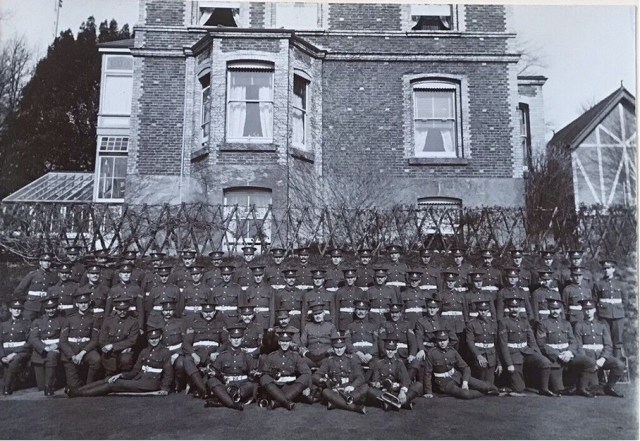
I was interested in the photograph of the Sussex Royal Garrison Artillery 3rd (Lewes) Company [Bulletin no.171], as I recognised the large house in the background. It is on the southern side of Rotten Row, and is now called Rykehurst. When the photograph was taken it was called Sunnyside and it was owned by brewer George Ravenhill Beard (1871-1958). He was also a Captain and later a Major in the Sussex Royal Garrison Artillery. I assume he’s the man at the centre, wearing gloves and a slightly paler uniform.
At the time of the photo Sunnyside’s south-facing garden sloped all the way down to Grange Road. The garage on the right survives today but the conservatory on the left has been replaced by a modern extension.
10. Lewes Bus Station (by Alan Green)
Lewes was one of three commodious new Southdown bus stations built in the 1950s, the others being at Chichester and Haywards Heath. All three locations were transport hubs and provided facilities for waiting passengers and bus crews. Constructed as an island to make best use of the space, it was designed by the architectural practice of Clayton and Black. Their bold design, using brick, concrete and glass bricks, is evocative of the 1950s and features a widely overhanging cantilevered first floor which, as well as maximising use of space, provides shelter for those queuing for buses. Overall the design is elegant and an asset to the Lewes Conservation Area, not least because its design and modest scale fits well with the massing of adjacent historic buildings. Since privatisation of the National Bus Company most of the ex-Southdown estate has been sold off for development, and amongst the many casualties was Haywards Heath. Chichester bus station is also proposed for redevelopment.
The Lewes bus station is also of national importance as the only other bus stations using an island layout – at Hawkhurst and Derby – have already been demolished, leaving Lewes as the sole survivor. Suitably refurbished, it would remain fit for purpose. Its location and facilities are far superior to the replacement bus interchange facility on School Hill or the proposed alternative replacement provision of bus stands on either side of the windswept Phoenix Causeway.
Alan Green MA BSc CEng MICE FPWI, is Historic Structures Advisor to the Sussex Industrial Archaeology Society
11. Grown in Lewes (by Ruth Thomson)
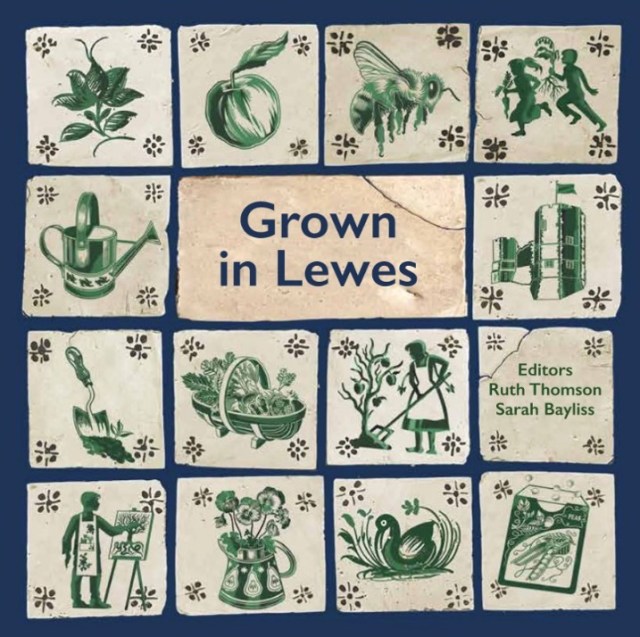
Produced by the same creative team as ‘The Pells of Lewes’, ‘Grown in Lewes’ is a timely compendium of all things green in the town – past, present and future. More than 50 local volunteer authors (some members of LHG) provide, with passion and expertise, insights into the history of cultivation in Lewes, as well as many current community environmental projects helping to make Lewes a greener place to live. The book features many intriguing stories. Discover the history of Elphick and Son, the much-loved – and much-missed – seed merchant and garden shop, which traded in Cliffe High Street for more than 150 years, and the story behind McBean’s, the oldest-surviving orchid nursery in the UK. Find out about the changing fortunes of various notable private gardens in Lewes, which are now public spaces – Southover Grange, Lewes Castle and Lewes House Garden – as well as those which have disappeared or
remain hidden. Read about the growth and demise of Lewes horticultural societies and shows from the 1850s, the pressure on allotment land for housing developments in the town, and much, much more.
‘Grown in Lewes’ will be on sale at the LHG meeting on Monday, December 9
12. A.G.M. Reports
Chair’s Report (by Ian McClelland)
This has been another successful year for LHG – thank you for your membership and support.
We continued our practice of hosting our monthly talks on Zoom in the winter, and in King’s Church in the summer. Attendances at both have averaged over 100, with the most popular being Alexandra Loske’s talk on Turner and Constable in Sussex.
Membership has fallen slightly during the year and is currently about 520. We have a large group of long-established members, but over 50 who have joined in the past year. We also have over 200 additional contacts who receive information about our talks and events. As you will see from the financial report we end the year in a healthy state.
We have continued to publish our monthly bulletin, and this autumn run a 5-session introductory course on Victorian & Edwardian Lewes led by Sue Berry. We also participated successfully again in both the Lewes Societies Fair and the Heritage Open Days weekend, both in September. This year we also published ‘South Street’ by Heather Downie as part of the Street Stories project.
Once again thanks are due to all our EC members for their commitment and contributions:
Phil Green for managing our finances,
Ann Holmes for chairing our EC meetings,
John Kay for the monthly Bulletins, for our monthly talks programme, and for fielding most of the surprising number of enquiries we receive about local history and genealogy,
Victoria Moy for keeping us in the public eye through her PR work,
Ian McClelland for managing our Street Stories research program and chairing our talks,
Bill Kocher and Paul Yates for tirelessly maintaining both our website and social media presence, and our LHG records,
Chris Taylor for his work in the membership secretary role,
Thanks are also due to our various volunteers, including Tessa Bain who maintains our display boards.
EC membership: Neil and Barbara Merchant left the EC at the beginning of 2024 due to health issues. Neil was our Chair for several years and, in particular, steered our migration into the digital era in relation to membership & subscriptions, enabling our Zoom meetings, and enabling card payments for publications and meeting attendees. Barbara set up and ran our Web site and social media presence for over a decade which in large measure kept our group in the public eye.
Their contributions to from the establishment of the LHG in the early days to the present were invaluable for which the group is very grateful.
Victoria Moy is leaving Lewes and so can no longer continue in her PR role. We are very grateful for Victoria’s contribution. We urgently need someone to replace her and continue the work of keeping us in the public eye. Fortunately, thanks to all the PR work of the past years, what needs to be done is well documented. However we need to look to the future so we need to recruit someone who is also familiar with social media to support our public presence.
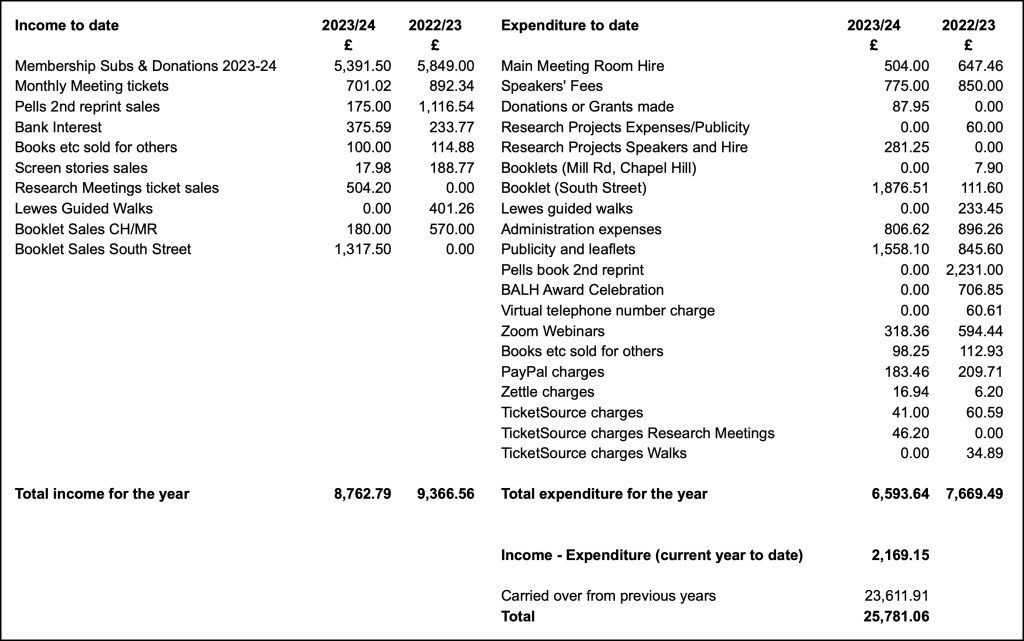
Treasurer’s Preliminary Report (by Phil Green)
Below are our interim accounts for 2023-4, but our financial year is not yet complete. Final accounts will be published early in 2025.




 Lewes History Group