Lewes History Group: Bulletin 149, December 2022

Please note: this Bulletin is being put on the website one month after publication. Alternatively you can receive the Bulletin by email as soon as it is published, by becoming a member of the Lewes History Group, and renewing your membership annually.

  1. Next Meeting: 12 Dec 2022, John Kay, ‘Lewes in Living Memory
  2. A.G.M. Agenda
  3. Annual Reports for the G.M.
  4. The Juggs Lane Windmills
  5. John Gibbs and the Bethesda Chapel, St John Street (by Ian Smallwood)
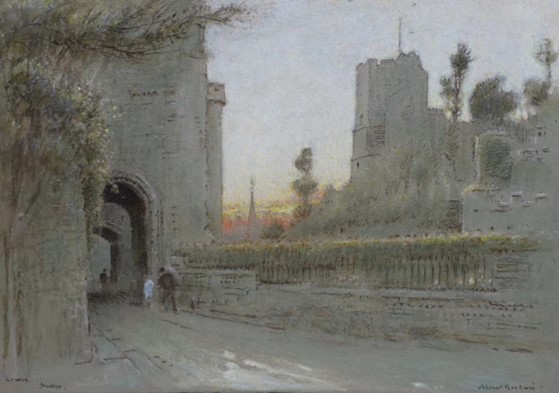
  6. Albert Goodwin’s view of Lewes Castle
  7. Lewes Railway Station postcards
  8. The Golf Links
  9. Christmas Dinner in the House of Correction
  10. Fifty Years a Master Baker (by Eunice Olley)


1.                Next Meeting,  7.30 p.m.  Zoom Meeting, Monday 12 December                           John Kay                 Lewes in Living Memory

This will be self-assessed quiz along the same lines as last year’s Christmas Quiz, except that this time we shall be using photographs of the town taken between the 1940s and the 1980s, within the memory of many of our members. It is surprising how much Lewes has changed in that time.

This meeting will be held by Zoom. Members will be sent a free registration link in advance. Non- members can buy a ticket (£4) at www.ticketsource.co.uk/lhg. The emailed ticket will include a Zoom registration link for the talk, to complete in advance.


2.                  A.G.M. Agenda

Our December meeting will be followed, after a short gap, by our A.G.M. at 8.45 pm.

You will need to log in separately for the A.G.M. You can join directly via the link that will be sent to members in a separate email invitation. The A.G.M. will be held in the regular Zoom format, so we will all be able to see each other. For the A.G.M. Reports please see item 3 below.

Agenda

  1. Acceptance of Annual Please see below.
  2. Appointment of The following officers have so far been nominated for 2023:
    1. Chair: Neil Merchant
    2. Treasurer: Ron Gordon
    3. Secretary: Krystyna Weinstein
    4. Executive committee: Ann Holmes (Chair for EC meetings), John Kay (Bulletin editor), Jane Lee (Communications), Ian McClelland (Chair for evening meetings & ‘Street Stories’ lead), Barbara Merchant (Website manager) & Chris Taylor (Membership).

Any other nominations, seconded and with the candidate’s consent, should be sent to info@leweshistory.org.uk by 5 December.

  1. Membership The committee recommends that the annual subscription should remain at £10 p.a. per member, and that admission to evening meetings should be free for members. Admissions charges for non-members should remain at £4 per meeting.
  2. Questions and Comments


3.                  Annual Reports for the A.G.M.

Chair’s Report                                                                        (by Neil Merchant)

It has been a successful year for LHG – thank you for your membership and support. We started the year continuing to deliver our monthly talks using Zoom, but in April we took our heart in our hands and switched back to King’s Church with the Battle Of Lewes reenactors. Attendances rose steadily through the spring and summer, but with Covid still present – and the anticipation of a winter resurgence of both it and flu – we asked you how you’d prefer to attend our talks in future. We offered Zoom all year, in the hall all year, or a Zoom in winter/hall in summer mixed option. Based on your clear preference, we’ve adopted the mixed option.

Membership has risen gently but steadily through the year, and now stands at over 560. We have continued to publish our monthly bulletin, put on some guided walks around Lewes, led by Sue Berry, and participated successfully again in the Heritage Open Days weekend in September.

Our website goes from strength to strength, and acts as a valuable resource for visitors from far and wide. We have published two more books in our Street Stories series, covering Mill Rd and Chapel Hill, and these are selling well, and other research projects are under way. You will see from the financial report that we end the year in a healthy state.

Once again my thanks are due to all our EC members for their commitment and contributions:

  • Sue Berry for leading our course program, chairing our talks and contributing her profound local history knowledge. Sue had to leave us during the year, for personal reasons, but continues to support us by leading walks and in other ways
  • Ron Gordon for managing our finances
  • Ann Holmes for chairing our EC meetings
  • John Kay for the monthly Bulletins, for our monthly talks program, and for fielding most of the surprising number of enquiries we receive about local history and genealogy
  • Jane Lee for her unstinting PR work
  • Ian McClelland for managing our Street Stories research program and chairing our talks since Sue’s departure
  • Barbara Merchant for tirelessly maintaining both our website and social media presence, and our LHG records
  • Chris Taylor for taking on the membership secretary role
  • Krystyna Weinstein, our secretary, for taking our committee meeting minutes

Thanks are also due to our various volunteers, including over the HOD weekend, when Bill Kocher and Penny Butten helped resource our presence.

Succession

LHG has now been in existence for some 13 years, and has become a thriving, well-established group in Lewes, with over 560 members, but is still run largely by the same group of volunteers who originally started it. We are looking for new blood to join our committee with a view to helping with, and ultimately taking over, some roles. There is no immediate urgency: rather, we are preparing for the future, to ensure LHG’s continued success.

Specifically, we’re looking for people interested in the following roles in the coming year:

  • a treasurer;
  • a PR person (someone with a marketing and social media background);
  • someone to manage Zoom and Ticketsource;
  • someone to help with preparing our monthly talk program; and
  • a local historian to guide research projects, answer queries from members, and perhaps give some talks and lead occasional historical walks in the town.

If any of this sounds of interest to you, do get in touch (info@leweshistory.org.uk) so we can explore further. Thank you.

Treasurer’s Report

The full Treasurer’s Report will be included in the January 2023 Bulletin, after the end of our financial year. The provisional report received by the last EC shows that the Group’s finances remain on a very sound footing.

Membership Report                                                                       (by Chris Taylor)

We now have 560 members, compared with 550 at this time last year: a modest increase. While 95 memberships lapsed for one reason or another during 2022, no fewer than 105 new members have joined. We are delighted to welcome among them our first member based in Norway. We also have 282 “Information only” email contacts, slightly more than last year (276).

Our membership is at its highest ever level indicating, we think, the success of our use of technology at our Zoom meetings; and, we trust, the high quality of the benefits we offer to our members. We have about the same number of members as local history societies in significant towns across the country, most of them much larger than Lewes, for example St Albans (population 80,000).

The great majority of members now pay their annual subscriptions online. This helps considerably to simplify our administration, for which I am particularly grateful.

LHG Website Report                                                          (by Barbara Merchant)

In the 12 months to mid-November 2022, website usage showed a small rise from pre-Covid figures, having dipped back down after two years of high usage levels during lockdown and social restriction (2022: 41,311; 2021: 54,220; 2020: 43,410, 2019: 39,446). Posts about Events rose up the list of most popular website pages, in third place after Lewes Street Stories reports, and Bulletins, reflecting a return to normal life.

LHG website Views to 2022Our website News items are copied to Facebook and Twitter, drawing followers to the website. We continued our efforts to increase our Facebook presence to reach a new audience and broaden our visibility.

  • Twitter – 1,096 following @LewesHistory (2021: 1,037), +5.7%
  • Facebook – 1,850 following LewesHistoryGroup FB page (2021: 1,223), +51.3%
  • Website – 290 news item subscribers (2021: 273), +6.2%

Communications Report                                                               (by Jane Lee)

Our promotional activities in 2022 have included:

  • Keeping the Tourist Information Centre stocked with LHG leaflets as a key means of raising awareness
  • Using @leweshistory Facebook/Twitter accounts to promote our own and other local history events
  • Talk information disseminated via:
    • Sussex Express
    • Lewes News
    • The Lewesian
    • Online what’s on pages: co.uk, VisitLewes.co.uk, ESCC Library (escis.org.uk), WhereCanWeGo.com, TheLewesList
    • Third party Instagram accounts: @Visit.Lewes & @LewesNews
    • A4 posters in Library, Tourist Information Centre, Bow Windows Bookshop & Nevill noticeboard. Also, the windows of members in all parts of the town and some nearby villages
    • LHG website & Bulletin

    For 2022 Heritage Open Days in September we again had a room in Lewes House. There we launched the latest Street Stories books on Mill Rd and Chapel Hill and also displayed panels covering other Street Stories’ projects and recent research on Winterbourne Lodge and on John Steinhaeuser, the early 20th century medical officer who reduced TB levels in Lewes.

    In addition to promoting the new books at HOD, we had editorial in The Lewesian (June), Lewes News (July) and Sussex Express (9 Sept). The books are on sale from our website and the Tourist Information Centre.

    After over 10 years in the role of Publicity Officer, I would like to find, and progressively hand over to, a successor: if you’d be interested in this, feel free to email me via the LHG website.


    4.                      The Juggs Lane Windmills

    This photograph of the two windmills that stood on either side of Juggs Lane must have been taken before the smock mill on the left collapsed in 1891. Postcard-sized copies were recently offered for sale on ebay. The remains of the brick roundhouse of the post mill on the right remain visible in the garden of Rosery Mill Cottage [see Bulletin no.131].
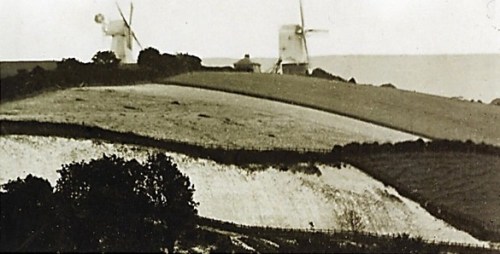
    Juggs Lane windmills, near Lewes, before 1891


5.           John Gibbs and the Bethesda Chapel, St John Street        (by Ian Smallwood)          

My ancestor John Gibbs was born in Ditchling in 1769, where his parents were hired to manage a house owned by the Countess of Huntingdon. She occasionally stayed there herself, but it was mainly used to accommodate some of the ministers she had had trained to preach the Gospel when they were between assignments.

Very soon after John Gibbs was born one of these priests brought disaster on the family, by bringing to stay with them a child who had been inoculated with the smallpox in the days when real smallpox virus was used. The live virus was administered in a way designed to give the person inoculated only a mild infection followed by lifelong immunity. A problem with this approach was that if the inoculated person was not carefully isolated they could spread the live virus to others, and this child spread it to John’s family, leading to the deaths of his mother and one of his brothers, and other siblings being blinded. John Gibbs was left to the tender mercies of his father, who also preached at some of the Countess’s chapels, and suffered neglect. Contrasting his treatment by his father with the kindness and moral conduct of the Anglican mistress who he served as a teenager, he abandoned dissent in favour of the established church. He married and came to Lewes, and had four sons and a daughter born between 1797 and 1812.

With 12 guineas inherited from his grandmother he apprenticed himself to a shoemaker and followed that trade for the rest of his life, in combination later with his role as a Minister of the Gospel. He appears in both capacities in Pigot’s directories. He appears as a resident in East Street in John V. Button’s ‘Brighton & Lewes Guide’ of 1805, and lived at 14 East Street for the rest of his life. Initially a tenant, he became the owner and bequeathed it to his widow, who lived there until her own death in 1851.

However, he soon began to doubt the value of the Anglican preaching he heard at churches in and around Lewes. Some academic sermons went over his head, and those he understood focused only on the value of virtue, good works and charity, which he found unhelpful as a poor man who had little enough for his family and nothing to give to others. After a long and painful period of soul- searching, he initially found a happier spiritual home in the new Jireh Chapel established in 1805 by Rev Jenkin Jenkins and William Huntington. While there he had a dramatic experience that he interpreted as a vision of Christ, but when he told Jenkin Jenkins it was dismissed as the work of the devil. John Gibbs then abandoned Jireh, and instead began to preach to others in his own house, with mixed results. In 1811 he and a small band of adherents leased a building on Lancaster Street to serve as a new chapel, inviting the radical Brighton Calvinist preacher Vigor McCulla to preach there. They called this chapel Bethesda, which means house of grace. This building, called the Refuge Chapel, was built for them by Amon and Amon Henry Wilds.

This project also soon came to grief, as McCulla judged that John Gibbs “did not speak consistently with the Spirit’s work”, and banned him from the building. John Gibbs went back to preaching with passionate intensity in his own house, until in 1815 he and his adherents leased an old schoolroom in St John Street from Mrs Gideon Mantell for their new Bethesda Chapel. The room was enlarged in 1824 and rebuilt in 1827. Here, despite being plagued by ill-health, John Gibbs continued to preach until his death in 1838. In 1827 he published a 206-page book, ‘The Life and Experience of and Some Traces of the Lord’s Gracious Dealings Towards the Author John Gibbs, Minister of the Gospel, at the Chapel in Saint John Street, Lewes, Sussex’. Copies, at 3s 6d each, were sold from his house, his chapel and a range of booksellers across Sussex, but only two copies are known to survive today. One is in The Keep, purchased from the estate of the noted Sussex University academic Stephen Medcalf, where it is accompanied by a register of the children ‘named’ in the chapel up to 1842. However, facsimile copies, printed on demand, are now widely available at a modest cost. His book received a long and mocking review titled ‘Nuts for the Saints’ in the 27 May 1830 Brighton Gazette. The review treated other prominent Calvinist preachers such as William Huntington, Jenkin Jenkins and John Vinall with similar ridicule, so he was in good company.

His chapel was one of two Lewes chapels that joined in the national 1831 petition to the House of Lords “for the total abolition of negro slavery” – the other was the Wesleyan Methodist chapel in St Mary’s Lane. Evidently successful (if not quite on the scale of Jireh or Tabernacle) it had a congregation of 250 in 1829. He also preached on occasion in Brighton. He died in East Street of consumption on 1 May 1838, aged 68. His death certificate described him just as a ‘Dissenting Minister’. John Gibbs’ death was noted in national newspapers like The Globe as well as in the local press, and he was buried in a family vault in his chapel. His will left his entire estate to his widow, with his personal estate (excluding his house) valued at under £100. The chapel continued in other hands until 1929. It was demolished to be replaced by a terrace of modern townhouses in 1973. I would love to know what became of the bodies of John Gibbs, his wife and the other members of his family who were buried in the family vault when the chapel was demolished.

Sources: ESRO NI/3; Jeremy Goring, ‘Burn Holy Fire’; Emma Griffin, ‘Liberty’s Dawn: A People’s History of the Industrial Revolution’; British Newspaper Archive; Colin Brent, ‘Lewes House Histories’; House of Lords Journal for 1831; Sussex County Magazine (1930) p.717.


6.                  Albert Goodwin’s view of Lewes Castle

Albert Goodwin painting of Lewes Castle

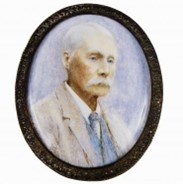
Albert Goodwin, artist 1845-1932This ink and pastel painting captioned ‘Lewes Sussex’ and signed by Albert Goodwin (1845-1932) was offered for auction at Gorringe’s autumn fine sale in September 2022, at an estimated price of £600-£800. It sold for £600.

Albert Goodwin, a builder’s son, trained under the Pre- Raphaelites Arthur Hughes and Ford Madox Brown and was championed by Ruskin. He first exhibited at the Royal Academy at the age of 15. His works included, in addition to landscapes, biblical and allegorical subjects. He was a prolific artist, exhibiting and travelling widely.

Image of Albert Goodwin from https://www.chrisbeetles.com/artists/goodwin-albert-rws-1845-1932.html


7.                  Lewes Railway Station postcards

Two more postcards of Lewes railway station were recently advertised for sale on ebay, with a starting price of £30 each. The first shows a view from above the station looking towards Haywards Heath & London. There appear to be allotments below Southover Road, to the right of the tunnel. The second, dated 1907, shows a train pulling out heading towards Eastbourne and Hastings

Lewes Railway Station looking North, postcard

Lewes Railway Station with train going towards Eastbourne, 1907, postcard


8.                      The Golf Links

This postcard, by an anonymous publisher, was used in the 1920s, but another postcard view with its caption in the same distinctive hand and the same elaborate printed styling on the reverse has ‘Affix Halfpenny Stamp’ in the stamp box, indicating it was published before the cost of mailing a postcard was doubled in 1919.

The photographer took this view from the open downland between the Offham Road and Hill Road, but while the Lewes golf course is there in the distance, ‘The Golf Links’ does not seem the most obvious caption. The Martyrs Memorial is certainly visible but the clubhouse, if there at all, is hard to make out. The Malling chalkpits are a more obvious distant feature. Beyond are Caburn and Firle Beacon, with arable fields advancing far up the downland towards Caburn. There is no traffic visible, but there are several groups of people out and about, some sitting to survey the view, suggesting this was not taken on a working day.

Postcard titled The Golf Links, Lewes, pre 1919

There are houses on the Wallands, but development has not yet advanced up Hill Road, which at this date looks little more than a track across the chalk downland. The positions of the railway line, raised slightly above the surrounding brookland, and the river are evident. St John-sub-Castro rises above the surrounding houses, and I think that the large multi-chimnied building a little distance to its right must be the old House of Correction, by this date a Naval Prison.

Down to the left, where the Landport estate was to appear before the start of World War II, part of the lower downland has been enclosed into smaller units. Many have buildings, some little more than allotment sheds but others more substantial, more like small barns. None of the buildings appear to have chimneys, so they are probably not residential. The first impression is of allotments, but many of the plots seem far larger than any allotments would be today. Is this the reality on the ground of Lewes residents ‘digging for victory during their spare time in the Great War?

This postcard was offered for sale on ebay during September 2022.


9.                  Christmas Dinner in the House of Correction

The 17 December 1829 Cheltenham Chronicle noted that in the previous week an incorrigible poacher had again been committed to the Lewes House of Correction.

It reported: “He managed his affairs so seasonably that his last eleven Christmas dinners had all been taken in the same prison”.


10.             Fifty Years a Master Baker                                      (by Eunice Olley)

From a July 1943 local newspaper report, retained by my Pinyoun family.

“Recently Mr Harry Pinyoun, of Keere Street, Lewes, Sussex, created a proud record – that of completing fifty years as a master baker in one street. Born in Lewes seventy four years ago, he was closely associated with the local trade, and for thirty years has been treasurer of the Lewes and Mid-Sussex Master Baker’s Association.
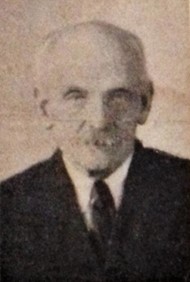
Harry Pinyoun, master baker of LewesIn an interview with a local representative, Mr Pinyoun said:

Here in Keere Street I have made my home, and perhaps you would hardly credit that I still serve some of my original customers who came to me when I first opened my bakery.

Mine has always been a one-man business, so you may guess that I have not had much time for holiday-making. Even during war time I have not changed my methods of baking, and I think I am one of the few remaining hand-made bakers in the district. I have no machinery of any kind. War, of course, has changed things in the bakery, but even with war-time flour I can still keep the distinctive character of my bread. This was flour is much better than the flour we had to use in the last war. It is more scientifically mixed/ Last war I think they just used to shovel in the ingredients anyhow. I still make my morning rolls, and every morning the early workers in Lewes call for them and take them away to eat in the dinner hour. The school children also take them to school.”

Harry Pinyoun was born in Lewes in December 1869, and he died in 1952, aged 82. The 1871 & 1881 censuses find him with his family in Spring Gardens and Lancaster Street, respectively. By 1891 he was a journeyman baker in Croydon, Surrey, lodging with the master baker he worked for. He married a Surrey girl at Lewes in 1896, not long after he started his own business back in his home town. The 1901 census finds him in Keere Street, now with a young daughter. His household included a middle-aged man and a middle aged widow, both described as assistant bakers, so he was not always a one-man band. By the 1911 census he had three daughters, ranging from a teenager to a baby, and his wife assisted in the business. He finally gave up his business when bread rationing began. His family worshipped at Tabernacle Congregational Church.


John Kay

Contact details for Friends of the Lewes History Group promoting local historical events:

Sussex Archaeological Society
Lewes Priory Trust

Lewes Archaeological Group
Friends of Lewes

Lewes History Group Facebook, Twitter


Posted in Art & Architectural History, Biographical Literature, Ecclesiastical History, Economic History, Lewes, Local History, Transport History, Uncategorized | Comments Off on Lewes History Group: Bulletin 149, December 2022

Lewes History Group talk: Lewes in Storm and Flood – Monday 9 January 2023, 7:20 for 7:30pm start

A Zoom Webinar

Marcus Taylor: Lewes in Storm and Flood

For our first 2023 talk Marcus Taylor will speak about the flooding of the river Ouse in October 2000 and the so-called Great Storm of 1987. Both had a huge impact on Lewes and its residents; if you were here then, you will have memories of your own. Many people had to leave their homes for months after the relatively brief but deep and sudden surge of water.

However, such floods have happened on quite a number of occasions over the past century or so. Using interviews and many previously unseen photographs, the effects of this natural disaster are vividly outlined.

Similarly, in the middle of an October night, ‘the hurricane that wasn’t’ caused widespread damage to buildings throughout the town in 1987, uprooting trees, closing roads and affecting businesses. First-hand accounts will remind many of us of the chaos that met our eyes the next morning.

Lewes flood 2000; Storm Southover Church, Lewes 1987
Lewes flood 2000 © Heart Radio; Storm damage at Southover Church, Lewes 1987 © Alan Pilfold (Click image to enlarge)

To join this talk, you need to
1) register your intention in advance
2) receive our confirmation email with a link to the talk
3) click on that link to attend the talk 10 minutes before it starts

LHG Members can attend our talks for free. We will send members emails with a link to Zoom registration. Then please follow steps 1, 2, and 3 as above. 

Non-members can buy a ticket (£4) from TicketSource. The ticket will provide a link to Zoom registration. Then please follow steps 1, 2, and 3 as above.

Please join the webinar at 7:20pm.

We would recommend a computer screen or an iPad as a minimum screen-size for viewing our webinars.

Our presenters will be speaking live, and you can ask questions by typing in the Q&A box in Zoom.


See the Talks page for a list of  forthcoming monthly events organised by the Lewes History Group.


Posted in Uncategorized | Comments Off on Lewes History Group talk: Lewes in Storm and Flood – Monday 9 January 2023, 7:20 for 7:30pm start

Lewes History Group: Bulletin 148, November 2022

Please note: this Bulletin is being put on the website one month after publication. Alternatively you can receive the Bulletin by email as soon as it is published, by becoming a member of the Lewes History Group, and renewing your membership annually.

  1. Next Meeting: 14 Nov 2022, John Bleach, ‘A Historical Overview of Cliffe’
  2. Battlefield Trust event: ‘Conflict on the South Coast’
  3. Emmanuel Bowen’s 1750 Map of Sussex
  4. Southover’s failed stratagem
  5. Two 1905 Bonfire postcards
  6. A Bonfire case in 1786
  7. Naming the Royal Oak
  8. Thomas Read Kemp: how to Win Friends and Influence People
  9. William Cobbett’s view of Lewes
  10. The Cliffe Tavern on Cliffe High Street
  11. The Clock at St Thomas, Cliffe (by Peter Varlow)
  12. The Demolition of Southover Brewery chimney


  1. Next Meeting 7.30 p.m.       Zoom Meeting                    Monday 14 November     John Bleach           A Historical Overview of Cliffe

John Bleach gives November’s Lewes History Group talk and suggests answers to some basic historical questions relating to Cliffe, including where it was, when and why it was founded, and who by. He will describe its medieval development as a commercial centre to rival that controlled by the De Warrenne family.

Viewed over the long run this can only be seen as a success. The Cliffe, which includes both Tesco and Aldi, is now the commercial heart of the town, leaving Lewes only with Waitrose. There are still plenty of businesses on the Lewes side of the river, but the centre of commercial gravity has been dragged away from the old High Street atop the hill down the hill towards Cliffe.

This will be the first of our winter meetings to be held by Zoom. Members will be sent a free registration link in advance. Non-members can buy a ticket (£4) at http://www.ticketsource.co.uk/lhg. The emailed ticket will include a Zoom registration link for the talk, to complete in advance.


  1. Battlefields Trust event: ‘Conflict on the South Coast’

The Battlefields Trust South East and South London Region’s First History Day, entitled ‘Conflict on the South Coast’ will be held in the Meeting Room at Lewes Town Hall on Saturday 26 November 2022. Use the Fisher Street entrance. Registration is from 10.00am and the first talk is 10.30am. The meeting finishes at 4.00pm. Tea, coffee and biscuits are provided, and there will be a lunchtime break. Advance registration is necessary and the cost per participant will be £25.00.

The four key speakers will be:

  • Professor Andrew FitzPatrick: The Roman invasions
  • Julian Humphrys: The Battle of Hastings
  • Dr Sophie Therese Ambler: The Battle of Lewes (including Simon de Montfort’s crucial role)
  • Dan Moorhouse: The 14th century French raids, their impact on Lewes and the coastal towns.

Book via Eventbrite: www.eventbrite.co.uk/e/conflict-on-the-south-coast-tickets-415595516377

Please phone John Freeman, 07957 829997, for any further information.


  1. Emmanuel Bowen’s 1750 Map of Sussex

Offered for sale at Gorringe’s weekly auction on Monday 16 May 2022 was a copy of Emmanuel Bowen’s map of Sussex. It sold for £180. The map is undated, but dedicated (top right) to Algernon, Duke of Somerset. He inherited this title when his father died in 1748, at the age of 86, and died himself in 1750, which gives a pretty precise date. The title (top left) includes two illustrations of 18th century surveyors with their equipment, one of them for some reason unclothed.

Emmanuel Bowen's 1750 map of Sussex

18th Century surveyors, and Dedication to Algenon, Duke of Somerset, from Emmanuel Bowen's 1750 Map of Sussex

The plan includes at the top street plans of Lewes and Chichester in about 1750, and at the bottom views of both towns. That of Lewes is taken from the south (bottom right hand corner).

Street plan of Lewes, and Southern Prospect of Lewes, from Emmanuel Bowen's 1750 Map of Sussex

To the right of the street plan are listed the seven rectories of Lewes: St Andrew, St John by the Castle, St Mary Mag, St Mary in the Market, St Michael in the Market, All Saints and St Peter & St Mary. Four streets are named: School Hill; Friars (the High Street section between School Hill and the Bridge); Friars Lane (Friars Walk); and St Mary’s Street (Station Street). It also shows the Bowling Green within the Castle precincts.

Under the view of Lewes from the south is the text: “Lewes is one of the principal Towns in the County, for largeness and Number of Inhabitants. It stands upon a rising Ground and consists of 6 Parishes in which are many Gentlemen’s Seats whose Gardens joyn to each other. Tis a Sea Port at a distance of 8 miles on the River Ouse which runs thro the middle of the Town. Here are several iron works in which they make Guns for Merchants service. This Town is famous for a Bloody Battle fought here between King Henry 3rd and the Barons headed by Simon Monford Earl of Leicester, wherein the King was defeated. From a Windmill belonging to and near this Town is a Prospect of so large an extent as is hardly to be equal’d in Europe, for you may see the Sea Westward at 30 Miles distance, and Eastward there’s  an uninterrupted view to the Bansted Downs in Surrey, which us 40 Miles.”


  1. Southover’s failed stratagem

The 1741 Epiphany Quarter Sessions held in Lewes heard an appeal by Horsted Keynes parish against a magistrate’s order that they should pay 1s 6d per week to Newick parish for the maintenance of an illegitimate baby girl. An illegitimate child was the legal responsibility of the parish where it was born, but the practice was that the child would remain with its mother (Mary Longley at the time of the birth, but now married and living in Newick) until it reached the age of seven. The Horsted Keynes parish officers did not dispute that the child had been born in their parish in May 1740, and it was baptised there that month, on the same day as its mother was married there. At the baptism the baby was given her mother’s new surname. However, the grounds for their appeal were that, from the mother’s sworn statement, “the child had been born illegally in Horsted Keynes by the fraud and practice of Southover”. The order was quashed.

At the following Midsummer Quarter Sessions held in Lewes it was Southover’s turn to appeal against a new order made by a magistrate a few days previously that they were to pay two shillings a week to Ditchling parish, where the mother (since widowed and remarried to a Ditchling labourer) had now moved. The magistrate believed that the Southover parish officers had overstepped the mark, by carrying the mother away to Horsted Keynes when her delivery was imminent. The assembled magistrates deferred the decision until the next Sessions, when they decided that Southover should pay half a crown a week for the child’s maintenance. The unusually high maintenance payment ordered presumably reflects their disapproval of Southover’s behaviour.

Source: Quarter Sessions minute & order books, ESRO QM/8 & QO/18


  1. Two 1905 Bonfire postcards

Bonfire postcard identified as Southover Bonfire Society, with banner, posted 1905

Postcard mailed 12 November 1905 from Lewes by  ‘Ted’ to Mr W. Webb, 9 Park Place, St James. “I send you a post card of the Boys” “We are having fine weather down here raining every day”.

Bonfire postcard identified as Southover Bonfire Society, posted 7 November 1905

This postcard was sent to the same recipient by ‘FB’ on 7 November 1905, with the note “It is the Bonfire lot. Ted is there somewhere”. Again the judge sits in the middle of the front row. Mick Symes identifies this as the Southover Bonfire Society. The two postcards were the subject of competitive bidding on ebay.


  1. A Bonfire Case in 1786

This letter to The Times was dated 13 Aug 1786 and published 3 days later.

A prosecution commenced by some persons not openly avowed against Mr Charles Scrase, son of Mr Henry Scrase of Lewes (who as a tradesman, a neighbour and a gentleman has ever supported an unblemished character) and their apprentice Mr Chitty, for firing squibs etc on the 5th November last, was tried on Wednesday 19th inst. at the assizes at Horsham, when after the examination of many witnesses they were convicted and fined £25 each. 

The inhabitants of Lewes are by no means satisfied with the determination, for the whole affair has been pursued in a very arbitrary and malevolent manner, as several young gentlemen were in company, and only those two singled out as victims for resentment. Had not the people of Lewes been very pacifically inclined they would have enquired, through the medium of a Court of Judicature, whether it was legal to read the Riot Act, on the 5th of November, at a spot where it had been kept time out of mind; and to disturb the commonality without previous offence? And how consistent was it with justice to drag people to prison for being mere spectators, and others who were passing by the place on business? It is not however wished to irritate; yet to represent the matter in its true colours, and to recommend to the Bench if they wish to appear respectable, to proceed in a quite different line of conduct, by preferring mild and lenient directions in such sort of cases, previous to the exercise of arbitrary and coercive measures; perverting the civil, by introducing military police, and thereby widening a breach which it is the duty of their office to heal.  

What a pity the tradesmen and populace of Lewes should be held as slaves; and that every effort of ingenuity, genius or industry should be cramped by inconsiderate men. If the Justices of Lewes would exert themselves to crush the baneful encroachments of smuggling, in conjunction with the tradesmen who have conspicuously evinced their abhorrence of it, they might be of infinite service in their station. Let them also look to several of those pernicious haunts in their vicinity called gin-shops, nurseries of every species of iniquity, and view the several families who exist, and are brought up in beggary, without any knowledge of their duty to either God or man from their parents resorting to these places. Were men in the beforementioned station to notice, as they ought, these lamentable evils, and use the means of taking those children from their abandoned parents, placing them in some manufacturing line, mercantile service or fishery, and promoting industry by proper encouragements, these steps would at once insure them respect and authority; while on the contrary their persevering in the mere pusillanimous exertions of office will ever render them equally ridiculous and contemptible.”


  1. Naming the Royal Oak

The Royal Oak at the top of St Mary’s Lane was built in 1791 as a public house initially called the White Horse. In 1819 it was purchased by the wine and spirit merchant Adam Harvey, and he installed as tenant a Mr Penderell, who was a linear descendant of the Richard Penderell who had saved the future King Charles II from capture by Parliamentary forces after the battle of Worcester, on one occasion by hiding him in an oak tree. After the Restoration Charles II signalled his gratitude to Richard Penderell by awarding him and his descendants an permanent annuity of 100 marks per annum, and the right to hunt in any part of the king’s own lands. The new tenant at the White Horse was a lineal descendant of Richard Penderell, who hoped to inherit the annuity in due course, and he changed the name of the establishment to the Royal Oak.

Although Adam Harvey was a wine and spirit merchant in Lewes at the same time as his contemporary John Harvey was engaged in the same business in Cliffe, I have not been able to establish any relationship between the two, and both the Royal Oak and the Harvey & Windus wine and spirit merchants business at 83 High Street became part of the rival Beards Brewery.

Sources: Gideon Mantell’s journal, entry for 15 October 1819 and a footnote to page 201 of Thomas Walker Horsfield’s ‘History and Antiquities of Lewes’, published in 1824.


  1. Thomas Read Kemp: how to Win Friends and Influence People

In February 1814 the Sussex Advertiser reported that T.R. Kemp esquire distributed amongst such of the inhabitants of Lewes as would accept his bounty one hundred pounds in beef or coals, at the option of the partakers, which afforded a very seasonable relief to the sufferers in the frost. The tickets were for seven pounds of meat, or three bushels and a half of coals. Thomas Read Kemp (1782-1844) was at that time MP for Lewes, and such generous gestures to the electorate were expected. The word ‘inhabitants’ had at that time a somewhat different meaning from today – it meant those householders who paid the poor rates and were thus, in the old borough of Lewes, qualified to vote. The Sussex Advertiser was a Whig newspaper, and Thomas Read Kemp was a Whig MP. This gift was not to the poorest members of the town community, who had no vote.

Thomas Read Kemp was a landowner’s son, educated at Westminster School, Cambridge and the Middle Temple, who is best known as a developer of Kemp Town and other areas of Brighton. He provided the site for the Royal Sussex County Hospital, and donated £1,000 towards its construction. In 1806 he had married a daughter of the merchant banker Sir Francis Baring. He was MP for Lewes from 1811-1816 (in succession to his father Thomas Kemp), MP for Arundel 1823-1826 and then MP for Lewes again from 1826-1837. He resigned his seat in 1816 to found a dissenting sect in Brighton, for whom he built a chapel where he preached for six years, before returning to the established church and re-entering Parliament. In 1837 he left Britain to escape his creditors, and died in Paris.

Thomas Read Kemp

Portraits of Thomas Read Kemp by Sir Thomas Lawrence RA (left); from the Henry Smith collection of Brighton prints (centre); and from kemptownestatehistories.com (right).

Sources: 14 February 1814 Sussex Advertiser; Wikipedia; Dictionary of National Biography; Mark Antony Lower, ‘Worthies of Sussex’; Victoria County History of Sussex; mybrightonandhove.org.uk; kemptownestatehistories.com.


  1. William Cobbett’s view of Lewes

Lewes is in a valley of the South Downs. There is a great extent of rich meadows above and below Lewes. The town itself is a model of solidity and neatness. The buildings are all substantial to the very outskirts; the pavements good and complete; the shops nice and clean; the people well-dressed; and, though last not least, the girls remarkably pretty, as indeed they are in most parts of Sussex; round faces, features small, little hands and wrists, plump arms and bright eyes. The Sussex men too are remarkable for their good looks. The inns are good at Lewes, the people civil and not servile, and the charges really (considering the taxes) far below what one could reasonably expect.” 

Source: 10 Jan 1822 entry in Cobbett’s Political Register.


  1. The Cliffe Tavern on Cliffe High Street

This must be one of the earliest postcards of Cliffe High Street, published by Stengel & Co of 39 Redcross Street, London EC, and printed at their works in Dresden. It has an undivided back, found only in the earliest Edwardian cards. As usual there is a policeman ready to assist passers-by.

Cliffe High Street, Stengel & Co postcard c.1902

To the right, after the Rice Brothers saddlers shop, was the inn sign of the Cliffe Tavern, proprietor G. Edwards. Bulletin no.95 identifies G. Edwards as the licensee there in 1902.

Cliffe High Street, Stengel & Co postcard, close-up showing sign for Cliffe Tavern


  1. The Clock at St Thomas, Cliffe                                      (by Peter Varlow)

St Thomas à Becket Church in Cliffe is appealing to local residents to join a volunteer team to wind its turret clock every day. The clock has been out of action for over a year while funds were raised to make the church tower’s 15th-century spiral staircase safe. Now the clock will be re-started, at midday on Friday 25 November.

The clock dates to 1670 and is reputed to be the second oldest in Sussex, so this is an opportunity for LHG members to literally get a handle on Lewes history. Thomas Woollgar’s ‘Spicilegia’ begun in 1761 reads: “The Clock was made by James Looker a blacksmith of Ditchling for five pounds ten shillings in 1670. He was to keep the same in repair for three years. To find all the materials except the Dial. This was originally in the loft where the clock stands, but being worn out a new dial was added within my memory and placed against the Bell loft.”

The new clock may have replaced one noted by Woollgar as “repaired in 1650-1 by Mr Gorynge of Lewes”. In 1697 the Churchwardens’ accounts state, says Woollgar, “Cleaning and mending the Clock, Paid 10s 6d”. Fifty years later the accounts said that “Ringing the Bell and winding the Clock cost £1 10s.”

The clock works are set in a wrought iron frame with scrolled finials and two side-by-side trains. One train drives the hands, and one operates the hourly strike via the clapper of one of the bells in the belfry a storey above. The frame is mounted on a modern platform in the clock-room, 42 steps up from the base of the tower, behind the attractive gold-and-blue external dial. The cast iron weights for both trains hang from pulleys in the belfry.

In 1886 the East Sussex News told its readers that repairs to the clock in 1886 by William Tanner, watchmaker of the Cliffe, “caused the expenditure of a considerable sum”. In the late 1990s when the ring of four bells was re-installed, after more extensive and expensive repairs, one was connected to the clock so that it would once again chime the hours. In 2016 the entire mechanism was overhauled and the clock-face repainted and gilded by Thwaites & Reed Engineering Ltd of Rottingdean, who will be re-commissioning it on 25 November.

The latest work has included a new handrail for the 42-step spiral stair to the clock room and up to the bell chamber (another 15 steps), new stone flooring at the base of the stair, and new lighting, incorporating emergency lighting. The Church raised nearly £25,000 for this thanks to generous donations by many local people and visitors to the town, as well as by the organisations that have supported the project, including Lewes Town Council, the Friends of Lewes, the Worshipful Company of Clockmakers, the Rugby Group Benevolent Fund and the Ian Askew Charitable Trust.

The daily hand-winding that is required is a five-minute job, and St Thomas is aiming to establish a rota of winders who live nearby and would like to a handle on their town’s history. Interested members can get more information from parochial church council member Peter Varlow, peter@varlow.org.uk. Guided tours of the tower are also planned.

Source: Woollgar, Thomas, ‘Spicilegia sive Collectanea ad Historiam et Antiquitatis Municipii et Viciniae Lewensis’, vol II, p.342. Woollgar (1761-1821), did not complete the title page of the MS in the Sussex Archaeological Society library – its date reads 1790-18.. with space left for the final two digits.


  1. The Demolition of Southover Brewery chimney

The demolition of Southover Brewery’s chimney in September 1905 was an event attended by at least two professional photographers. The Lewes firm Bliss and the Mezzotint Company of Brighton both sold postcards of the event, taken at almost exactly the same moment but from slightly different vantage points. The Brewery stood opposite the Swan Inn in Southover.

Bliss, and Mezzotint postcards of the demolition of the Southover Brewery's chimney, 1905

The Southover Brewery run for many years by William Verrall senior (1759-1837), his son William Verrall junior (1798-1890) and then by his son Francis Verrall. In 1897 Francis Verrall sold the brewery and its chain of 35 public houses to the Croydon brewery of Page & Overton for £118,000. £65,000 of the cost was covered by a mortgage secured on the business and provided by Francis Verrall. It was Page & Overton who demolished the Brewery. After the Great War the business passed successively to the Southdown & East Grinstead Brewery, Tamplins and Watneys. Some of the brewery buildings survive, now converted to housing.

Source: Graham Holter, ‘Sussex Breweries’ (2001); my file on the Cock Inn, Ringmer (one of their houses).


John Kay

Contact details for Friends of the Lewes History Group promoting local historical events:

Sussex Archaeological Society
Lewes Priory Trust

Lewes Archaeological Group
Friends of Lewes

Lewes History Group Facebook, Twitter


Posted in Biographical Literature, Cultural History, Ecclesiastical History, Legal History, Lewes, Local History, Political History, Social History | Comments Off on Lewes History Group: Bulletin 148, November 2022