Lewes History Group: Bulletin 131, June 2021

Please note: this Bulletin is being put on the website one month after publication. Alternatively you can receive the Bulletin by email as soon as it is published, by becoming a member of the Lewes History Group, and renewing your membership annually.

  1. Next Meeting: 14 June 2021, Sarah & Peter Earl, ‘The Stories of East Street & Albion Street
  2. The Sheffield Arms (by Angela Wigglesworth)
  3. The Railway Bridge across the High Street
  4. Motor Traffic on School Hill
  5. A flash in the pan: Victor Amedee Raymond’s lucky escape
  6. The British Queen, Lewes (by Heather Downie)
  7. The Southern Post Mill, Juggs Lane
  8. The Bakery at 61 Southover High Street (by Richard Pearson)
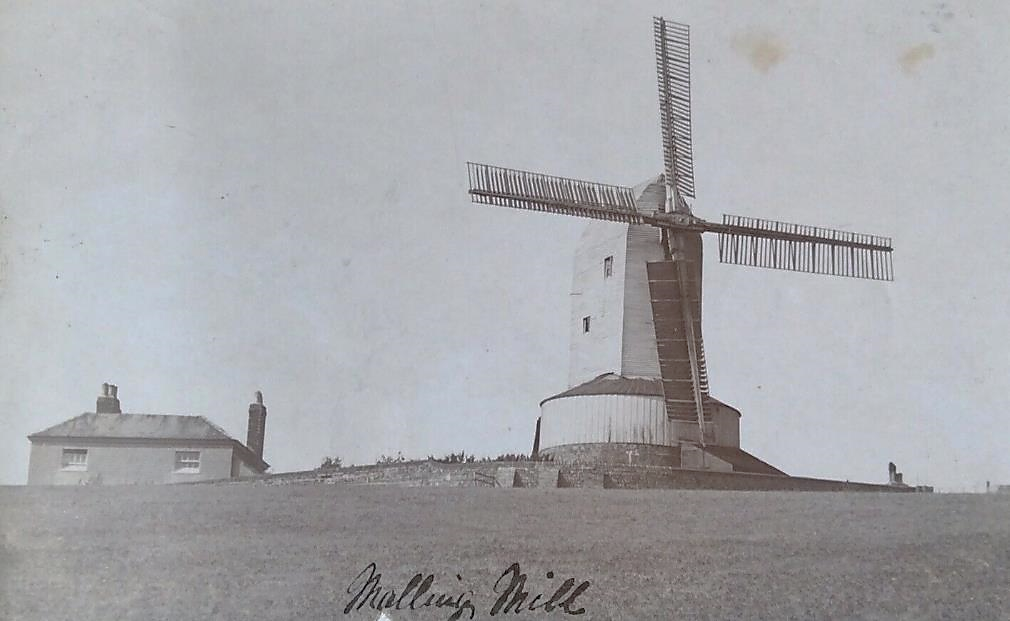
  9. Malling Mill and the Mill House
  10. Lewes Guardians advertisement for Medical Services


  1. Next Meeting               7.30 p.m.    Monday 14 June
    Sarah & Peter Earl    The Stories of East Street and Albion Street

East Street and Albion Street comprise what has been referred to as the first phase of ‘New Town’ development in Georgian Lewes. What was originally on the site? How did the land develop into streets? What was going on in Lewes at the time?  What has happened since the original builds?

To answer these questions Sarah and Peter Earl, long-standing residents of East Street, have been on a journey of discovery since 2018. Although neither are qualified in historical research they were inspired by the work and findings of earlier researchers taking part in the LHG’s Street Stories project and took advantage of the training offered to LHG members. You are invited to see how far they have travelled up to, and since, their small Heritage Open Days exhibition in September 2019, and to learn what sources have proved most useful in piecing together a fascinating history.

This meeting will again be a Zoom webinar, and to attend you must register in advance. You will then be able to join the meeting from 7.20 pm. LHG members will be sent a link to register directly: non-members will need to purchase registration via https://www.ticketsource.co.uk/lhg.


  1. The Sheffield Arms                                       (by Angela Wigglesworth)

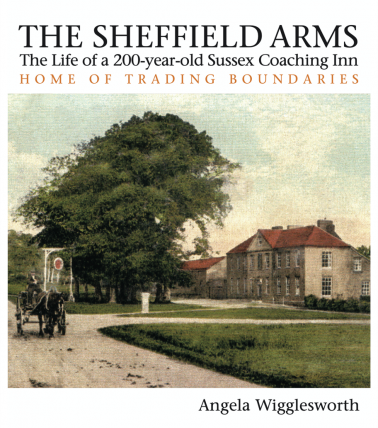
Wigglesworth, The Sheffield ArmsAngela Wigglesworth has recently published the story of the Sheffield Arms, A Sussex coaching inn on the A275, half a mile north of Sheffield Park and the Bluebell Railway, on one of the coach routes from Lewes to London. It was built by the first Lord Sheffield in 1779. Its guests included Australian cricketers whose tours of England in the 1880s and 1890s started at the nearby Sheffield Park, and the Prince of Wales (later Edward VII) who was provided with lunch by the landlord when he came to watch the cricket in 1896. The British and Canadian troops stationed in Sheffield Park in World War II spent their evenings here. Dinner dances were held in the 1970s and 1980s. In 1997 the inn closed, after two centuries of service, and then re-opened as a retail showroom and art gallery. In 2021 it hopes to reopen as a boutique hotel for those attending live music concerts and weddings.


  1. The Railway Bridge across the High Street

There have been quite a few changes in this part of Lewes High Street since this photograph was taken around a century ago. There are still some landmarks that survive, like the baker’s shop in the left foreground, Dial House and Fitzroy House. The removal of the railway bridge and its embankment has made a very positive contribution to the townscape, while the Tabernacle, as imposing as its builders intended, somehow never looked quite at home in the heart of Lewes. This image comes from a postcard by an anonymous photographer that was recently offered  on ebay and the subject of enthusiastic bidding.

Railway bridge across Lewes High Street, postcard

The 1960s photograph below, posted by Nigel Coomber on the Lewes Past Facebook page, shows the view from close to the rear of the current Waitrose store after the demolition of the embankment carrying the Lewes-Uckfield railway across the High Street.

After demolition of embankment carrying Lewes-Uckfield railway


  1. Motor Traffic on School Hill

These two postcards show increasing levels of motor traffic on School Hill. The War Memorial and the School Hill Cinema have arrived, and the ladies’ clothes indicate inter-war dates. The five visible number plates all follow the pattern of two letters, indicating the county of registration, followed by four numbers. From 1932 the pattern of three letters followed by three numbers became increasingly common. The three vehicles with PN numbers were registered in East Sussex. PL was Surrey and YV London.

Traffic on Lewes High Street postcard

Traffic on Lewes High Street near War Memorial, postcard


  1. A flash in the pan: Victor Amedee Raymond’s lucky escape

Victor Amedee Raymond (c.1749-1820) was a Swiss Protestant, who married at St Clement Danes, Westminster, in 1782 and then moved to Lewes to establish a boarding school for young gentlemen where, according to an advertisement in the Sussex Weekly Advertiser, only the French language was allowed to be spoken on school premises. The school thrived. It was initially established in 1783 at 135 High Street in St Anne’s parish. In 1786 it moved to 174 High Street and then in 1789 moved again to grander premises on the corner of School Hill and Albion Street, 209 High Street. His wife Mrs Ann Raymond purchased these premises, which had once been the Turk’s Head and then the home of the doctor Thomas Frewen, and had a quarter of an acre of grounds for £1,200. The school then remained at 209 High Street until Mr Raymond’s death. He was a member of Westgate chapel, but was buried at All Saints on 18 October 1820. His will shows that he had by this date accumulated £2,200 in government stocks, and soon afterwards his widow sold the property for development for a further £2,100. He left a widow, a son also called Robert Amedee Raymond and two daughters.

In January 1805 Mr Raymond took into his household a young man called James Vaughan Everall, to serve the school as an usher. There he paid his addresses to his master’s eldest daughter, Marie Petroline. This was said later to have been without his master’s knowledge, and to have culminated in an elopement, but the formal record shows that the marriage took place at All Saints church, by licence, on 30 April 1805. The daughter soon came to regret her hasty decision, and ill-treatment led to her seeking the protection of her father’s house. The duration of the marriage was short, but it produced a son, Robert Raymond Everall, who was baptised at All Saints on 19 September 1806.

Two months later James Vaughan Everall arrived at 209 High Street demanding to see his wife and child. When he was denied admission he contacted a local magistrate, and eventually Mr Raymond agreed to allow him to enter the house providing the magistrate came with him. Everall was allowed to see his wife and child, and asked Marie Petronelle whether she would live with him again, if he could get the means to support her. She replied that she would, providing he did not mistreat her again. He then asked to speak to his wife alone, but when that request was refused he responded so outrageously that the magistrate ordered him out of the house.

He did leave, but returned secretly later that afternoon, finding his way in through an unlocked rear door. He then entered the parlour, where Victor Amedee Raymond was with a pupil, and with a cry of “Now, God Damn you” took a pistol from his pocket, pointed it at Mr Raymond and pulled the trigger. The pistol flashed in the pan, but the ball with which it was loaded was not fired. Mr Raymond attempted to wrest the pistol from his assailant, but was overpowered. A second attempt by Everell again failed to fire the ball and, the alarm being raised, he ran off.

The local constable, Thomas Whiteman, attended the scene and apprehended Everall at the end of Mr Raymond’s garden wall. When he attempted to arrest him Everall first pointed his pistol at the constable, and then pointed it at his own head before pulling the trigger for the third time. For the third time the pistol failed to fire.

The prisoner’s only defence when tried for attempted murder at the Sussex assizes was that he had intended only to kill himself in his wife’s presence, driven to desperation by Mr Raymond having “allured” his wife’s affections from him. Unsurprisingly the jury returned a guilty verdict. When sentenced he prayed for mercy, and asked to be “sent from England for ever”. The final outcome is not recorded. However, his baby son Robert Raymond Everall was buried at All Saints on 7 January 1807, just a few weeks after the events recorded above, and in Victor Amedee Raymond’s last will, written in 1820, his elder daughter is described as Marie Petroline Everall, widow.

Sources: Colin Brent, ‘Lewes House Histories’; FindMyPast & Familysearch websites; March 1807 New Annual Register.


  1. The British Queen, Lewes         (by Heather Downie)

L.S. Davey, in his book ‘The Inns of Lewes’ lists the British Queen, saying it is mentioned in a newspaper report in 1839,  but he had not been able to trace its exact location, other than to suggest it may have been in Malling Street. However, while researching the history of South Street I have found evidence that the British Queen was the original name of the Snowdrop Inn in South Street.

The Snowdrop Inn is in South Malling Parish, as is the southern third of South Street, the remainder being in Cliffe Parish. What is known of its foundation? An avalanche in December 1836 destroyed Boulder Row, seven small cottages in South Street, housing the South Malling Parish poor, killing eight. In December 1837 The churchwardens and overseers of South Malling parish sold the site to Thomas Berry and his brother James.  Between 1838 and 1839, Thomas Berry built on the site a public house and 5 cottages. His design for the pub was almost identical to that of the Railway Inn in Ringmer, which he built at about the same time. In the 1841 census Thomas Wymark (used interchangeably with Weymark), occupation ‘publican’, is listed in the place where we would expect to find the Snowdrop (although not named as such), and on 14t January 1845 the Sussex Advertiser reported on a ‘family fracas’ at Mr Weymark’s Snowdrop – the first report of this name I have encountered.

So now to the British Queen. On 2 September 1839 the Sussex Advertiser reports that Thomas Wymark, keeper of the British Queen beershop, South Street, South Malling (landlord Mr. T Berry) had made an application for a victualler’s license. Wymark declared that his house was the only one from the bridge to the end of town on the Eastbourne Road which had accommodation for wagons and other vehicles. His application was supported by the South Malling Poor Law Guardian, churchwardens and overseers. There was opposition to the license from competitors, who claimed there was no necessity for another licensed house, as there were already 7 public houses and 14 beer shops in Cliffe and South Malling. The case was adjourned.

The 16 September 1839 Sussex Advertiser reports that the case had come again before the Petty Sessions. It was then reported that Wymark had written to the magistrates on 9 September, saying he withdrew his application, but there was doubt as to the genuineness of the letter as only two days earlier he had signed a petition ‘praying for a license’.  Wymark was employed by Mr John Hillman, a ‘person of influence in the Parish’, and Hillman had indicated that Wymark had no intention of applying for a license. It was stated that the letter had been handed in by the son of John Hillman, who had stood over Wymark while he signed it. Wymark was not present in the court; his wife was called but said she did not know where her husband was. Mr John Langford  said he knew nothing of the letter but he was against the granting of the license as the British Queen as it would be within 140 yards of his own public house and would damage his trade.  It was decided to adjourn the hearing so Wymark could attend and clarify the circumstances under which he had signed the document. From 1832 John Langford owned the Old Ship in South Street (now number 49 South Street). The distance from there to the Snowdrop is slightly more than the 140 yards quoted but not far out.

In the same issue of the Sussex Advertiser a letter was published from Thomas Berry. He stated that the Cliffe Improvement Act allowed only loading or unloading by wagons and horses and there was, therefore, no accommodation for these vehicles on the Eastbourne Road until beyond the Fountain Inn in South Street. He pointed out that the carriage road in front of the British Queen was 23 feet wide and measurement of the yard of the British Queen showed that there was room for 12 wagons or 26 carts and every convenience for an inn, ale house or victualling-house. In a later 1867 sale advertisement for the freehold of the Snow Drop Inn it was described as: “Situate at South Street… with large open yard, extensive stables sufficient to accommodate twenty horses, (one of which is suitable for a skittle alley, and has been used as such) with spacious lofts over, double coach house, pig-pounds, and other conveniences. The House contains bar, bar-parlour, tap-room, kitchen and beer store;  also four good bed-rooms, one of which is suitable for a sitting-room.  There is a pump and an excellent supply of good water.”

A week later the 23 September 1839 Sussex Advertiser reported that the case had been re-considered at the Lewes Petty Sessions.  After the contested letters were described, and it was confirmed that Weymark was present, there was discussion as to whether this court was the appropriate place to hear detailed evidence but it was decided to proceed. The hearing took three hours and the magistrates then refused the license for that year as under the circumstances they did not feel it was justified.

This hearing established that Thomas Weymark had been employed by John Hillman for ten years and that he had been told by Hillman that the magistrates would not grant him a license for the British Queen for this year, but that the following year they would grant a license for Mr Hillman’s house at Southerham Corner. John Hillman had been promised Weymark that license. Thomas Berry said he had expressly built his house for Weymark and it was intended for a public house. He had agreed to lease the British Queen to Weymark for 7, 14, or 21 years. These statements confirm that the British Queen was not the pub at Southerham (later The Fox) and that the British Queen had been newly built by Thomas Berry.

Thomas Berry had another letter published in the 30 September 1839 Sussex Advertiser in which he attempts to clarify the situation.  He says that about April 1838 Thomas Wymark and his wife had applied to him to build them a House (i.e. a public house) in South Street and he had done so, with the accommodation executed to meet the wishes of Wymark and no expense spared to make it a place worthy of a license from the magistrates. Finally, a year later, the 17 August 1840 Brighton Gazette reported that Thomas Wymark was granted a license for the British Queen. There were July and October 1840 reports of coroner’s Inquests being held at the British Queen.

I think the above makes it completely clear that the British Queen was the public house now known as the Snowdrop. Why was the name the British Queen?  This is not an uncommon pub name and Queen Victoria had come to the throne in June 1837 so it seems likely it was named in her honour. I haven’t established when the name was changed to the Snowdrop but, as mentioned above, there was a newspaper report in January 1845 about a fracas in the pub named as Mr Weymark’s  Snowdrop. The change of name must therefore have been prior to 1845 but after 1840. It is possible that naming a pub for the avalanche might have seemed tasteless in 1838, only 2 years after the disaster, but by 1844 might have been seen as a commemoration of a noteworthy event.

Snowdrop pub, Lewes, by John Downie
A photograph of the Snowdrop taken in 2015 by John H. Downie


  1. The Southern Post Mill, Juggs Lane

Long after the demolition of the Southern Post Mill, one of the three windmills surrounding Lewes reached by Juggs Lane, a 1960s owner of the house on the site, Rosery Mill Cottage, dug out the centre of the mill ruins to create a swimming pool. His son, Stephen R.P. Bailey provided the Sussex Mills Group with a photograph of the pool taken in 1968. The swimming pool has since been filled in, but the circular brick remains of the mill’s roundhouse reportedly remain visible in the cottage’s garden.

Southern Post Mill, Juggs Lane, swimming pool

Southern Post Mill and Rosery Mill Cottage

This picture from Alex Vincent’s ‘Windmills of Lewes’ shows the Southern Post Mill, known at different times as Payne’s Mill, White Mill, and Southover Mill. Rosery Mill Cottage is shown to the right. A windmill at this location is first recorded in 1720. This mill was demolished in 1913.

Sources: Martin Brunnarius, ‘The Windmills of Sussex’; Alex Vincent, ‘Windmills of Lewes’; Article in the Sussex Mills Group Newsletter no.189 (January 2021), brought to our attention by Sue Berry.


  1. The Bakery at 61 Southover High Street                         (by Richard Pearson)

 Shown below are the 1876 auction particulars for 61 Southover High Street. At that date Mary Cruttenden of Lewes, widow, offered for sale the freehold dwelling house there on the north side of Southover High Street with a baker’s shop, a large detached bakehouse (with its own loft and drying room) and a garden, from which a baker’s and confectioner’s business had been run for the previous fifty years. The auction particulars come from the title deeds and show that at the auction the property was purchased by R.H. Billiter of Barcombe for £500, who paid a 15% cash deposit on the day of the auction. Earlier title deeds show that Mary’s husband, Thomas Cruttenden of Southover, baker, had purchased the property as early as 1827. The previous year he had also purchased a piece of land nearby, on which he had built two cottages.

Both of Thomas Cruttenden’s purchases had previously been part of a larger property that had, until a century earlier, been part of the lands belonging to William Newton of Southover Grange. This also included considerable land to the east, as far as what is now 56 Southover High St; to the west, land including the neighbouring Yew Tree Cottage; and to the north land that is now the playing fields of Southover and Western Road Schools. In the intervening century the property had passed through several hands and was progressively subdivided. It was further subdivided at the date of Thomas Cruttenden’s purchase, but there was already a house present when he purchased it.

61 Southover High Street, Lewes, 1876 auction particulars

Thomas Cruttenden’s 1827 purchase and his developments were financed through a mortgage, secured on his properties. Mortgages were available from private individuals with money to invest in return for an annual interest payment. Payment of the annual interest was expected, but the capital sum owing often continued for years, until the lender (or more often his executors) required repayment or the property came to be sold. In his long years of ownership Thomas Cruttenden only had to refinance his mortgage twice, lastly in 1861, when he took two separate mortgages, one from John Hoadley, a retired Cliffe gas fitter, and the second from Richard Henry Billiter of Barcombe Mills, who may well have been the supplier of the flour the Cruttendens’ bakery used, and was the purchaser of the business in 1876. The association of the business with Barcombe Mills may well have gone back to its foundation, as when Thomas Cruttenden first purchased the property in 1827 his trustee in the purchase deed was Samuel Woodgate Durrant. Described in the deed just as a Lewes merchant, he was a prosperous corn merchant, miller and farmer whose interests included Barcombe Mills and some adjacent farm tenancies. The mortgages confirm that Thomas Cruttenden occupied the house, shop and bakehouse himself.

After Richard Henry Billiter’s 1876 purchase this baker’s shop remained in the ownership of the successive proprietors of Barcombe Mills until in 1920 the property was sold William Thomas Cruttenden. During this period the baker running the business was first Thomas Cruttenden’s son William, and then his grandson William Thomas Cruttenden. In 1881 William Cruttenden (1834-1905, baptised at Southover in 1834) was here as a Southover baker and confectioner, and in 1891 & 1901 he was additionally a sub-postmaster. His son William Thomas Cruttenden (1867-1945) was a journeyman butcher in Bedfordshire in 1891, but by 1901 he was back in Southover, now a journeyman baker, with a Bedfordshire-born wife and several children born in Colchester. By 1911 he was a Southover master baker. The middle photograph below shows a Miss Cruttenden standing outside the shop in about 1920, and it is assumed the attached drawing by Ruth Cobb (1878-1950), the illustrator and author of ‘A Sussex Highway’ (1946), is from a similar era. In 1944, William Thomas Cruttenden, now a retired baker, sold it to his son John Wright Cruttenden of the same address, baker and confectioner, so four generations of the family baked here. It 1955 he then sold the property to Miss Byron of Yew Tree Cottage next door. It is not known when it ceased to be used as a bakery, but it is believed by the 1970s, if not earlier, it was being used by a Mr Tullet, as an office and store for his building business.

In 1976 I bought No 61, which was then a severely run down house, with a ‘kitchen’ and ‘bathroom’ in an outhouse, along with the bakehouse. The bakehouse consisted of an oven, similar to a pizza oven, about 3 metres in diameter taking up half of the ground floor along with a ‘giant’ mixing machine, over one metre in diameter, and with a large store above. The building was transformed in to a home in several phases between 1976 and the early 1980s. One of the builders remembered it when he was apprenticed baker, when he was locked in the oven as an initiation rite. The oven was not lit! At the time there was an active butcher’s and grocer’s shop in Southover, and in earlier years many breweries and ale houses; in the 1970s a knife grinder on a bicycle still came door knocking. A flock of sheep also passed along the street, apparently going to graze at the football club. No 61 was sold in 1986 to Betty Lockwood and there have been several other owners since.
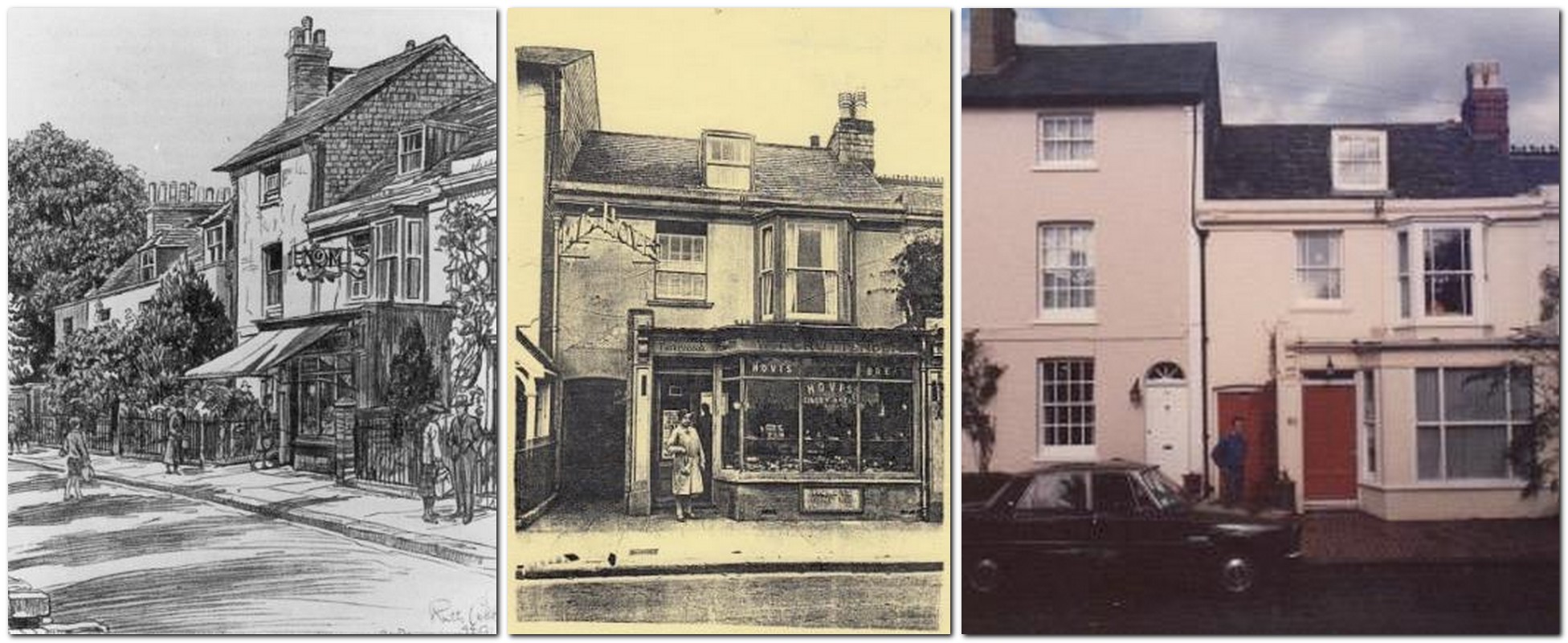
61 Southover High Street, Lewes, 3 images
61 Southover High Street – Left: drawing by Ruth Cobb c.1920, Centre: photo of Bakery shop and Miss Cruttenden c.1920, Right: Later 20th Century photo

Sources: Privately held auction particulars: title deeds for 1721-1955 are ESRO LIB/501912/92 and ACC 8577/26; Familysearch website.


  1. Malling Mill and the Mill House

Malling Mill and Mill House, Lewes, James Cheetham

This postcard, captioned in what looks like James Cheetham’s handwriting, was offered for sale on ebay in March 2021. It sold for £42. It shows the mill not long before it burnt down in 1908.


  1. Lewes Guardians advertisement for Medical Services

The 1 April 1851 edition of the Sussex Advertiser carried an advertisement from the Lewes Board of Guardians for the provision of medical services. They were seeking qualified doctors to provide medical and surgical relief for the poor residing in the several parishes, whether legally settled or not, including those in the Union workhouses, for the year ending Lady Day 1852.

The upper district comprised the parishes of St Ann’s, St Michael, St John under the Castle and Southover, and the workhouse in St Ann. The salary for this post was £73 10s 0d. The lower district comprised the parishes of All Saints, Cliffe and South Malling, and the two workhouses of All Saints and Cliffe. The salary for this post was £63.

Extra fees were payable for midwifery cases at half a guinea each; for successful vaccinations at 1s 6d each and remuneration for surgical operations on outdoor paupers in accordance with article 177 of the Poor Law Commissioners’ order. I note that at the date the advertisement was published the first week of the year that the appointments were to cover had already passed, and that a second week would have passed before an appointment could be made. 


John Kay

Contact details for Friends of the Lewes History Group promoting local historical events:

Sussex Archaeological Society
Lewes Priory Trust

Lewes Archaeological Group
Friends of Lewes

Lewes History Group Facebook, Twitter

Posted in Biographical Literature, Economic History, Education History, History of Medicine, Legal History, Lewes, Local History, Transport History | Comments Off on Lewes History Group: Bulletin 131, June 2021

Lewes History Group talk: Southover Church: 900 Years of Change – Monday 12 July 2021, 7:20 for 7:30pm start

A Zoom Webinar

Marcus Taylor: Southover Church: 900 Years of Change

All English parish churches have seen changes over time – great or small, enforced or consensual – but the evidence of them is often hard to see now.

Starting as a hospitium or guest house for Lewes Priory, it became a parish church to meet the needs of those who served the priory and lived nearby in the later 13th century. Marcus Taylor outlines the way in which the building has adapted and grown over the years and explains how these changes have mainly been in response to the needs and priorities of the time.

He also introduces some significant people in this process and relates some associated stories along the way: a dramatic unearthing of ancient bodies and a Victorian riot – in sleepy Southover? Surely not…

Southover Church, Lewes, by RH Nibbs, by Jeremy Long
Southover Church by RH Nibbs (left), by Jeremy Long (right)

To join this talk, you need to
  1) register your intention in advance
  2) receive our confirmation email with a link to the talk
  3) click on that link to attend the talk 10 minutes before it starts

LHG Members can attend our talks for free. We will send members emails with a link to Zoom registration. Then please follow steps 1, 2, and 3 as above. 

Non-members can buy a ticket (£4) from TicketSource. The ticket will provide a link to Zoom registration. Then please follow steps 1, 2, and 3 as above. 

Please join the webinar at 7:20pm.

We would recommend a computer screen or an iPad as a minimum screen-size for viewing our webinars.

Our presenters will be speaking live, and you can ask questions by typing in the Q&A box in Zoom.

See the Talks page for a list of  forthcoming monthly events organised by the Lewes History Group.


Posted in Uncategorized | Comments Off on Lewes History Group talk: Southover Church: 900 Years of Change – Monday 12 July 2021, 7:20 for 7:30pm start

Lewes History Group: Bulletin 130, May 2021

Please note: this Bulletin is being put on the website one month after publication. Alternatively you can receive the Bulletin by email as soon as it is published, by becoming a member of the Lewes History Group, and renewing your membership annually.

  1. Next Meeting: 10 May 2021, John Kay, ‘Listed Buildings of Lewes’
  2. Lewes Priory Trust Symposia, May 2021
  3. Images of Lewes Priory
  4. Winter Coach Service in 1784
  5. Castle Place for Sale
  6. The Lewes Gas Question
  7. John George Blencowe, M.P. for Lewes 1860-1865
  8. Lewes Photographer Alfred Edward Strong
  9. Parsons Family Portraits
  10. The Downs viewed from Lewes Railway Station
  11. View from the Castle (by Mike Brough)
  12. Thank you to LHG members


  1. Next Meeting                       7.30 p.m.                              Monday 10 May           John Kay                               Listed Buildings of Lewes

Lewes is unusually well represented on the Historic England list of English buildings of special architectural or historical importance. This is perhaps not altogether surprising, as the man behind the whole movement, which began soon after the end of World War II, was a Lewes resident. I shall be covering the principles behind such listing, how the system works in practice and the consequences if your own home is listed and also showing some examples of local buildings that are, and are not, protected in this way.

This meeting will again be a Zoom webinar, and to attend you must register in advance. You will then be able to join the meeting from 7.20 pm. LHG members will be sent a link to register directly: non-members will need to purchase registration via https://www.ticketsource.co.uk/lhg.

As England seems to be slowly emerging from lockdown, your committee has been discussing how and when we might best resume our normal Monday evening meetings. An obvious problem is that Lewes doesn’t really have a suitable space to accommodate the large audiences that we currently attract in a socially distanced way. For the time being we shall continue to run them in Zoom webinar format, most likely for the remainder of 2021. However, many of us do miss our normal human interactions with each other, and if the current improvements remain on track we shall also be looking for opportunities for some smaller scale physical events over the summer.


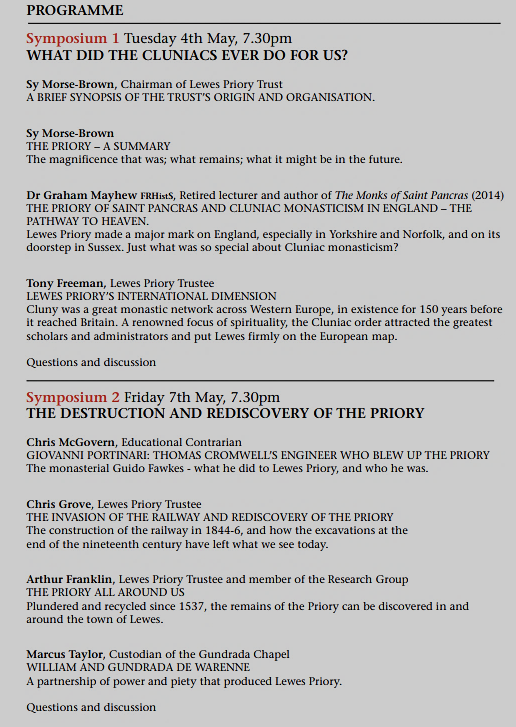
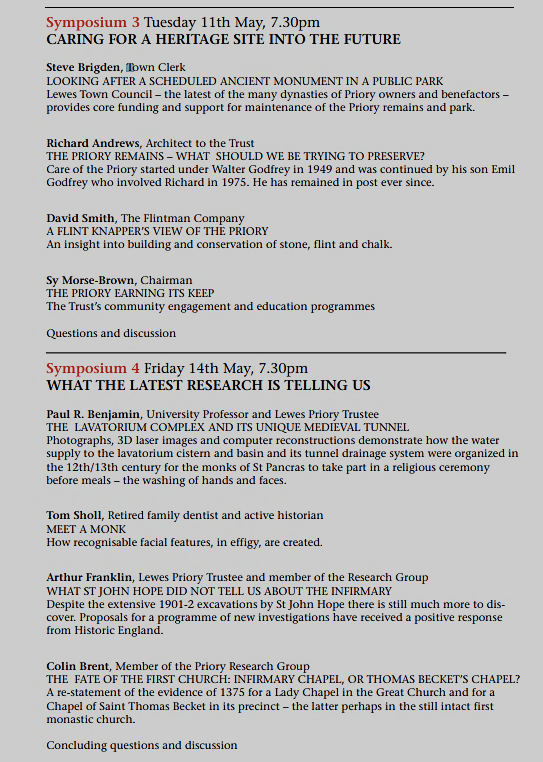
  1. Lewes Priory Trust Symposia, May 2021

This month the Priory Trust will be offering sixteen short talks, arranged into four evening symposia starting at 7.30 pm, all available online by Zoom, and all free of charge. Each will last for 90 minutes, including questions. To register email enquiries@lewespriory.org.uk

  1. Tuesday 4 May What did the Cluniacs ever do for us?
  2. Friday 7 May The destruction and rediscovery of the Priory
  3. Tuesday 11 May Caring for a Heritage Site into the future
  4. Friday 14 May What the latest research is telling us

On Saturday 15 May there will be a guided tour of the Priory ruins. 

Lewes Priory Trust Symposia programme 1

Lewes Priory Trust Symposia programme 2


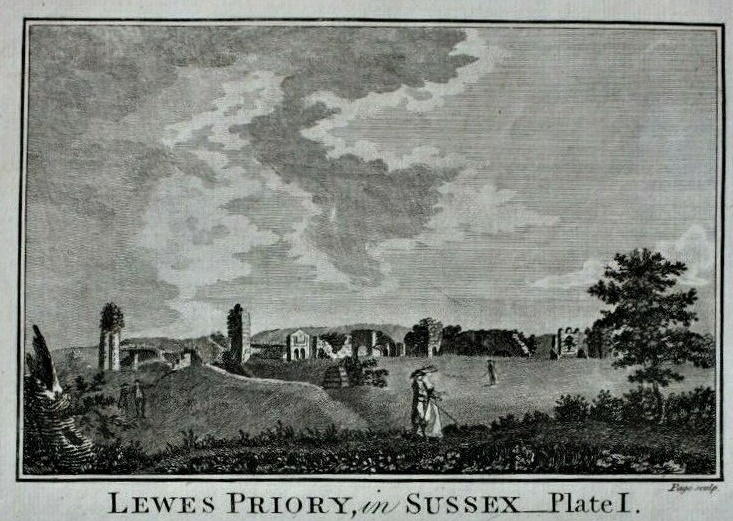
  1. Images of Lewes Priory

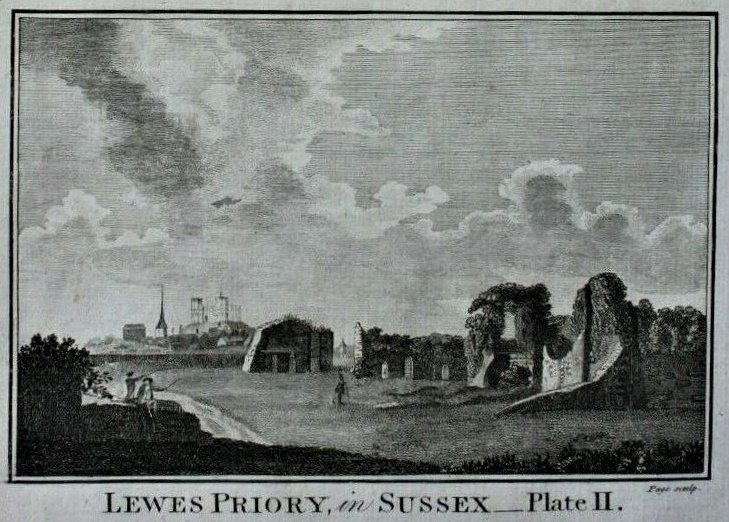
These two printed images of Lewes Priory below were included in Henry Boswell, ‘Historical Descriptions of New and Elegant Picturesque Views of The Antiquities of England and Wales’, published by Alexander Hogg of Paternoster Row, London, in 1786. This ambitious volume included a complete set of county maps, so travellers could find their way to the various attractions.

Lewes Priory Plate I, Boswell 1786

Lewes Priory Plate II, Boswell 1786

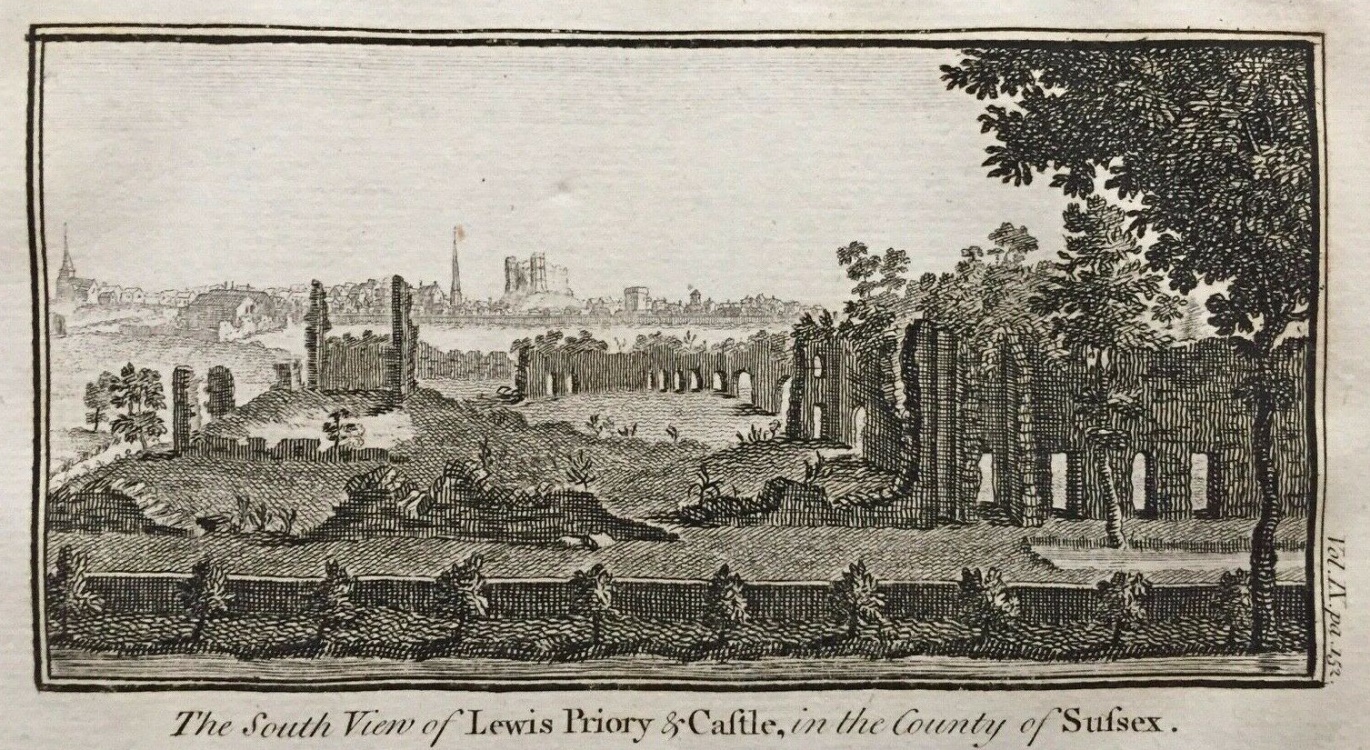
The image below shows an earlier image of the remains of Lewes Priory as viewed from the south, published in Francis Newbury & Thomas Carnan, ‘A Description of England and Wales’, vol.9 (1769).

Lewes priory in Newbury 1769

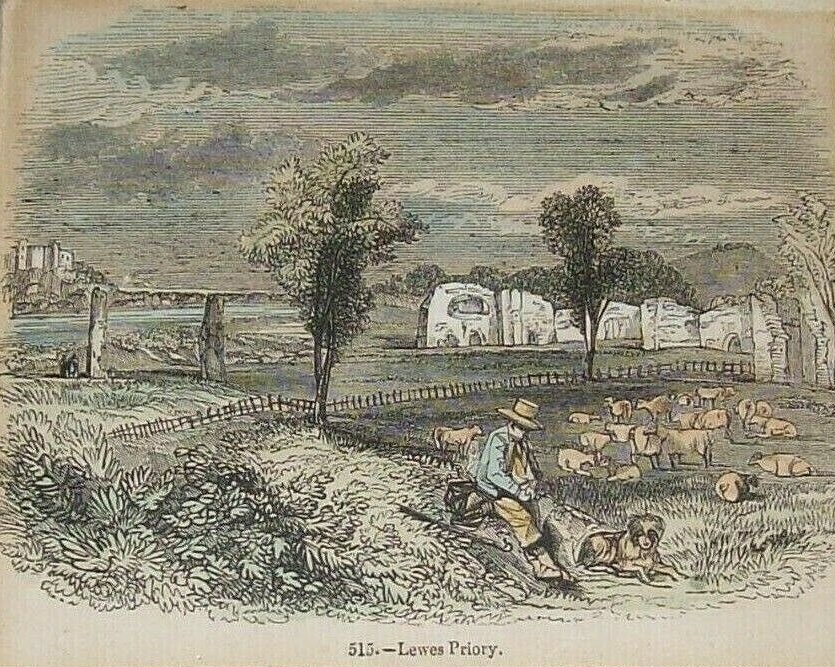
The 1845 print below was made by an unknown artist at about the time the Lewes-Brighton railway was driven through the site.

Lewes Priory 1845 print

Sources: All the prints above were being offered for sale on ebay in January 2021


  1. Winter Coach Service in 1784

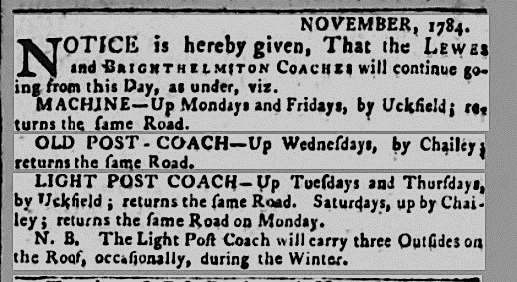
The advertisement below in the 29 November 1784 Sussex Advertiser shows that the Lewes and Brighthelmston Coaches were then offering a daily service from Brighton via Lewes to London that ran, by one vehicle and route or another, every day of the week except Sunday.

Lewes and Brighthelmston Coaches services, 1784


  1. Castle Place for Sale

The 19 May 1834 Sussex Advertiser noted an important sale on the following Thursday:

 “A most desirable modern FREEHOLD PROPERTY the late Residence of Mr G. MANTELL. Also a 2-stall Stable, Chaise-House, Loft, Granary, Yard, etc, nearly contiguous to the same.”

The sale was to be conducted at the White Hart by the auctioneer and house agent Thomas Mantell of 2 Waterloo Place, with the house and the stable as two separate lots.

The house at 166 High Street was described as an elegant mansion in the best part of the High Street, with a front of great architectural beauty and a frontage of 32 feet. In the basement were two elegant kitchens, with wine, beer and coal cellars and a dairy. On the ground floor was an entrance hall and four well finished parlours. On the first floor was a spacious parlour, a dining room and two best sleeping rooms. Above were four attic rooms, a dressing room and a garret. Out offices were well managed, the whole was fitted up with closets and cupboards and there were two pumps of excellent water. The stable and chaise house were across the High Street in Bull Lane.

The sale took place a few months after Gideon Mantell had moved his family and his practice to Brighton in December 1833. It was however unsuccessful – Mantell notes in his diary on 24 May1834: “Castle Place was put up for sale by auction on Thursday, but not one bidder appeared. What I am to do I know not!” Subsequent diary entries show that he retained ownership for another dozen years. The rapid growth of Lewes in the early 19th century came to a sudden halt in the middle of the century, and as Mantell noted on an 1847 visit to Lewes: “In the afternoon went to Lewes: looked over my house at Castle Place. The town looked more deserted than ever”. In September 1847 he finally managed to sell Castle Place for £950 – several hundred pounds less than he had paid in 1816 & 1819 for the two houses from which he had converted it.

Sources: 19 May 1834 Sussex Advertiser; E. Cecil Curwen (ed),’The Journal of Gideon Mantell’ (1940); Colin Brent, ‘Lewes House Histories’.


  1. The Lewes Gas Question

When the Lewes Gas Company was formed it avoided the considerable expense of a private Act of Parliament by reaching an agreement with the Lewes Town Commissioners to supply gas to all the new town streetlights at a very modest price, on the condition that they were allowed to dig up the town streets to lay the necessary gas mains without opposition. In 1850, almost thirty years later, this arrangement remained in place. The town commissioners were still paying only 4s 0d per “1,000 feet” of gas. Initially private consumers had been charged as much as 15s 0d for the same amount, but over time economies of scale and paying down the initial investment led to increasing profits. By the 1840s comfortable dividends were paid to shareholders, while the price paid by private consumers had fallen, little by little, to 8s 4d. In 1850 the directors proposed a further reduction in this price, down to 7s 6d.

This offer was not received by many of their customers in the way that the directors of the company had hoped. A vigorous campaign was mounted, apparently led by George P. Bacon, proprietor of the Sussex Advertiser, for a much larger cut in the gas price, and for the public and private supply prices to be equalised. Their case was that the gas that was supplied so cheaply to the Commissioners, who could afford to pay a market rate, had to be subsidised by unfairly high prices paid by the private customers. This in turn led to far too few households adopting the new fuel, so that the Company had fewer than 400 customers in a town with a population of almost 10,000. Those customers who did use gas restricted their use because of the high cost, to the disadvantage of the town’s trade. The campaigners mounted a large petition targeted at both the directors and the Town Commissioners. Its signatories were mainly customers, but also included potential customers put off by the high price and even some gas company shareholders. The petitioners suggested that they could themselves take over the running of the Lewes Gas Company, expanding production and aiming to supply all their customers at what they considered a fair price of 6s 0d.

The Town Commissioners, while not necessarily unsympathetic, did not feel it was for them to go cap in hand to the directors and demand that the price they paid should be increased. That, they thought, was a matter in which the company should take the initiative. The directors were also not overwhelmed by the argument, but agreed to meet representatives of the commissioners. Gas might be supplied to the Commissioners on an annual contract, but these were of course the days in which a gentleman’s word was his bond, and some of the gas company directors who had struck the original bargain were still in place. Notable amongst them was the Quaker businessman Burwood Godlee, a member of a group who considered honouring any obligations into which they had entered as part of their duty to God, as well as to man. Also on the board was another Quaker, the retired brewer John Rickman, a man of notorious punctiliousness in honouring the letter of any agreement he made, and requiring the other party to do the same. The other directors were draper Henry Browne (of Browne & Crosskey), Cliffe grocer William Farnes, surveyor William Figg, grocer Benjamin Flint, Cliffe tea dealer Gabriel Grover and Cliffe ironfounder Ebenezer Morris.

A meeting was held in the Mechanics Institute at which the petitioners were represented by brewer Edward Beard (chairman of the Gas Consumers Committee and a gas company shareholder), W.E. Baxter (printer and publisher of the Sussex Express), W.R. Lower, E. Neale, J. Smith and, as their secretary, George P. Bacon. Another brewer, Edward Monk, was unable to attend. Views were exchanged, and it appeared the directors were at least prepared to consider conveying the business to their more entrepreneurial townsfolk, if the right conditions were offered. Three years later it appeared that the directors had largely adopted the policies advocated by the petitioners. The price of gas was to be reduced from 6s 8d to 5s 10d, and the terms of the contract with the Town Commissioners were to be reviewed. By now the new Lewes Prison had been built, and that had negotiated its own contract for gas, at a price of 5s 0d. The same board of directors continued to manage the company. Burwood Godlee, the moving spirit behind the foundation of the Lewes Gas Company in 1822, when he was not yet of age, remained chairman of the board until his death in 1882.                      Source 2 April 1850 & 8 Mar 1853 Sussex Advertiser


  1. John George Blencowe, M.P. for Lewes 1860-1865

After Lewes MP Henry Fitzroy died in office in December 1859, the Liberal John George Blencowe (1817-1900) was chosen as his replacement and returned unopposed. He served alongside another Liberal, Henry Brand, who later went on to be chosen as Speaker of the House. Blencowe however chose to stand down in 1865, making way for the young Lord Pelham, eldest son of the 3rd Earl of Chichester.

John George Blencowe was the only son of Robert Willis Blencowe (1791-1874) one of the leading magistrates on the Lewes bench, a Deputy Lieutenant of the county and an enthusiastic antiquarian who was a very active member of the young Sussex Archaeological Society. He had been born in the Midlands but came to live in Chailey after his marriage to Charlotte Elizabeth Poole (1791-1867), daughter and co-heiress of Sir Henry Poole, 5th baronet, who owned a mansion called the Hooke there. The Pooles were originally from Cheshire, but long established in the Lewes area. The 2nd baronet, Sir Francis Poole had married a Pelham, a cousin of the Duke of Newcastle, and served as MP for Lewes in the Whig interest for 20 years up to his death in 1763. His two sons, both also enthusiastic Whigs, became the 3rd and 4th baronets, the latter the horseracing enthusiast Sir Ferdinando Poole of the Friars. When Sir Ferdinando Poole died in 1804 the title devolved to a distant relative Sir Henry Poole, a clergyman, the 5th and final Poole baronet, whose mother was also a member of the Pelham family, a sister of the 2nd baronet’s wife. The surname Blencowe might be a novel one in Lewes, but the family was very well connected into the key political family that managed the Lewes seats.

In 1857, three years before his election and at the age of 40, John George Blencowe had married Frances Campion. She was the daughter of William John Campion (1804-1869), another magistrate and Deputy Lieutenant, who had two years previously inherited the Elizabethan mansion of Danny, in Hurstpierpoint,. Frances Campion was more than a decade her husband’s junior and brought with her a substantial dowry. She also brought further connections to the local Whig political elite. Her mother was Harriet Kemp, daughter of Thomas Read Kemp (1782-1844), the developer after whom Kemp Town is named, who had been MP for Lewes 1811-1816, MP for Arundel 1823-1826 and then again MP for Lewes 1826-1837. Thomas Read Kemp’s father, also Thomas Kemp, had been MP for Lewes from 1780 to 1811, apart from a short gap between 1802 and 1806.

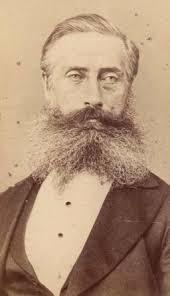
John George Blencowe, Lewes MPJohn George & Frances Blencowe had 3 sons and 5 daughters born in the first dozen years of their marriage. The two eldest children were born at Hurstpierpoint, the younger ones at Chailey. In the 1871 census the family were living at Hooke with the elderly widower Robert Willis Blencowe and supported by no fewer than 19 resident servants. John George Blencowe had a new house, Bineham, designed by the architect Decimus Burton, built on the Chailey estate, and by 1891 the couple were living there with their five daughters, the husband and children of a daughter who had married, and 17 servants.

John George Blencowe kept a diary for most of his life, starting from his time at Oxford, and they survive in The Keep. This was evidently a family tradition, as both his mother and his maternal grandfather Sir Henry Poole were also diarists. When John George Blencowe died at Bineham on 28 April 1900 he left a personal estate of £179,000.

Sources: 17 January 1860 Sussex Advertiser; Judy Brent, Sussex Archaeological Collections vol.114, pp.69-80 (1976); ESRO HOOK 21/8-9 & 22/9/29; FindMyPast website; photograph of John George Blencowe from Tommaso Valarani’s Geni webpage.


  1. Lewes Photographer Alfred Edward Strong

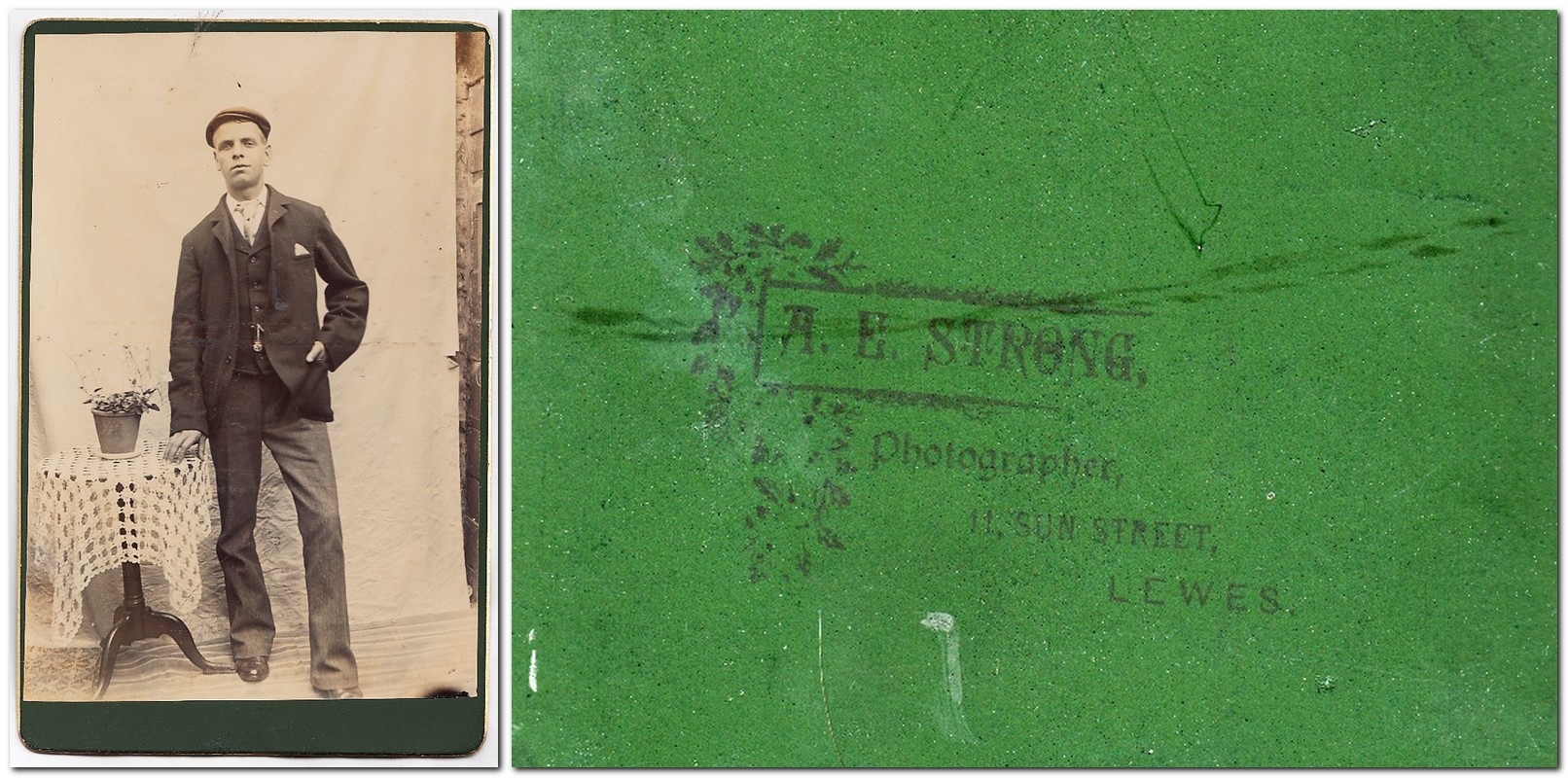
Photograph of young man, by A.E. Streng, Lewes, and reverse

This cabinet card photograph of a young man, stamped on the reverse “A.E. Strong, Photographer, 11 Sun Street, Lewes” was offered for sale on ebay recently by a French seller. It is now in David Simkin’s collection.

A.E. Strong was not a Lewes photographer previously listed on David Simkin’s Sussex Photohistory website.

Alfred Edward Strong’s birth was registered in the Lewes registration district in 1873, and his death was also registered here in 1949, with probate of his estate granted shortly afterwards to Florence Mary Strong. In the 1881 and 1891 censuses he can be found living in Sun Street with his parents and younger siblings, aged 8 and 18 respectively. His father was described as a slater in both censuses, and Alfred Edward Strong was also a slater in 1891. His father’s address is given as 16 Sun Street in 1881, and in 1891 the household lived close to the Fruiterers Arms. Sun Street houses were re-numbered in 1892 [see ‘The Sun Street Story’].

In early 1900 Alfred Edward Strong married Winifred Taylor, and in the 1901 census they were living at 26 Morris Road, Cliffe. Alfred was described as a house slater aged 28. He was still at 26 Morris Road in electoral registers for 1902-1904, but by 1907 he had returned to 13 Sun Street, with his father nearby at 11 Sun Street. By 1911 he had moved to 31 Vale Road, Tunbridge Wells, and his occupation was given as confectioner and shopkeeper. This was a 5-roomed property, and accommodated husband and wife, their two daughters aged 9 and 3, Alfred’s widowed mother, a female servant in her early twenties and two young male lodgers. Unless all the five rooms in the house were bedrooms, the sleeping arrangements must have been complicated!

Too old for military service in the Great War, a 1915 electoral register finds him in Brighton at 86 Islingword Road. In 1920, in his late forties, he married for a second time to Elizabeth Mary Streete, a blouse maker his own age, and promptly moved to her address at 235 Queens Park Road, Brighton. Electoral registers show them both there 1921-1923, but only Alfred listed there 1923-1925. Then in 1925 he married for the third time, again in Brighton, to Florence Mary Evans, a lady 20 years his junior. Soon after his third marriage he returned to Lewes. The 1927 local directory finds him at 92 Malling Street. He was still there in the 1939 register, his occupation now given as a jobbing gardener, and his widow remained living at 92 Malling Street in the 1951 local directory.


  1. Parsons Family Portraits

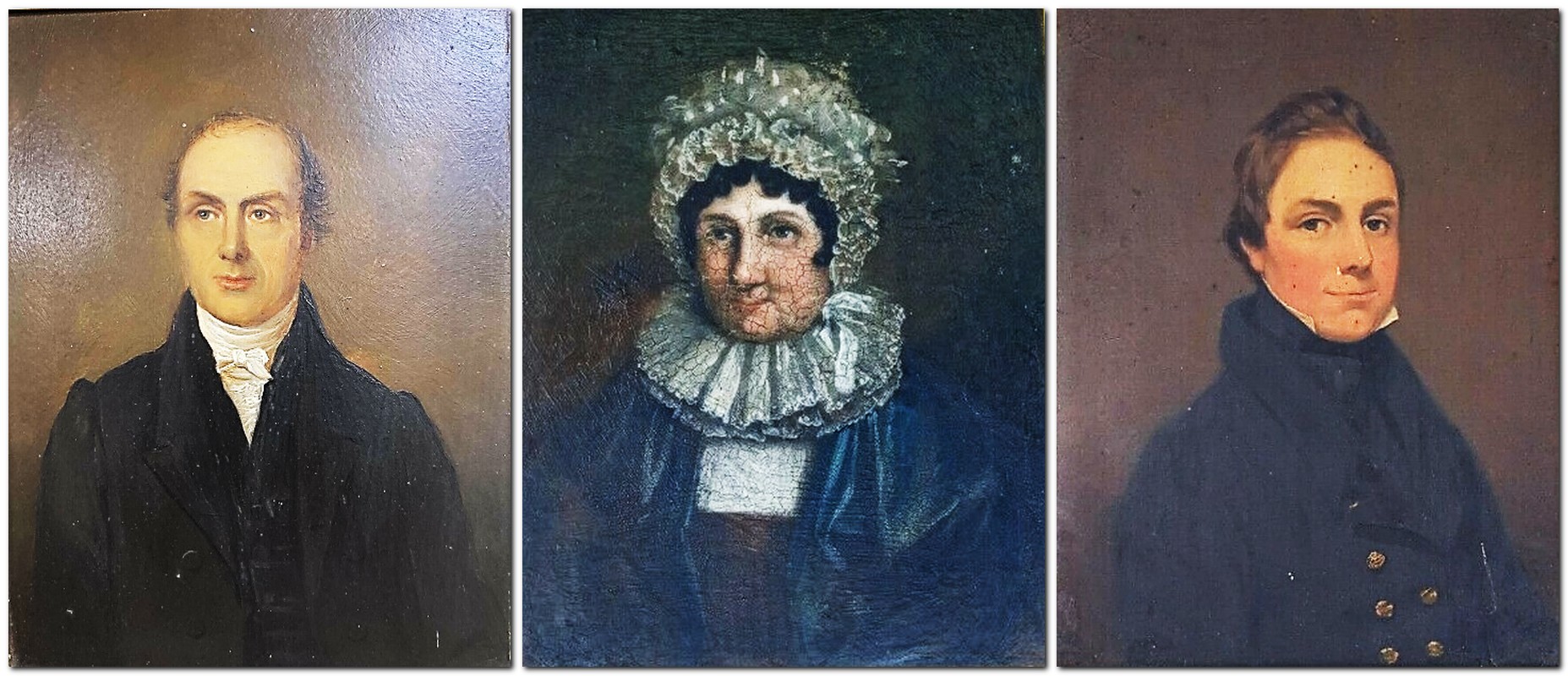
Three portraits in elaborate gilt frames of the Parsons family of Lewes were offered for sale on ebay recently. They were those of stone mason Latter Parsons (1773-1848), his wife Sarah Parsons (1771-1827) and their son John Latter Parsons (c.1806-1885). The husband and wife portraits are in matching frames. Father and son appear to have been painted by the same hand (Archibald Archer, also responsible for the grand portrait on view in the Town Hall of the 1830 Royal Visit to the Friars), while the portrait of the wife, who died three years earlier, differs in style. Following the ebay auction, and with some modest LHG assistance, the portraits will be returning, together, to The Keep.

Latter, Sarah, and John Latter Parsons, portraits             Latter Parsons                              Sarah Parsons                    John Latter Parsons

Latter Parsons, son of Charles Parsons, was baptised at Southover in 1773. In 1794 he married Sarah Martin, and in the same year went into partnership with Edward May, who had taken over the long-established Morris family stone mason’s business based at Eastgate Wharf. After Edward May’s death in 1803 he was replaced by Latter Parsons’ younger brother Charles Parsons (1776-1828). Amongst Latter and Charles Parsons major projects was the rebuilding of County Hall (the present Law Courts) between 1808 and 1812. The business was later run by Latter Parsons sons’ and a nephew. The stone mason’s business was sold to C.F. Bridgman later in the 19th century, but the Parsons Brothers timber merchants’ business continued at Eastgate Wharf until sold to Wenban Smith in the 1970s. The very extensive family business records at The Keep are largely unexplored, while their stone monuments decorate most of the churchyards within the Lewes market area.

John Latter Parsons added architectural design to his business interests, and was also an enthusiastic antiquary. He is recorded as the architect for the Gundrada chapel at Southover church in 1847, for the Turkish Baths in Friars Walk in 1862 and for the School of Science and Art (later the Lewes Library) in Albion Street in 1872. He retired in the early 1870s to a new house, Paddock House, that he built on Prince Edwards Road, one of the first houses of the new Wallands Park estate. He was a founder member of the Sussex Archaeological Society in 1846, becoming a committee member from 1870 and a regular contributor to the Sussex Archaeological Collections, especially on the Wealden iron industry. He married a daughter of the timber merchant Thomas Berry, and had a large family. At his death his estate was valued at £23,000 (about £3M today). The Parsons family played a significant role in the public life of 19th century Lewes, and were leading members of Lewes Tabernacle, John Latter Parsons becoming a Tabernacle trustee in 1857. The complicated inter-marriages between the Parsons, Berry and Mannington families were featured in Bulletin no.80, while John Latter Parsons has featured half a dozen times in these Bulletins.

Sources: We are grateful to Michael Long for bringing to these portraits to our attention and pointing out that a label on the reverse of the John Latter Parsons portrait dates it to 1815-1831; John Latter Parsons obituary in Sussex Archaeological Collections vol.34 [in Secretary’s Report]; Deeds of Eastgate Wharf in ESRO HIL 6/28C/1-25; Business records in ESRO AMS 5836 & ESRO BRN; Church architects section of www.sussexparishchurches.org; Familysearch; Lewes Town Book, vol.3; British Newspaper Archive.


  1. The Downs viewed from Lewes Railway Station

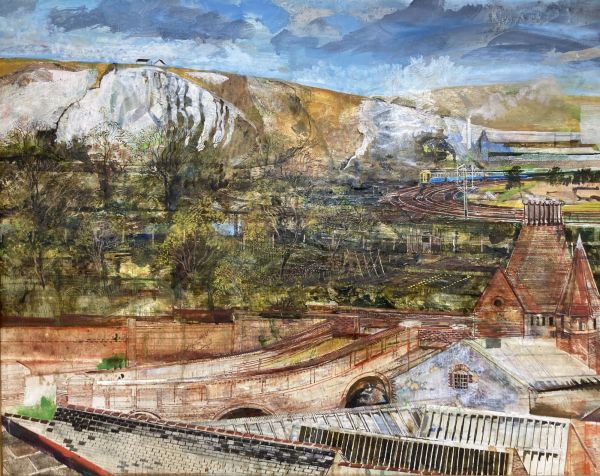
The mixed-media artwork shown below by Nicholas Johnson, with the title above, is offered as lot 611 in the forthcoming Gorringe’s weekly auction on Monday 10 May. Sized at 41 x 52 cm, it carries an estimated sale price of £40-£60.

The Downs viewed from Lewes Railway Station, by Nicholas Johnson
Click on image to go to auction site and enlarge

While undated and quite modern in appearance, it must have been created at a date when

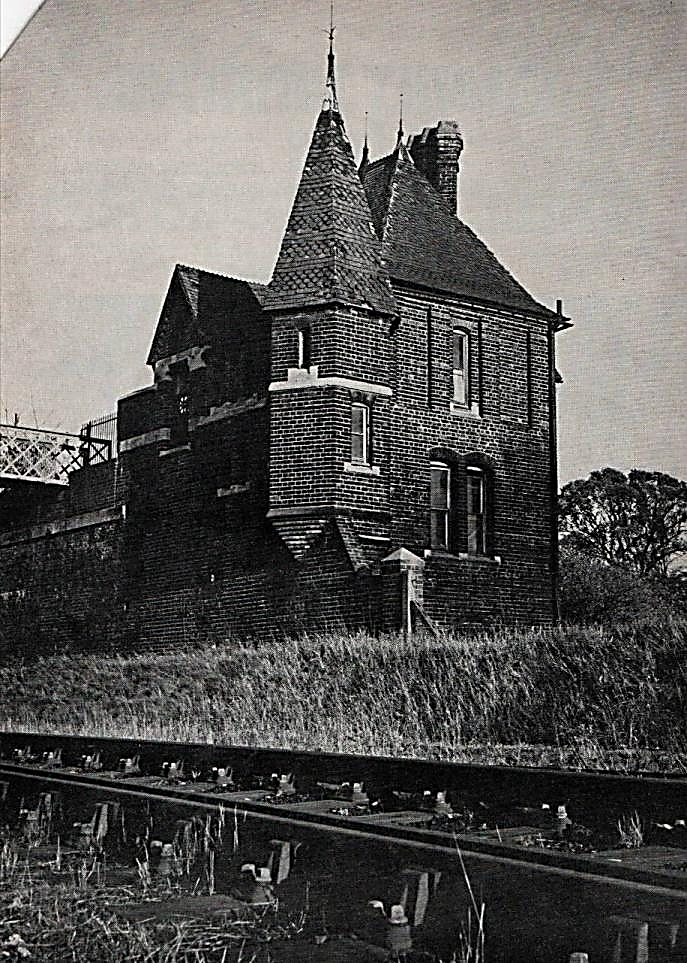
  • Leightside gatehouse, Lewes, 1970the railway line to Uckfield remained in place;
  • the cement works was still in operation;
  • the former garden of Leighside had been replaced by allotments; and
  • the entrance bridge from Friars Walk across the Uckfield line was guarded by its Victorian-Gothic gatehouse.

The photograph of the Leighside gatehouse shown to the right was provided by Rosemary Page and is taken from the January 1970 issue of Sussex Life.

Also offered as lot 27 of the same sale, with an estimated price of £120-£180, is a reproduction Regency style duet music stand and a music canterbury (for storing sheet music) by the Lewes firm of Restall Brown and Clennell.


  1. View from the Castle    (by Mike Brough)

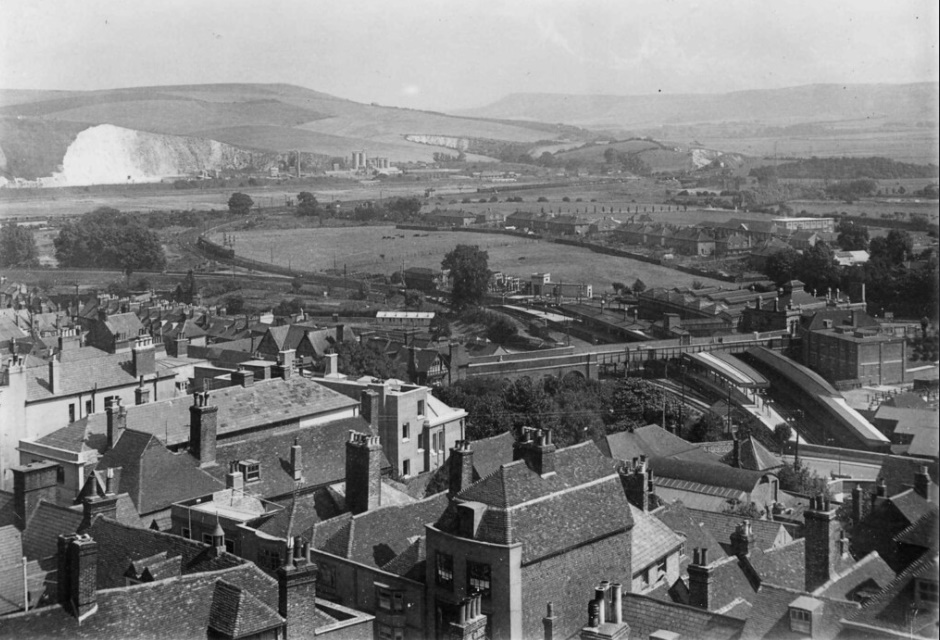
View from Lewes Castle, photograph by Frank Brough, 1930s

This photograph was taken in the second half of the 1930s by my father Frank Brough. Lewes railway station is featured with the line to Eastbourne and Hastings curving away into the distance. The Post Office sorting office is shown opposite the station entrance and houses and a school have appeared on Mountfield Road. The cement works can be seen near the chalk pits.


  1. Thank you to LHG members             (by Neil Merchant)

The Lewes History Group executive committee have asked me to record their thanks to the many LHG members who have made donations to our work, over and above the usual annual subscriptions. It is members’ generosity of this type that enables our group to contribute towards such objectives as helping with such projects as the acquisition of the Parsons family portraits.

We thank you too for your patience with us as we have tried to find ways of continuing as a meaningful group during the difficulties of the past year. As our monthly Bulletin is normally circulated by email, that was one activity that could continue.

The replacement of our normal Monday evening meetings by Zoom webinars has proved more successful than we could have hoped, with increases in attendances and membership numbers. At the same time, we recognise that not everyone who would like to has been able to these online events: like many other groups, we are considering the options open to us as we all adapt to our longer-term “new normal”.


John Kay

Contact details for Friends of the Lewes History Group promoting local historical events:

Sussex Archaeological Society
Lewes Priory Trust

Lewes Archaeological Group and go to ‘Lectures’
Friends of Lewes
Viva Lewes
The Arts Society: Uckfield & Lewes – meets 2nd Wed. Guests £7 per talk

Lewes History Group Facebook, Twitter


Posted in Art & Architectural History, Biographical Literature, Ecclesiastical History, Economic History, Family History, History of Religions, Lewes, Local History, Political History, Transport History, Urban Studies | Comments Off on Lewes History Group: Bulletin 130, May 2021