New Book: The Sun Street Story

Sun Street is in the conservation area of Lewes situated in the area known as the ‘New Town’ in the parish of St John sub Castro.

A team from the Lewes History Group began to research the history of Sun Street in 2013, and were inspired by those who attended their very successful exhibitions in 2014 and 2015 to produce a book which describes their very interesting findings, and which includes previously undocumented information about Sun Street.

Sun Street Book cover pageThe authors describe the origins of Sun Street and the construction of the houses, and also  unexpected findings such as the employee of Albion Russell and Co. (forerunner of Russell and Bromley) who had previously made boots in Sun Street. Other discoveries were that the Lewes Wanderers cycle club’s home was the Fruiterers Arms, and that in the 1950s the Salvation Army held Sunday meetings under a gas lamp in the street.

The book includes previously unpublished family photos of the current and former residents of the street, along with photos of the model of the 1960s proposed Relief Road, found on a high shelf at the East Sussex Record Office. The book also includes stories of unfortunate residents hauled before the local magistrates and of those serving King and Country.

This newly published book ‘The Sun Street Story‘ is available to purchase at the Lewes History Group’s monthly talks starting with the November meeting, price £8.50. Alternatively you can buy the book by printing this order form and sending it with your cheque to the address shown. (Sorry, now out of print, Sept. 2017)

The November 2016 Lewes History Group meeting featured “The darker shades of Sun Street” a dramatic presentation by Lewes Little Theatre, accompanied by Valmai Goodyear of Lewes Folk Club, created from the Sun St Street Story team’s work. This performance was recorded and is available at Rocket FM.

The December 2016 Love Lewes Podcast also features co-author Rosemary Page talking about The Sun Street Story, and the activities of the Lewes History Group.

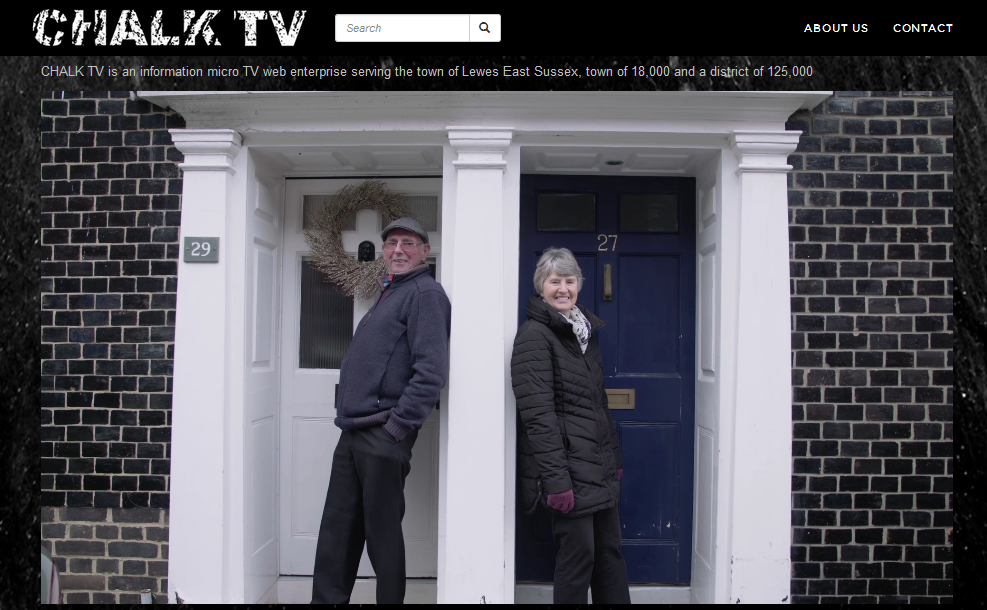
In addition, Rosemary Page and Brian Cheesmur were interviewed on location by Karen Dobres about the history of Sun Street: Chalk TV 10 January 2017
(The interview starts 3:44 minutes in)


Posted in Uncategorized | Comments Off on New Book: The Sun Street Story

Lewes History Group: Bulletin 77, December 2016

Please note: this Bulletin is being put on the website one month after publication. If you would like to receive the Bulletin by email as soon as it is published, please contact the Membership Secretary about joining the Lewes History Group, and to renew your membership at the start of the calendar year.

  1. Christmas Meeting:  12 December 2016: Ian Everest, ‘The Women’s Land Army
  2. Tesco Supermarket, Cliffe High Street
  3. The Sun Street Story (by Brian Cheesmur, Rosemary Page, Frances Stenlake & Susan Weeks)
  4. Flying Officer Claude Mervyn Wheatley (by Patty Harris)
  5. A Petition against Slavery
  6. The Premier Inn: Spot the Difference
  7. Brighton Main Line 2
  8. The Lewes Railway Coach
  9. A.G.M Reports (by Ian McClelland, Neil Merchant & Jane Lee)
  1. Christmas Meeting 7.00 p.m. for 7.30 p.m.          Monday 12 December      A.G.M.
    Ian Everest                                 The Women’s Land Army

Ian Everest grew up with tales from his mother who was one of 80,000 Land Girls during World War II. His talk includes some of her personal memories and a history of the role of women on Sussex farms around Lewes during the two world wars. This illustrated presentation shows what a debt our country owed to these “Cinderellas of the Soil”, with their vital contribution in feeding our country only gaining official recognition many years later after their disbanding in 1950.

As this is the Christmas meeting we shall be serving mulled wine and mince pies between 7.00 p.m. and 7.30 p.m. and there will be no entry charge for members.


  1. Tesco Supermarket, Cliffe High Street

tesco-supermarket-lewes-1960s

Image posted by Ian Freeston on the Lewes Past website

This photograph of the Tesco supermarket on Cliffe High Street, at the site now occupied by Bill’s, must have been taken in the 1960s. It looked like this when I first moved to the area, and I shopped there once. At the time I was used to shopping in American supermarkets, so it was just the once!


  1. The Sun Street Story (by Brian Cheesmur, Rosemary Page, Frances Stenlake & Susan Weeks)

Sun Street Book cover pageThe Lewes History Group was established in 2009 to promote an active interest in the history of Lewes and its surroundings. Members are encouraged to undertake research projects, and meet regularly to review progress and develop expertise. This book is the first LHG publication and is intended to be the first of a series about other streets in the town.

The co-authors came together as members of the LHG Street Stories project. Sue Weeks was living in neighbouring St John Street and had previously researched its history. Rosemary Page’s parents had lived briefly at the Old Police Station. Brian Cheesmur had 60 years experience with his building firm and had many older houses in Lewes and Frances Stenlake is a Sun Street resident who enjoys the close community spirit that still exists there today.

The Sun Street team started their research in 2013. One of the first aims was to egage with local residents, so that research reflected their interests and knowledge. As a result many Sun Street families, past and present, became enthusiastic contributors, sharing their memories, documents and photographs.

You may have heard a small part of the story of Sun Street, excellently presented in a dramatic format at our November meeting. Copies of ‘The Sun Street Story’ are available at £8.50p via our website or at our December meeting.


  1. Flying Officer Claude Mervyn Wheatley                                             (by Patty Harris)

By chance I saw online the item in Bulletin no.58 about Flying Officer Claude Mervyn Wheatley, the Spitfire pilot killed in action on 22 March 1940 who was the son of the proprietor of Browne & Crosskey’s Stores in Lewes, and I realised that F/O Wheatley was related to my husband. I contacted the Dutch Historian Sander Woonings and after much organisation he kindly came to England and met all the branches of our family related to F/O Wheatley. On 24 September 2016 Sander presented to us a PowerPoint presentation about our relative. We are so grateful to Sander for making the effort to contact our family. It has been a very emotional weekend for many of the family relatives and we owe Sander a huge debt of gratitude. Thank you for publishing his message.


  1. A Petition against Slavery

The 30 January 1826 Sussex Advertiser included a petition against various aspects of slavery in the British Colonies signed by 79 householders of the borough of Lewes. The signatories included the non-conformist ministers of Westgate Chapel (Thomas W. Horsfield) and Tabernacle (Evan Jones), the Unitarian gentleman William Boys, Baptist attorney John Webb Woolgar, banker Thomas Whitfeld, surgeon Gideon Mantell, ironmonger Nehemiah Wimble of The Friars, printers William Lee and John Baxter, butcher Benjamin Morris, auctioneer Plumer Verrall, bookseller R. W. Lower, draper William Crosskey and shepherd-schoolmaster John Dudeney. Many of the signatories were non-conformist Liberals but Anglican Conservatives were also represented.


  1. The Premier Inn: Spot the Difference

I have heard a range of opinions expressed about the new Premier Inn building on Friars Walk. Some, not all, have been quite favourable. We can thank the Friends of Lewes, amongst others, for a design that is certainly a considerable improvement on the original proposal.

premier-inn-lewes-stretcher-bond-bricks
The Premier Inn, 2016

friars-walk-lewes-header-bond-bricks
Traditional Victorian grey brickwork with red window quoins in Friars Walk

A number of people have commented on the grey bricks used to clad the exterior of the upper floors. When I first saw an unsheathed panel of the new brickwork from a distance, approaching down Friars Walk, I thought the colour a good match. Then, as I got nearer, I realised that most of the new grey brickwork of the Premier Inn was in continuous stretcher bond (bricks laid with the long side outwards). It is a feature of the old grey brickwork that is so common in Lewes and neighbouring parts of Sussex that it is invariably laid in all-header bond, as shown above in the Victorian houses along Friars Walk (above). The grey colour was achieved by wood ash at a high firing temperature and was only found on the headers on the outer edges of the bricks stacked in the kiln. Are there any other examples in Lewes of grey bricks laid in continuous stretcher bond?

premier-inn-lewes-stretcher-bond-bricks-detail
Premier Inn detail: continuous stretcher bond on all the straight sections of wall, but the traditional pattern of continuous headers just on the curved section of walling facing towards Friars Walk.


  1. Brighton Main Line 2

A public meeting was called on 25 January 1866 to support the proposed new railway from London via East Grinstead and Lewes to Brighton. The Honourable Henry William Bouverie Brand of Glynde Place, Liberal MP for Lewes, moved that the meeting should record its warm approbation of the proposal and pledge itself to support the undertaking with every means in its power. This was carried unanimously.

William Langham Christie of Glyndebourne, at this date still an unsuccessful Conservative candidate to represent Lewes, expressed the view that the immense amount of direct traffic between London and Brighton demanded a second railway in the hands of independent companies. Local businessmen Edward Monk and Ebenezer Morris said that the new railway would relieve Lewes trade from the serious delays in the transit of goods and lack of capacity caused by the existing monopoly railway company, who controlled both the main London-Brighton line and the line via Uckfield. It was unanimously agreed to ask the MPs for the borough and East Sussex to do all they could to ensure the new proposal was accepted.

Source: the Lewes Town Book


  1. The Lewes Railway Coach

An advertisement by George Leney in the 28 June 1842 Sussex Advertiser announced that, in compliance with the requests of several inhabitants in Lewes, a coach to Brighton would now leave his Lewes office every morning at half past seven in time to catch the 9 o’clock train to London. There would be a return coach every evening leaving Brighton at half past eight, on the arrival of the 6 o’clock London train.

At this date the railway from London had reached Brighton, but it was to be another four years before it reached Lewes. This service brought London within the reach of a day trip for Lewes residents, though it would be quite a long day. The advertisement shows that at this date George Leney ran six return coach trips each weekday between Lewes and Brighton.


  1. A.G.M. Reports        (by Ian McClelland, Chairperson)

This report covers the fourth year of the Lewes History Group (LHG) as a ‘formal’ group. As noted in last year’s report we set out two important aims for the Group which remain the focus for the LHG:

  • To make the history of Lewes accessible to the general public,
  • To promote projects that engage local people in the development and dissemination of knowledge about the history of Lewes.

Membership report (by Neil Merchant)

LHG membership now stands at 241, with a further 260 people (plus our 8 ‘Friends’) on our monthly email circulation list. Membership renewals for 2017 have started and will be available at our next three evening meetings, or by post.

Meetings

The programme of monthly meetings covered a wide variety of topics and, in general, were well attended and very well received by our audiences. There was an average attendance of 147 per meeting during 2016 up to October. Our meetings included the best ever attendance to date of 201 for Brigitte Lardinois’s talk in October on Stories seen through a glass plate 1916: Lewes remembers life during WW1’.

A small but important part of the Group’s work is the Research Meetings programme. The purpose of these meetings is to enhance the expertise of LHG members who want to undertake investigations. One particular initiative that proved to be very successful in 2015 was the course on Interpreting Wills and Deeds run by Christopher Whittick of the Keep. This was extended into 2016. In addition we have held regular quarterly meetings for the Street Stories project.

Bulletin (by John Kay)

We have continued to publish monthly editions of the Lewes History Bulletin, and passed the milestone of Bulletin no.75 in October. Barbara Merchant’s magic means that when you make relevant google searches the relevant Bulletin articles generally pop up high on the list, but I maintain for my own use an electronic index of the Lewes people, places and topics mentioned, and if anyone would like a copy of the index for the first 75 Bulletins I would be happy to email it to you.

Projects

The EC wants to do more to encourage the active involvement of members in research projects.  Clearly not every member needs to be active but the EC wants to see a broader portfolio of projects than just the Street Stories evolve over the coming years.

In addition to the Street Stories project the group has now the REEL project which started earlier this year. This project aims to document the history of cinema in Lewes through text, image and film.  The project aims to exhibit the results as part of the launch of the Depot cinema in May 2017.

The most important research initiative remains the continued development of the Street Stories project. We have several active groups and a programme of quarterly meetings to review progress and provide mutual support.

Last year several LHG members, working in the Pells area of the town, exhibited some of their work as part of the Heritage Open Day (HOD) 2015 at St John-sub-Castro.  This exhibition was very successful and as a result the HOD organisers invited us to contribute to the 2016 event. Two Teams, South Street and Grange Road took up the challenge and showed some of their work in the Yarrow Room of the Town Hall.  This exhibition was very successful and again showed how many people are fascinated by the history of their own immediate surroundings. Our thanks go to Heather Downie (South Street) and Bridget Millmore (Grange Road) and their supporters for all their efforts in putting together a great HOD 2016 exhibition.

The most notable achievement to date has been the publication of the ‘The Sun Street Story’ in November, the first publication by the LHG. This was co-authored by Brian Cheesmur, Rosemary Page, Frances Stenlake and Sue Weeks. Our thanks go to the co-authors for all the hard work they have put into the project and the book itself. We wait to see how successful the book will be and to what extent other Street Stories Teams will be motivated to follow suit.  It is certainly our intention that the book is the first of a series.

Treasurer’s report (by Ron Gordon)

Lewes History Group income for the year 1 Dec 2015 to 30 Nov 2016 was £5,371.28 and expenditure for the same period was £3,621.53.  Both income and expenditure increased compared to the previous year.  Expenditure for publications, mainly the Sun Street book, is shown as a separate category for 2015/16, but no receipts from book sales are as yet included.

The end of year balance £7,491.19 continues to show a useful surplus which provides a good base for the group to extend its activities in research projects, and further publications.  It is proposed to retain the same entrance fees and membership subscription for the next year.

Lewes History Group
Summary of Income and Expenditure 2015/2016
Income 2015/16 2014/15 Expenditure 2015/16 2014/15
£ £ £ £
Membership Subscriptions 1,637.00 1,653.50 Main Meeting Room Hire 770.00 630.00
Entrance Fees 3,683.00 2,589.30 Speakers’ Fees 420.00 435.00
Bank Interest 1.28 3.64 Meeting Refreshments 221.00 148.82
Research Projects 0.00 160.00 Research Projects Expenses 237.38 136.40
Uncashed cheque 2014/15 50.00 0.00 Research Projects Speakers and Hire 487.50 1,034.00
Sun Street book sales 0.00 Publications 913.00 0.00
Publicity and leaflets 276.20 21.70
0.00 0.00 Administration expenses 296.45 162.94
Total income for the year 5,371.28 4,405.68 Total expenditure for the year 3,621.53 2,568.86
Surplus of Income over Expenditure 1,749.75 1,836.82
Balance at end of year 7,491.19 5,741.44


Communications report (by Jane Lee)

What was achieved in 2016?

Our regular marketing activities continue to build awareness of the Group and to attract large numbers of members and visitors to the monthly talks. We hit a record with 201 attending Brigitte Lardinois’ talk in October on the lightbox exhibition.

Our marketing activities were maintained at similar levels during the year and numbers have grown for both joining and attending. The Sussex Express and Viva Lewes are still the prime ways of reaching non-members.

LHG promotional activities in 2016 included:

  • Taking a stand at the Societies Fair in Sept.
  • The Street Stories teams for South St & Grange Rd put on an exhibition jointly for Heritage Open Days on 10-11 Sept, showing their research into the history of their areas. 323 visitors attended and there were a lot of complements on the content.
  • Article by John Kay in Lewes News in May on Lewes Spitfire pilot Claude Wheatley.
  • Article by Ann Holmes in Nevill Junior Bonfire Programme on the history of the Nevill.
  • New publicity partnerships established with Uckfield & Lewes DFAS & Bridge Cottage Heritage Centre, Uckfield.
  • Talks featured in:
    • Sussex Express
    • Viva Lewes magazine
    • Lewes News
    • Online what’s on pages: Lewes.co.uk, Freegle, LoveLewes.com & LDC
    • Newsletters & websites of associates e.g. Friends of Lewes, Priory Trust, Sussex Archaeological Society, Lewes Archaeology Group
    • Posters in Tourist Office, Library, Barbican, Bridge Cottage, U&LDFAS. Also the windows of members in South St, Keere St, Little East St, Friars Walk & the Pells. New locations for posters/leaflets found at Ringmer village hall, Nevill noticeboards & retirement homes
    • Leaflets placed in locations around town and at The Keep
    • Posting on our Twitter & Facebook accounts
    • LHG website, event emailings & bulletin
  • Using our social media accounts to promote our own and other local history events. We now have 489 (was 373 in 2015) following @LewesHistory on Twitter & 405 on Facebook facebook.com/LewesHistoryGroup (was 286 in 2015) as at 4/11/15.
  • No reprint required of the group’s leaflet as stocks are adequate.

LHG website and social media in 2016 (by Barbara Merchant)

Usage of our website continues to grow but the figures are plateauing. An increasing number of people have signed on this year to receive the website’s news and event announcements by email, and our Facebook and Twitter pages have been very successful in magnifying the reach of these announcements, and bringing us to a new audience.

We also compile lists of resources for researching the history of Lewes, and these web pages and those on Reeves events topped the popularity list in 2016.

LHGEC

The focus of the LHGEC work in 2016 shifted towards encouraging the development of research activities. The LHGEC continues, unfortunately, to operate without a Secretary. We hope that a suitable candidate comes forward in 2017 to fill this position. Both Ron Gordon as Treasurer and myself as Chairperson are happy to continue in post for 2017.

Thanks

I would also like to take this opportunity, on behalf of all LHG members, to record thanks to the following for their valuable contributions to the work of the LHG during 2016:

  • To your Executive Committee for all their hard work
    • Ron Gordon, Ann Holmes, John Kay, Jane Lee, Barbara Merchant and Neil Merchant.
  • To all our speakers
  • Our public meetings
  • Our Research meetings.
  • To all the people who have helped to run the Public Meetings.
    • Tessa Bain; preparation and mounting the LHG display,
    • Peter Holmes and others; preparation of the meeting room
    • Anna Kay & Jan Osborne; refreshments,
    • Dee O’Connell; admissions desk
    • Dee O’Connell, Janet Kennedy, Peter Earl & Carol Todd; displaying our meeting posters,
    • and everyone else who has helped out over the last year.

My apologies to anyone in particular I may have unwittingly omitted.

  • To Lloyd Raworth for designing the LHG leaflet, our Heritage Open Day posters and the Sun Street book.
  • To Mike Stepney for auditing our accounts.
  • And most importantly, to yourselves for your continued support; the members, the attendees at our meetings and the many on our list of friends.


John Kay

Contact details for Friends of the Lewes History Group promoting local historical events

Sussex Archaeological Society
Lewes Priory Trust

Lewes Archaeological Group and go to ‘Lectures’
Friends of Lewes
Viva Lewes
Uckfield & Lewes Decorative & Fine Arts Society – meets 2nd Wed. Guests £7 per talk

Facebook: https://www.facebook.com/LewesHistoryGroup
Twitter: https://twitter.com/LewesHistory


Posted in Art & Architectural History, Lewes, Local History, Social History, Transport History | Comments Off on Lewes History Group: Bulletin 77, December 2016

Lewes History Group: Bulletin 76, November 2016

Please note: this Bulletin is being put on the website one month after publication. If you would like to receive the Bulletin by email as soon as it is published, please contact the Membership Secretary about joining the Lewes History Group, and to renew your membership at the start of the calendar year.

  1. Next Meeting: 14 November 2016: Joyce Fisher & Co ‘The Darker Shades of Sun Street
  2. Southdown sheep on Landport Lane
  3. The Pelham Arms by John Elvin, 1949
  4. Calling an Election
  5. A Biography of Wynne Edwin Baxter
  6.  A Fund Raiser at the Theatre
  7.  The Victorian Turkish Baths in Friars Walk
  8.  The Tabernacle Sunday School in June 1877


  1. Next Meeting 7.30 p.m.                               Monday 14 November
    Joyce Fisher & Co      The Darker Shades of Sun Street

When the LHG Sun Street research team got going in 2014, Frances Stenlake started looking through newspapers from the 1820s, when the Sun Street community began to develop, to see how the street featured in local news during the 19th century. She commented: “It was very exciting to discover how frequently its residents were involved, as victims or perpetrators, in various unlawful activities. These ranged from petty crime, harshly punished, to shocking scandal in which the villain went completely scot-free.”Several of the press reports suggested play scripts, and Sun Street researchers transformed themselves into ‘Sun Street Players’ to perform one of the stories, Stealing Turnip Greens, at the Dec 2014 LHG meeting. This went down so well that the next step was to go round the corner to the Little Theatre to see whether its experienced thespians would be interested in presenting more of the stories. They certainly were, and Joyce Fisher is now directing a reading of The Darker Shades of Sun Street, taking part herself with Jennifer Henley, Miles Jenner and Mike Piller. Appropriate musical accompaniment will be provided by Valmai Goodyear of Lewes Folk Club.As usual the meeting will be at the King’s Church building, Brooks Road, and all will be welcome. We shall be serving coffee and biscuits prior to the meeting.


  1. Southdown sheep on Landport Lane

southdown-sheep-on-landport-lane-cheetham-postcard

Two different copies of this James Cheetham postcard featuring the Landport Farm Southdown flock and their lambs making their way up from the farmstead to the Downs have been offered for sale on ebay this autumn.

Taken little over a century ago, this is now very atmospheric. Shepherds and sheep figure prominently in Cheetham’s work.

I rather doubt they would make it across the Offham Road today.


  1. The Pelham Arms by John Elvin, 1949

pelham-arms-lewes-elvin-1949-painting

This image of a well-executed painting of the Pelham Arms, signed by ‘Elvin’ and dated 1949, was posted recently on the Lewes Past Facebook page by Steve George. This artist was also in Lewes in 1944, when he painted an image showing the wartime rations that were to last two people for a week. This painting also showed his ration card, made out for John R. Elvin, 40 The Avenue, Lewes. A 1951 local directory lists John R. Elvin at 40 The Avenue, Lewes. Do any memories of him survive?


  1. Calling an Election

On Thursday 24 June 1841 the two Lewes constables received formal notice from the Sheriff of the county that they should elect two new burgesses to represent the borough in the new Parliament. The precept was read at County Hall by the town clerk, after which a proclamation of the election date of Monday 28 June was made by the town crier. They then went in procession through the borough, the Cliffe, South Malling and Southover, preceded by the Town Band.

The town crier then repeated his proclamation of the election date at all the following locations:

  • At the top of School Hill, opposite the Crown Inn
  • At the bottom of School Hill, opposite Mr Hoper’s
  • On the centre of Lewes bridge
  • At Cliffe Corner
  • Opposite the Old Ship Inn in South Street
  • Opposite the Wheatsheaf Inn [Malling Street]
  • Opposite Southover church
  • Near Mr William Verrall’s brewery in Southover Street
  • At St Ann’s church
  • At the Castle gateway (instead of at St Michael’s, where a Visitation was being held)
  • Near the Elephant and Castle on White Hill
  • At the top of East Street, near the Stag Inn

Source: the Lewes Town Book


  1. A Biography of Wynne Edwin Baxter

In Lewes Wynne Edwin Baxter (1844-1920) is perhaps best known as the last high constable of the old Lewes borough and in 1881 the first mayor of the new Borough of Lewes, in whose creation he was a prime mover. His portrait in his robes of office hangs in the town hall, and is reproduced in Bulletin no.19. His grandfather John Baxter (1781-1858) was the founder of the Lewes printers and publishers at 35 High Street. His father William Edwin Baxter (1808-1873) joined the family business and in 1837 became the founder and proprietor of the Sussex Agricultural Express – a Tory newspaper established in opposition to the Liberal Sussex Advertiser.

Although Wynne Baxter retained an interest in the family printing and publishing business, he trained in the law, qualifying as a solicitor in 1867. He established a practice in Albion Street, Lewes (still remembered in the Sussex-wide firm Mayo Wynne Baxter), but also had a London home in Stoke Newington and a legal practice and an advertising agency in Cannon Street, London. He is best known as a coroner, initially in Sussex and then for a number of London and Middlesex districts, including the East End. Near the end of his life he calculated he had presided at 40,000 inquests, including those of the victims of Jack the Ripper, the Sidney Street anarchists and many Great War victims of German air raids.

After his father’s death he added the role of chairman of W.E. Baxter & Son, but homes and businesses in town and city did not fully occupy him. He was active in public life in Lewes, Stoke Newington and London, serving as headborough of Lewes in 1868 and constable from 1878, while simultaneously under-sheriff of London and Middlesex and clerk to three city livery companies. For good measure he was considered one of England’s leading authorities on the poet John Milton, creating a unique library of over 3,000 volumes on the poet and his work, and giving lectures about him illustrated by lantern slides. He was fascinated by natural history, an expert on diatoms, treasurer of the Royal Microscopical Society and the translator of several scientific texts from French into English. He also maintained a country home in Stroud, Gloucestershire, presumably as somewhere to relax. He was a member of the Sussex, Surrey, Kent, Middlesex and Gloucestershire archaeological societies. He suffered his final heart attack after the third inquest of the day at Poplar Coroner’s Court. His funeral was held at St Mary’s, Stoke Newington, where he had been churchwarden for 25 years, and where he had married over 50 years earlier, and his body was laid to rest in the family vault in All Saints churchyard, Lewes.

It is for his association with Jack the Ripper, about whom he had his own theories, that he is best remembered today. He has a Wikipedia entry, and a detailed biography by Adam Wood that was first published in issue no.61 of The Ripperologist (2005), is now available online, and is only briefly summarised in this article.


  1. A Fund Raiser at the Theatre

The 26 October 1835 Sussex Advertiser reported that on the following evening the members of the Lewes Pic-Nic Society were to give their annual entertainment at the Theatre in aid of the funds of the popular East Sussex Hunt Races, which were to be held under the patronage of the master and subscribers of the East Sussex Hunt.

The Pic-Nic Society was to perform the domestic drama of ‘The May Queen’, together with ‘The Unfinished Gentleman’ and other entertainments. These were to include a performance by Mr C. Kitchener on the ‘Grand Piano Forte’ of Carl Czerny’s brilliant variations of some Rossini music.

The East Sussex Hunt was based at Rushey Green, Ringmer, but its races were to be held at Lewes racecourse. Those attending included the young Princess Victoria and her mother, who were staying with Lord Liverpool at Buxted Park. It is recorded that the princess made a speech to mark the occasion.


  1. The Victorian Turkish Baths in Friars Walk

In 1839 Henry Fitzroy, MP for Lewes, married Hannah Rothschild. They had two children, a son who died aged 16 in 1858 and a daughter. After Henry Fitzroy’s death in 1859 his widow Hannah, commissioned the Fitzroy Library in Lewes in his memory, before she also died in December 1864 aged 49. The library remained there until 1958, when it was moved to Albion Street. After a period of dereliction the building was rescued and converted to a private house by surveyor Jim Franks.

However, Hannah Fitzroy’s original intention for a Lewes memorial to her husband had been the provision of public baths, and a committee chaired by the Quaker businessman Burwood Godlee was established to implement this. A conversation on a train, followed by visits to operational examples led to Burwood Godlee becoming convinced that what Lewes needed was not a ‘water trough’ one of the new Turkish baths then becoming fashionable. On this occasion he failed to convince his fellow townsmen, whose preferences were for an expensive open air swimming bath, provided on the Town Brook in 1860 by public subscription. In the end Hannah Fitzroy and her architect, Sir George Gilbert Scott, determined that the library would be more appropriate.

However, Burwood Godlee was not a man to be dissuaded from what he saw as the right path. He built himself a private Turkish bath at his home, Leighside, which he used to convince doubters. Then he and a handful of other subscribers founded the Lewes Bath Association Ltd in 1861, and in 1862 they took a 99 year lease from the Society of Friends of a plot of land in Friars Walk on which they constructed a ‘Hot Air and Hot and Cold Water Baths’. The building, designed by a local architect, Mr Parsons, and built by Lewes builder J. Davey, opened in June 1862 and included accommodation for the attendants, Mr and Mrs Henry Norman. It proved popular with both men and women, and in its first 12 weeks there were more than 1,500 bathers.

The Turkish baths maintained a steady custom over the next decade, though receipts showed a slow but steady decline over the years, especially after a much larger rival baths were opened in Brighton in 1868. In 1882, the year of Burwood Godlee’s death, the Lewes Baths Association was wound up and a liquidator appointed. There followed a long negotiation with the new Borough Council about whether it would or would not purchase the premises. In recent years the building has housed a council printing service, but that has been moved to Eastbourne so the building is again in need of a new role.

Source: Lewes: 35 Friars’ Walk. In: Malcolm Shifrin, The Victorian Turkish Bath  website.


  1. The Tabernacle Sunday School in June 1877

When the anniversary of these schools was celebrated on a Sunday three addresses were delivered by the Rev D. Anthony, BA, the pastor of the congregation. Hymns were sung by the scholars. The congregation was large, and the chapel was literally crammed in every available part, the aisles being provided with forms to seat as many as possible. The number of scholars on the books, including two senior bible classes, was  298 with 29 teachers. The branch school in Ringmer had 105 scholars and 5 teachers. During the year 6 scholars had been received into church fellowship and four had died.  Source: 12 Jun 1877 Sussex Advertiser

John Kay

Contact details for Friends of the Lewes History Group promoting local historical events

Sussex Archaeological Society
Lewes Priory Trust

Lewes Archaeological Group and go to ‘Lectures’
Friends of Lewes
Viva Lewes
Uckfield & Lewes Decorative & Fine Arts Society – meets 2nd Wed. Guests £7 per talk

Facebook: https://www.facebook.com/LewesHistoryGroup
Twitter: https://twitter.com/LewesHistory


Posted in Art & Architectural History, Biographical Literature, Cultural History, Ecclesiastical History, Lewes, Local History, Political History | Comments Off on Lewes History Group: Bulletin 76, November 2016