Please note: this Bulletin is being put on the website one month after publication. Alternatively you can receive the Bulletin by email as soon as it is published, by becoming a member of the Lewes History Group, and renewing your membership annually
1. Next Meeting: 11 May 2026: Blake Galloway, ‘Excavating Bridge Farm, Barcombe Mills’
2. Rev Matthew Welland, pastor of Jireh Chapel
3. Rendel Williams postcard views
4. Two more William Page stereoviews
5. Eastgate Wharf to let
6. A change at the Crown Inn
7. The Salvation Army in Lewes
8. A Gentleman’s Carriage
9. The Lewes Police Court
10. George Poole’s Lewes stables
1. Next Meeting 7.30 p.m. King’s Church Monday 11 May
Blake Galloway Excavating Bridge Farm, Barcombe Mills
Blake Galloway’s full title is ‘Excavating Bridge Farm: 13 years of finding more than we bargained for’. His talk will reflect on the thirteen seasons of excavation to date at what has proved to be the nationally significant Romano-British settlement at Bridge Farm, Barcombe Mills. These excavations have uncovered the remains of an important Romano-British settlement, revealing a rich and unexpected chapter of local history. What began as an intriguing and unexpected discovery has grown into a long-running community project involving excavation, research, and reinterpretation as new evidence comes to light.
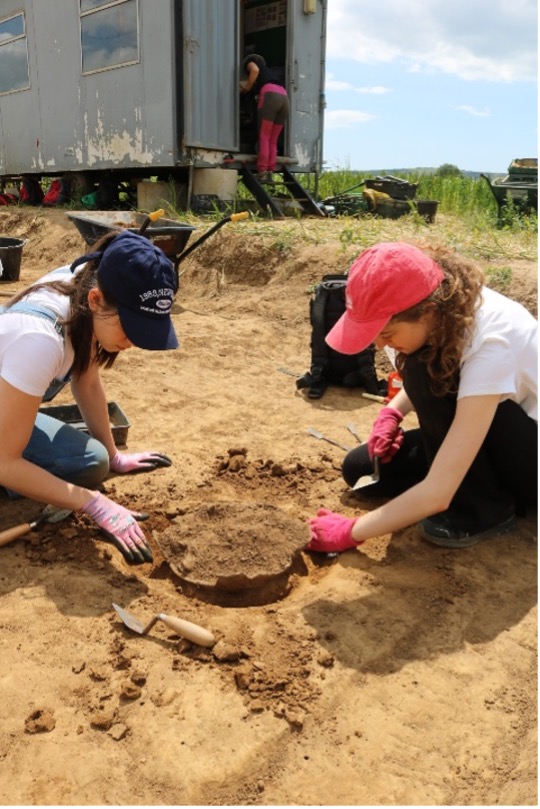
Blake’s talk will introduce the people behind the project, highlight some of the most exciting discoveries, and explore what they tell us about life at Bridge Farm nearly two thousand years ago. Along the way, it will show how our archaeological understanding has developed over time – often providing more questions than answers!
As the project moves forward, Bridge Farm continues to reshape our understanding of both the local and national Romano-British landscape. So many finds are recovered each season that so far only a small part of the site has been explored. When the Romans arrived in Britain in the 1st century there was as yet no Lewes, and this location seems to have been the site they chose from which to administer our area. There will be an open day at the site at the end of this year’s excavations, on the morning of Saturday 11 July 2026.
2. Rev Matthew Welland, pastor of Jireh Chapel
Matthew Hyde, who spoke to us about Jireh Chapel and its pastors in April, has recently published a hardback volume about the life and work of one of those pastors, Rev Matthew Welland, who led Jireh from 1859 until shortly before his death at the age of 90 in 1908. He led Jireh at a period when its large congregations drawn from Lewes and the surrounding countryside sometimes exceeded the nominal chapel capacity of 900. Some of its members played key roles in the town’s economy, and in its social life. Both Matthew Welland and his daughter Ruth kept journals, which Matthew has transcribed and included in the book.
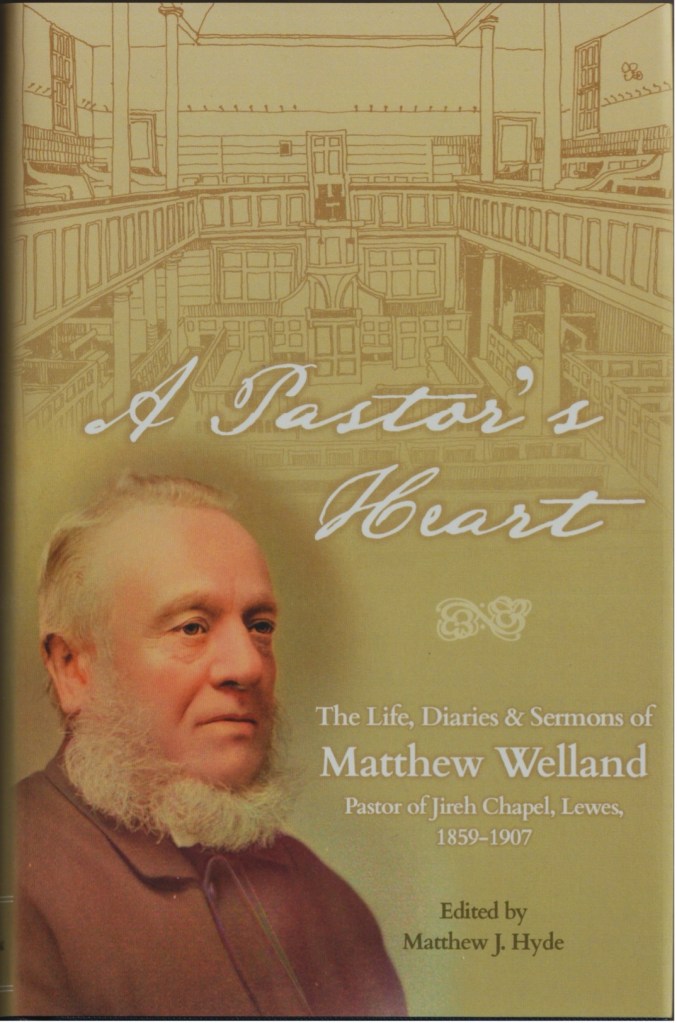
Copies are available from Matthew Hyde at £25. He can be contacted by phone (07729 307 433) or by email (matthewjhyde84@gmail.com). Matthew would also be very pleased to be contacted by anyone who has, or would like, further information about Jireh Chapel.
3. Rendel Williams postcard views
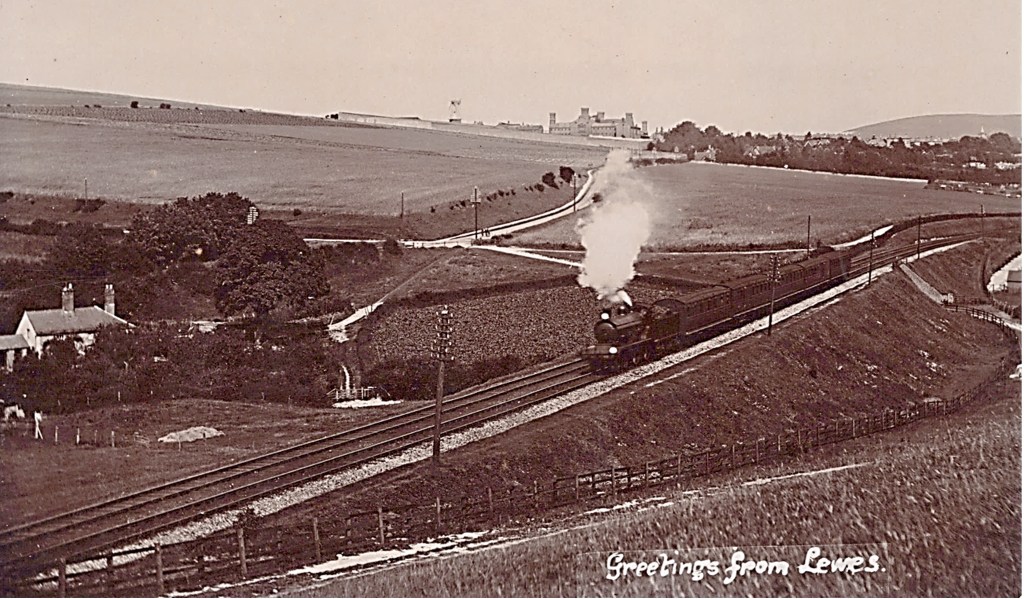
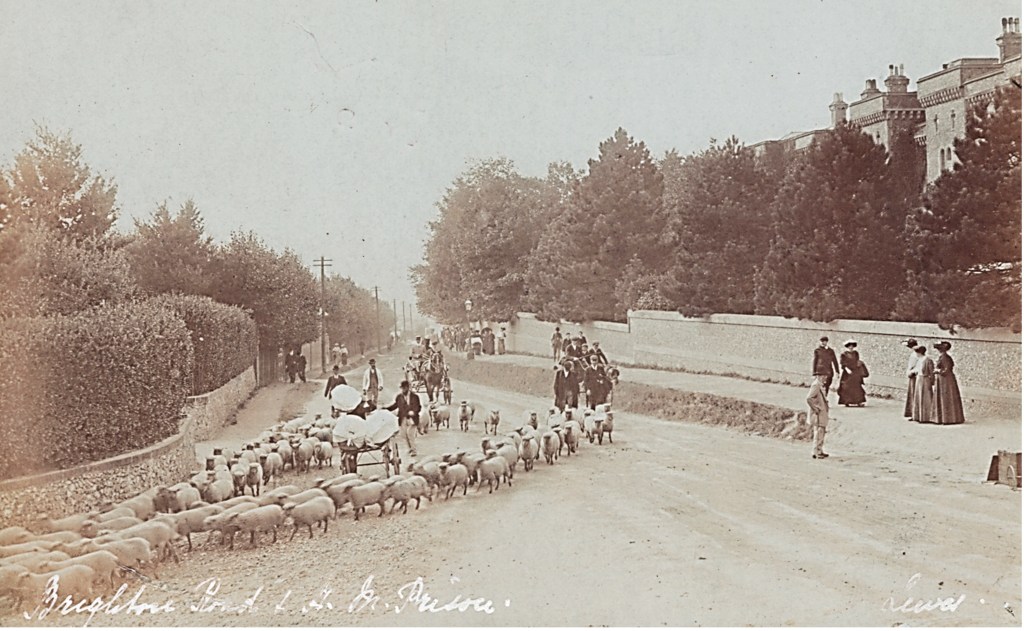
It is hard to credit that it is now over four years since the dispersal of Rendel Williams’ postcard collection at Toovey’s auction house. Shown below are four more Lewes examples from the sale.
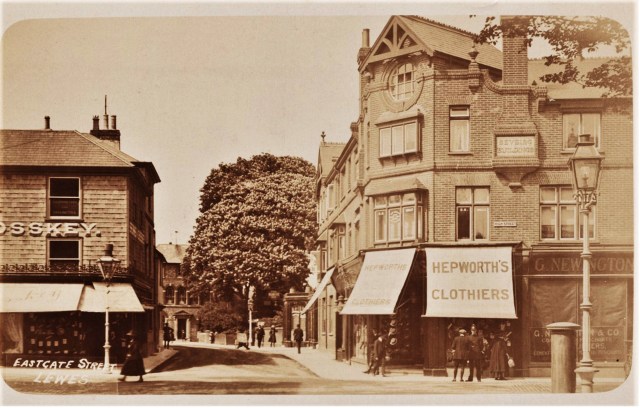
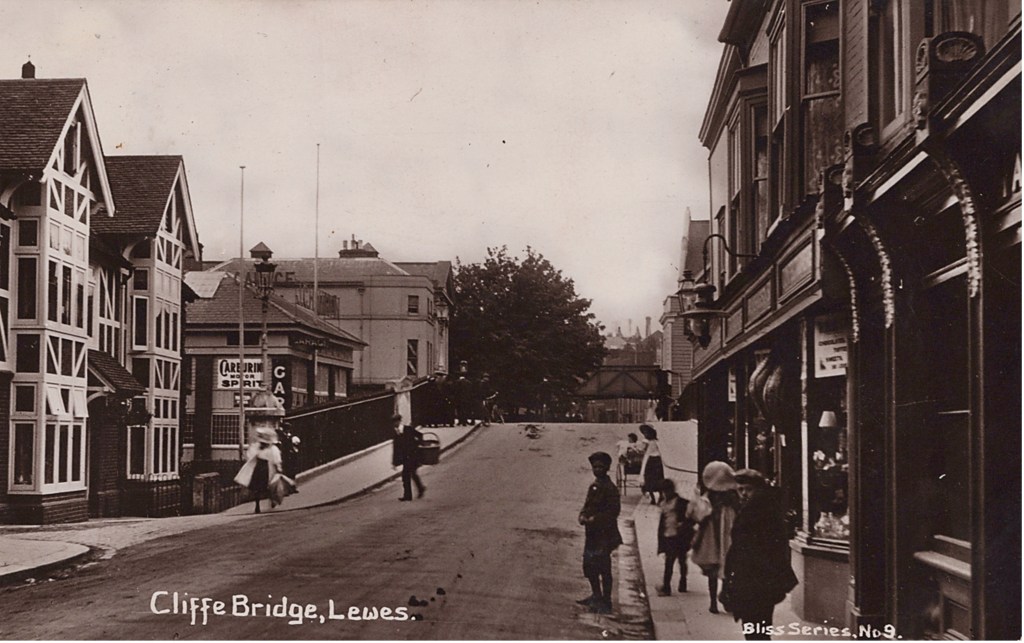
4. Two more William Page stereoviews
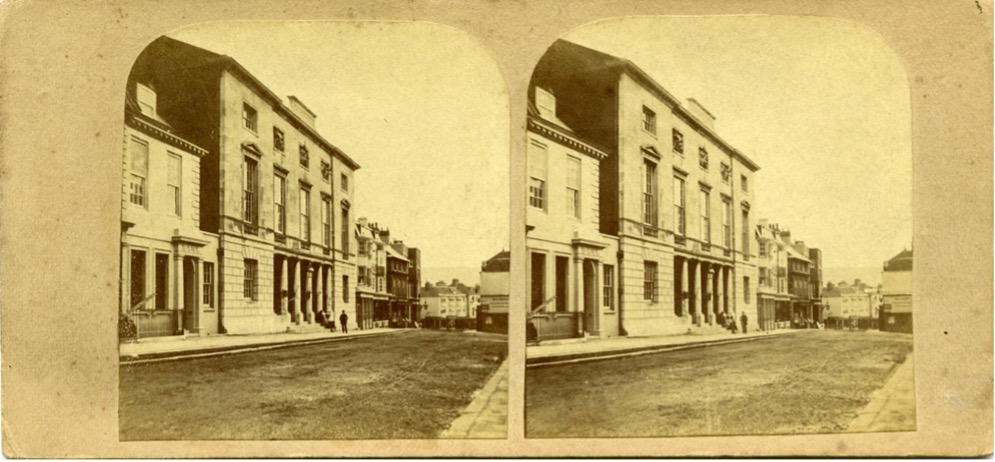
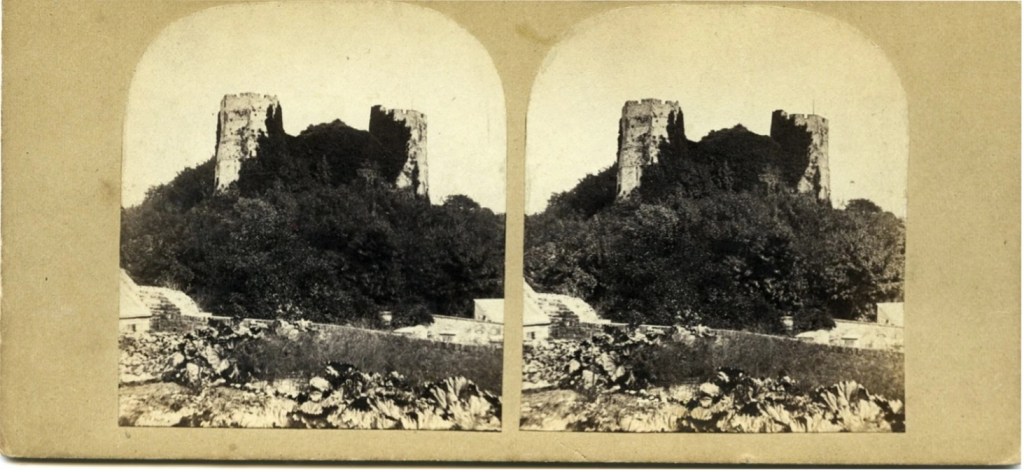
Two more stereoviews carrying the label ‘PAGE, Stationer, Bookseller, Printer, etc, High Street, Lewes were offered for sale on ebay recently. They show County Hall (with the High Street remarkably empty) and Lewes Castle.
5. Eastgate Wharf to let
The 14 October 1880 edition of the Hastings & St Leonards Independent announced that Eastgate Wharf was to let. There was a frontage to the River Ouse of 116 feet, with towing ports and every convenience for unloading barges. It was well adapted to trade in coal or beach (tide-rounded flints from the foreshore), and also had a corn store and a builder’s yard. There was a large workshop and two other sheds, sawing sheds with a bed and pit, and stabling and counting houses. Full particulars were available from the proprietor, Benjamin Morris of Yew Tree Cottage, Southover.
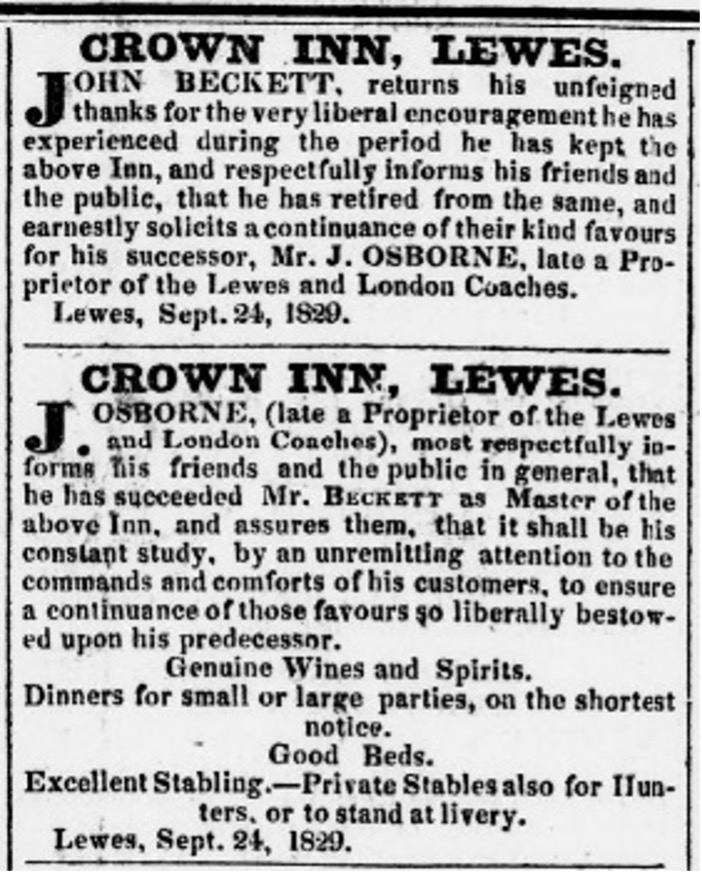
6. A change at the Crown Inn
When a Lewes business changed hands, the transfer of the goodwill of the business was achieved by the insertion of a pair of advertisements, such as those below, in the local press. This example, relating to the Crown Inn in Market Street, comes from the 5 October 1829 Sussex Advertiser
7. The Salvation Army in Lewes
When the Salvation Army arrived in Lewes in 1891 it was not universally welcomed, but the strong official hostility it met in Eastbourne, backed by the mayor and the Skeleton Army, was not reproduced here. Aggression, usually from residents who had taken drink, was punished in the usual way. This was despite Lewes being a town in which breweries played an important role in the town’s commerce and Bonfire held a very special role.
Thus, when in September 1891 a young local man called George Stringer shouted offensively at members of the Army marching down School Hill at Sunday lunchtime, and then followed them to the Army’s tent set up in South Street to continue his abuse, he was charged with being drunk & disorderly, using obscene language and causing them annoyance. Captain Thomas Whinnerah, in charge of the local corps, said he became very abusive when requested to behave himself. The bench fined Stringer 17s 0d, including costs, a typical penalty for local drunks causing a public nuisance. A month later South Street resident Thomas Thorpe, who had accompanied George Stringer at the time of the previous offence, and a drunken man called James Bray were charged with assaulting Captain Whinnerah and another Army member at their South Street base. The magistrates fined both men 5s 0d plus 11s 0d costs – about a week’s wages for a working man – for their pains.
The Salvation Army maintained a base in South Street until at least 1899, but they then disappear from the local newspapers and directories until after the end of the Great War. Captain Whinnerah, a Lancastrian, was replaced in his role in 1892 but stayed on in the town, married a local girl and managed a boot shop near Cliffe Bridge for many years – initially for his father-in-law and later for Milwards. He maintained his enthusiasm for both brass bands and temperance, working through the British Workmen’s Institute in Little East Street. He was also a well-known local breeder of canaries and other caged birds, who won prizes at local shows.
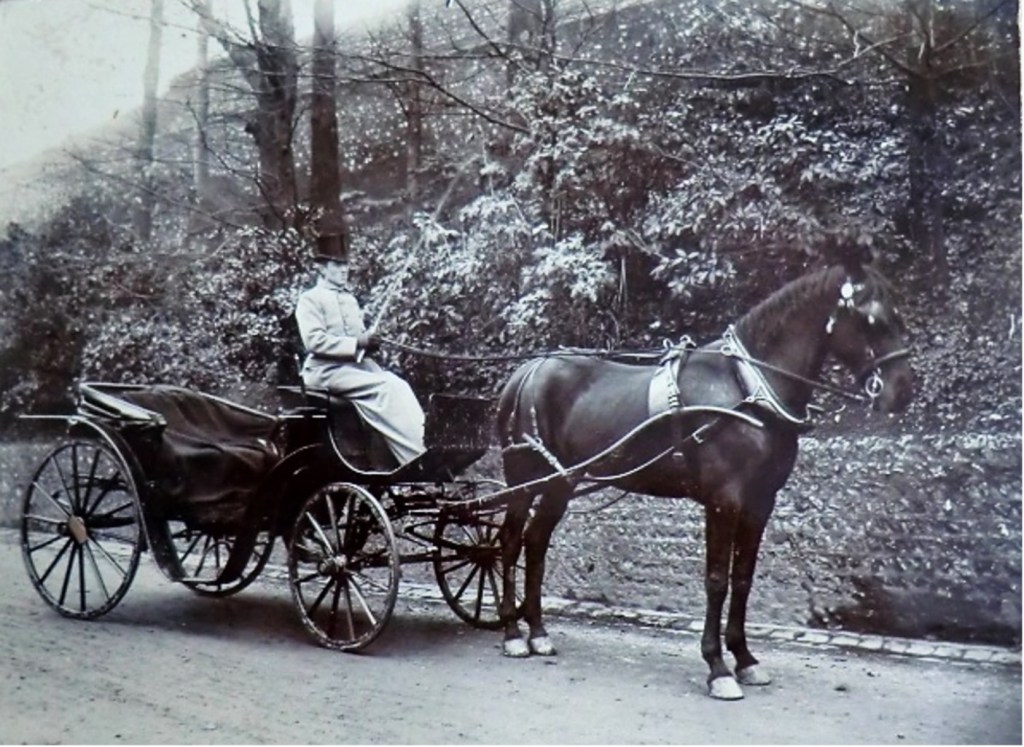
8. A Gentleman’s Carriage
This lovely photograph by Bliss & Co of Lewes of a gentleman’s carriage and its driver is posed outside Lewes Prison. The original, which is thought to date from around 1900, was recently offered for sale on ebay by a Sussex seller.
9. The Lewes Police Court
The 20 April 1907 Sussex Express reported that the Lewes police were busy enforcing the recent Dogs Act. Three different Lewes men were summoned before Lewes Police Court by three different policemen for allowing their dogs to be out in the High Street, the Offham Road and Lansdowne Place respectively without wearing a collar. All three pleaded guilty and all three were fined a shilling. For younger readers, a shilling was 5p.
Two other local men were fined half a crown (12.5p) each at the same Police Court for riding their bicycles without a light, one at Firle and the other in Southover High Street. The latter cyclist claimed not to have known that his light had gone out, but that was no excuse. William Brown of Lewes was fined 7s 6d for not sending his child to school regularly while a tramp who had called at Ringmer Police Station and asked for some bread and cheese was given a nominal one day’s imprisonment for begging. A soldier home on leave was fined 5s 0d for being drunk in the Cliffe and refusing to go home quietly, while a Seaford man found leaning against railings in Friars Walk and unable to walk was fined 2s 6d. The major case before the magistrates that day concerned two labourers staying in a Newhaven lodging house who were alleged to have broken in to the New Bridge Inn there and stolen the contents of the till, three watches and two handkerchieves, one of them silk. Such a burglary was much too serious a case for the magistrates to deal with, so after hearing evidence from numerous witnesses, including two policemen, both defendants were committed for trial at the next Assizes.
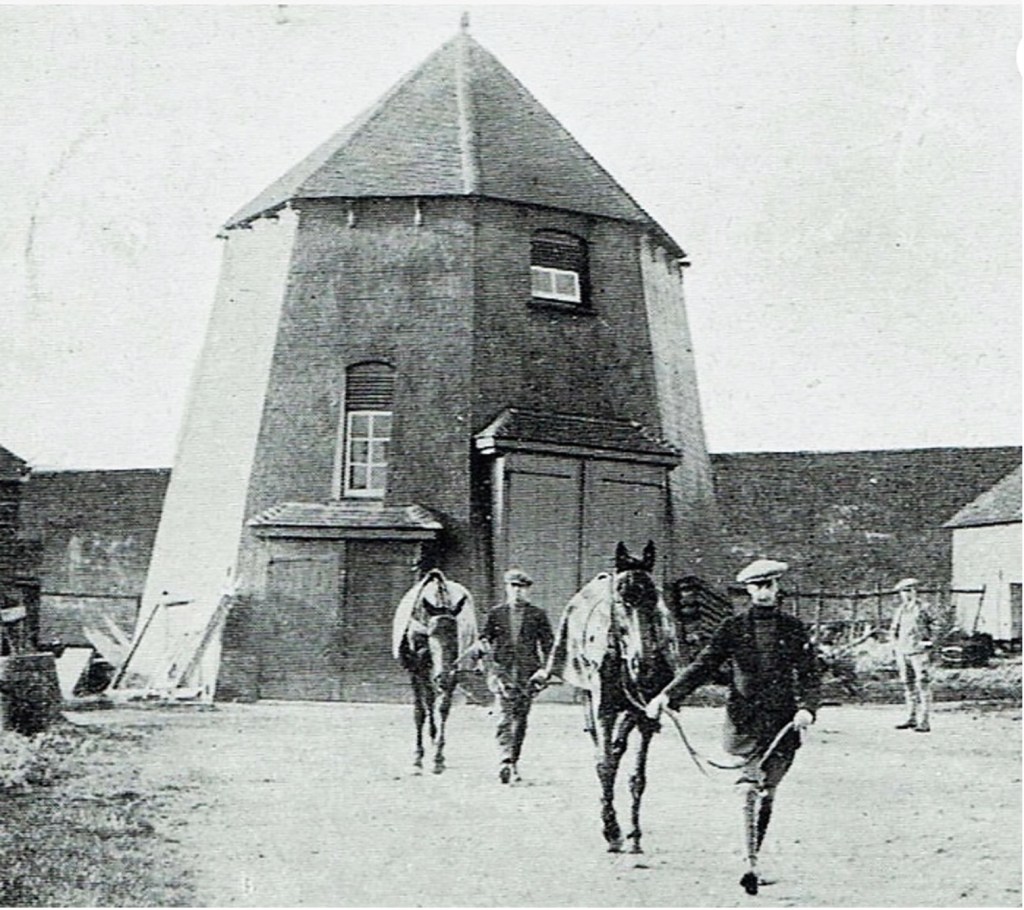
10. George Poole’s Lewes stables
The 3 January 1925 edition of The Illustrated Sporting and Dramatic News included an illustrated article about the Lewes stables of leading National Hunt trainer George Poole, who had won the 1921 Grand National with his horse Shaun Spadah. His stables was located on the Downs, convenient for the race course. One of the photographs illustrating the article shows the base of the former windmill by the Prison wall, which had been converted into loose boxes and a fodder store for the stables.
John Kay 01273 813388 johnkay56@gmail.com
Contact details for Friends of the Lewes History Group promoting local historical events
Sussex Archaeological Society: http://sussexpast.co.uk/events
Lewes Priory Trust: http://www.lewespriory.org.uk/news-listing
Lewes Archaeological group: http://lewesarchaeology.org.uk and go to ‘Lectures’
Friends of Lewes: http://friends-of-lewes.org.uk/diary/
Lewes Priory School Memorial Chapel Trust: https://www.lewesprioryschoolmemorialchapeltrust.org/
Facebook: https://www.facebook.com/LewesHistoryGroup
Twitter (X): https://twitter.com/LewesHistory