Anglo-Saxon Culture and Belief – Course: Monday 28 September 2015 for 8 weeks

Course tutor: Dr Geoff Doel (Sussex Archaeological Society member)

Duration: 8 meetings over two terms, held from 2.00 to 4.00 p.m. on Mondays, starting on 28 September 2015.

Venue: Friends Meeting House, Friars Walk, Lewes.

Cost: £80 for 8 weeks, reduced to £70 for SAS or Lewes History Group members.

To enrol: Email Geoff Doel, geoffdoel [at] btinternet.com, or contact him by phone at 01227 785882.


Posted in Uncategorized | Comments Off on Anglo-Saxon Culture and Belief – Course: Monday 28 September 2015 for 8 weeks

Lewes History Group: Bulletin 60, July 2015

Please note: this Bulletin is being put on the website one month after publication. If you would like to receive the Bulletin by email as soon as it is published, please contact the Membership Secretary about joining the Lewes History Group, and to renew your membership at the start of the calendar year.

  1.  Next Meeting, Monday 13 July: Joanna Wilkins, ‘Making Medieval Meals’
  2. The Cattle Market
  3. Lewes postcards on Ebay (by Ian Hilder)
  4. Lewes Schooling in 1818
  5. Lewes Racing Stables in 1914
  6. 6. Royal Visit to Lewes
  7. Lewes School of Art successes


  1. Next Meeting                7.00 p.m. for 7.30 p.m.          Monday 13 July
    Joanna Wilkins          ‘Making Medieval Meals’

Joanna Wilkins, is a Sussex Archaeological Society education officer, based at Anne of Cleves House, where she regularly gives visitors advice on how to be a successful Tudor housewife. For this evening will be taking us back a little further in time, to the medieval period. Unfortunately the church building lacks some key medieval cooking facilities, such as a large open-hearth cooking fire, so this cannot be a hands-on demonstration. Long-standing members will recall that Joanna has spoken to us on two previous occasions; about Anne of Cleves House and also about William de Warrenne. She is an excellent speaker.

As usual the meeting will be at the King’s Church building, Brooks Road, and all will be welcome. Coffee and biscuits will be served from 7 pm.


  1. The Cattle Market

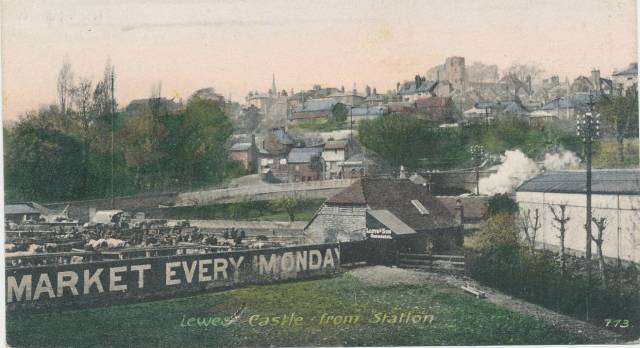
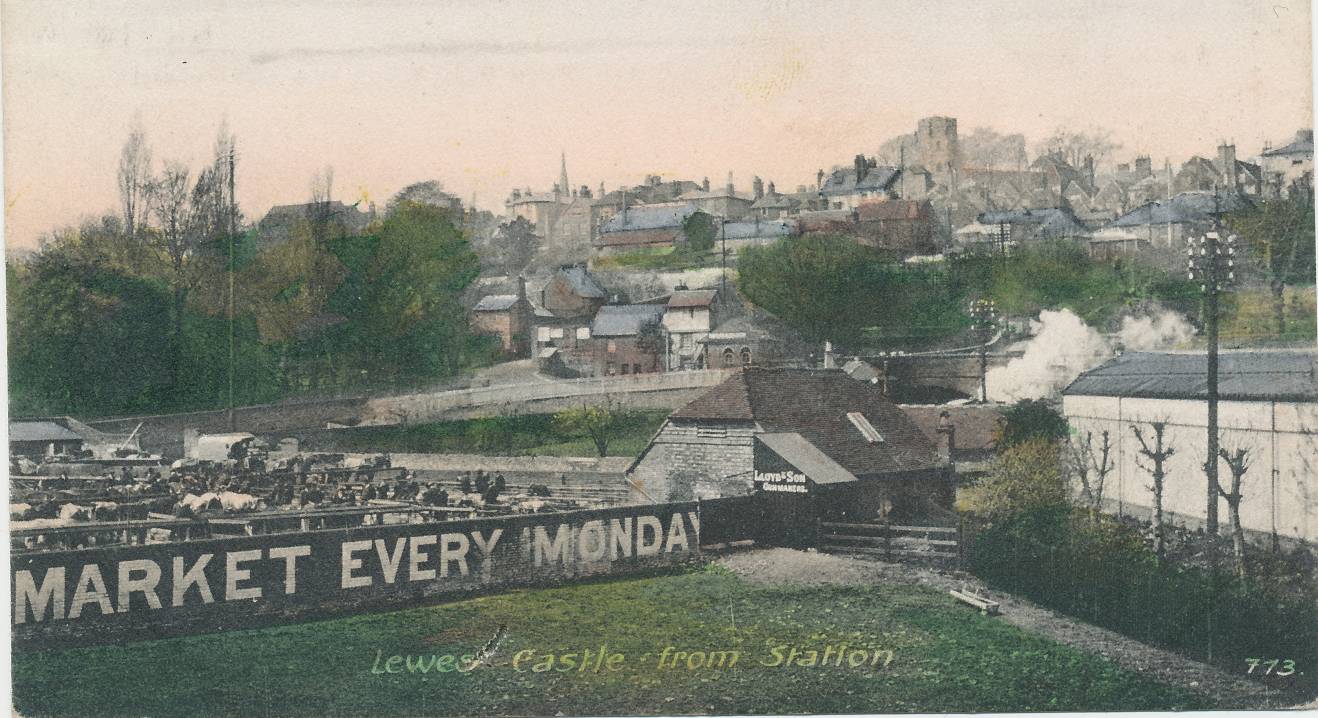
Cattle_Market_Lewes_postcard

This hand-coloured Edwardian postcard of the Lewes cattle market was published by W. Brooker of Sussex Gardens, Eastbourne, and was posted in 1907. It shows the cattle and sheep market in progress, with buyers examining lots. The shed in the foreground carries an advertisement for Lloyd & Son, gunmakers.


  1. Lewes postcards on Ebay                                                                 (by Ian Hilder)

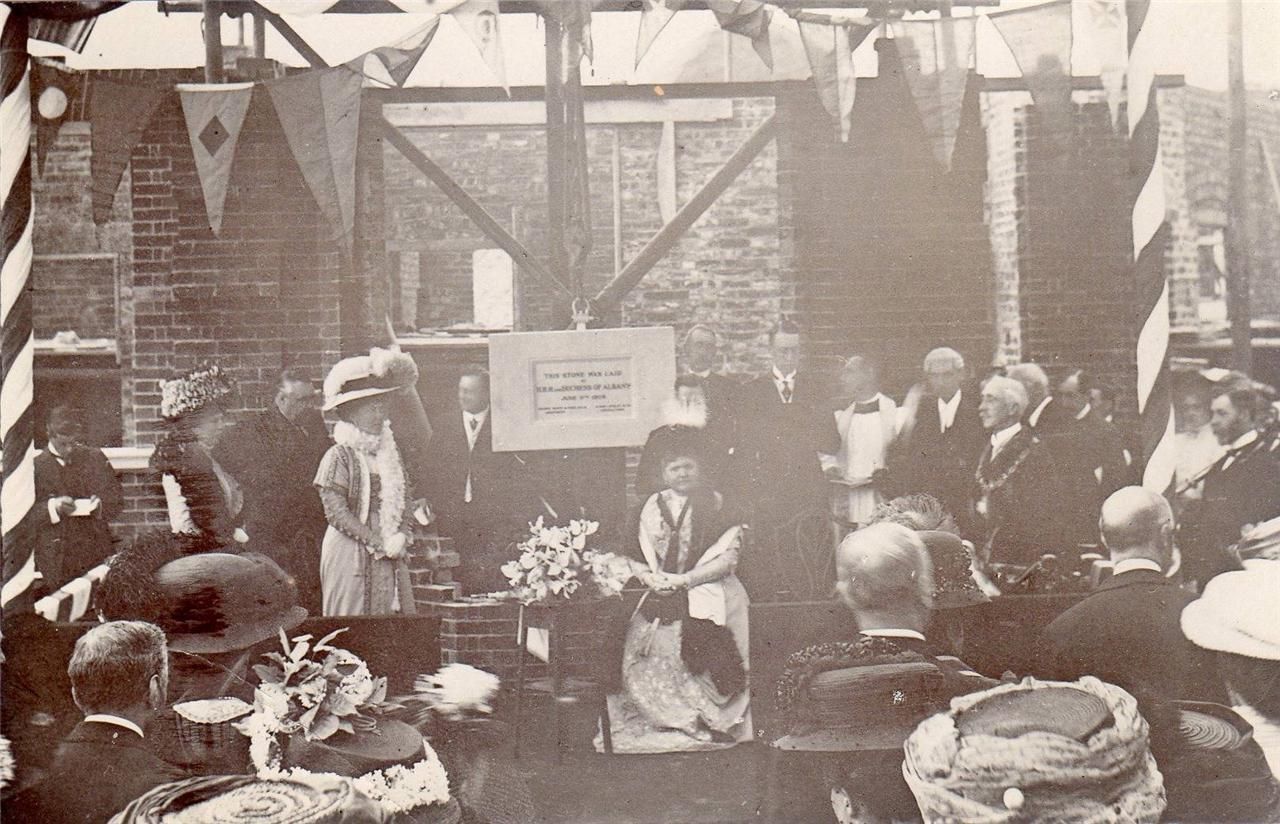
Lewes_Victoria_Hospital_foundation_stone_laying_1909_postcard

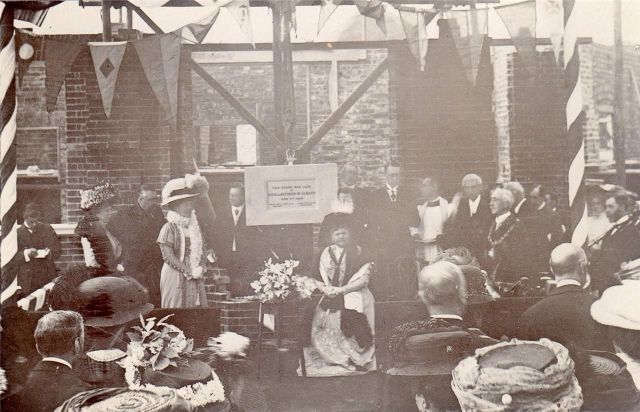
This postcard shows H.R.H. the Duchess of Albany laying the foundation stone of Lewes Victoria Hospital in 1909. The mayor (Alderman George Holman) stands to the right.
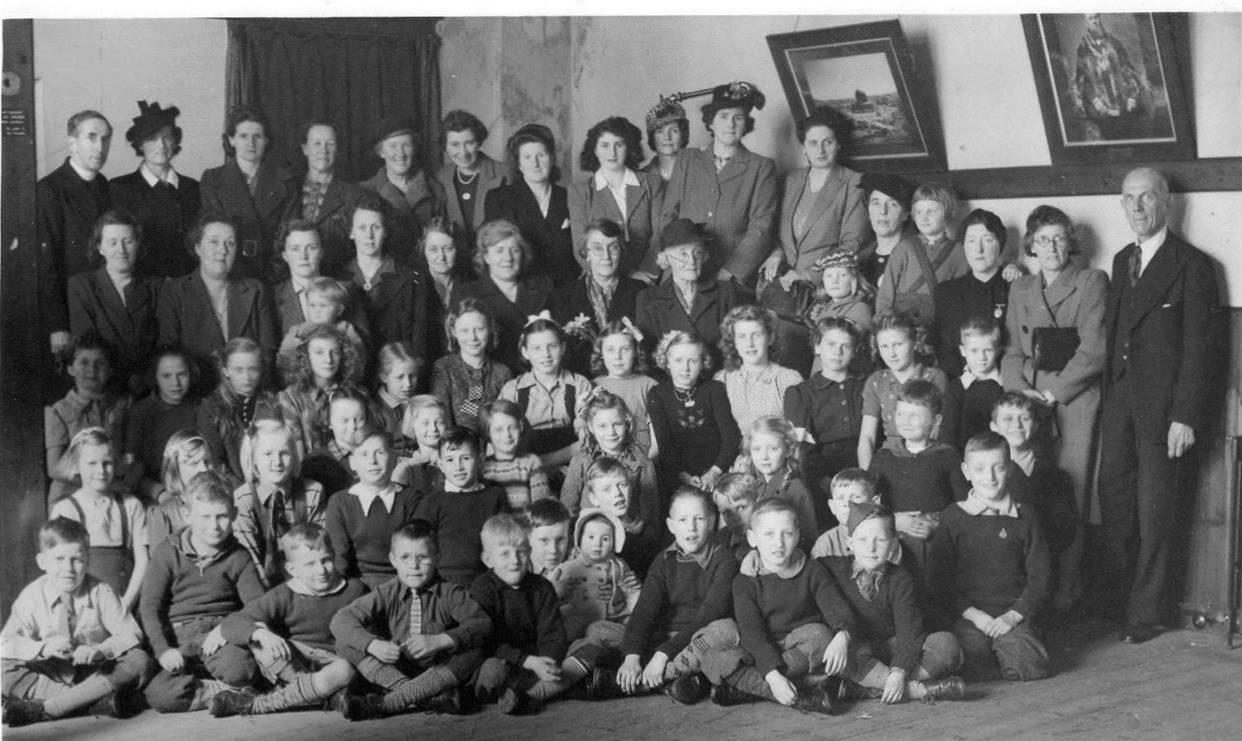
Dutch_children_visiting_Lewes_Feb_1946

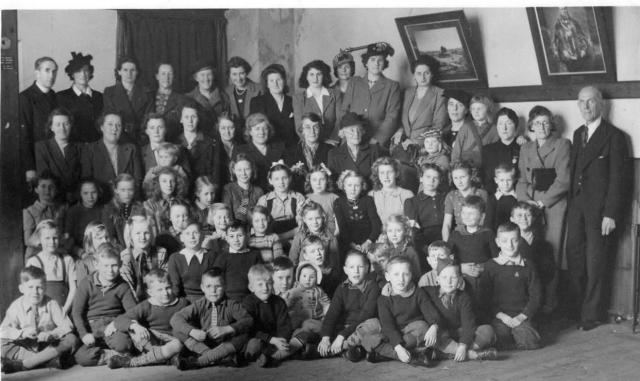
This postcard-sized photo has on the reverse “The Dutch children who came to Lewes in Feb 1946. Mrs Rainer’s party”.


  1. Lewes Schooling in 1818

In 1818 the Parliamentary Select Committee for the Education of the Poor conducted a survey of the school facilities available in parishes throughout the kingdom. The replies were published by Parliament on 1 April 1819.

The response from St John-under-the-Castle parish, population 1,126, was made by the rector, the Rev P.G. Crofts, a gentleman who lived in some style at Malling House. He reported that the parish had a school based on the Lancastrian system, supported by voluntary subscriptions and open to the whole town, in which about 400 boys and girls were instructed. There was also a day school for children, paid for by their parents. His conclusion was that the poor had sufficient means of education.

The response from St Michael’s parish, by the Rev G. Shiffner, reported that there were two day schools and one Sunday school, supported by voluntary contributions. He too considered the poor had sufficient means of education.

The curate, Thomas Airey, responded for All Saints parish, population 1,427. He reported a Sunday school containing 70 girls and 55 boys who attend the Lancastrian schools in St John’s during the week. There was also a Sunday school at a dissenting place of worship called The Tabernacle at which the number of children on the books was 124 boys and 111 girls. There was also an establishment on the new system in an adjoining parish to which many of the principal inhabitants of All Saints were subscribers, which enabled the children of the poor of both sexes to be educated.

The churchwarden replied on behalf of the parish of St Peter and St Mary Westout, population 918. He reported a free grammar school in which 12 boys are taught by a master, who received £25 p.a. accruing from lands in the parishes of Hamsey and St John the Baptist, Southover, £3 p.a. from a dwelling house in the parish of St Michael’s and £53 5s 0d interest in money in the public funds. The master was besides provided with a house in which he resided, a schoolroom, yard and garden, the same being portion of the endowment vested in feofees. A few of the poor received education at a subscription school on Mr Lancaster’s plan in the parish of St John-under-the-Castle, but many were without the means of education, and were desirous of possessing them.

The Rev W. Courthope, rector, replied for St John the Baptist, Southover, population 543. There were four small schools containing 52 children, all under 7 years of age. He thought the poorer classes had not the means of education, and were desirous of possessing them.

The Cliffe parish response was also from the rector, the Rev J.Lupton. The population there was 1,258. There were several schools containing 103 children, and a Sunday school, chiefly supported by Dissenters, in which 220 were instructed. He said the poorer class did not have the means to educate their children and would be glad to obtain them. As minister he much regretted that he had not been able to establish a Sunday school on the principles of the Church of England.

The final response was from South Malling parish, population 443. The respondent was W. Courthope, the curate – probably the same man as the rector of Southover. In this parish there was no provision whatever, and no comment from the curate.


  1. Lewes Racing Stables in 1914

Source: 1914 Local Directory (Pike’s Blue Book)

  • C. Poole, Elm Tree Stables, High Street, Southover
  • A. Butcher, Black Horse Stables, Western Road
  • Escott, Astley Stables, Spital Road
  • Fitton, Winterbourne Stables, Winterbourne Hollow


  1. Royal Visit to Lewes

Source: Deacon’s Court Guide, Gazeteer and Blue Book of Sussex, 1st edition, 1881

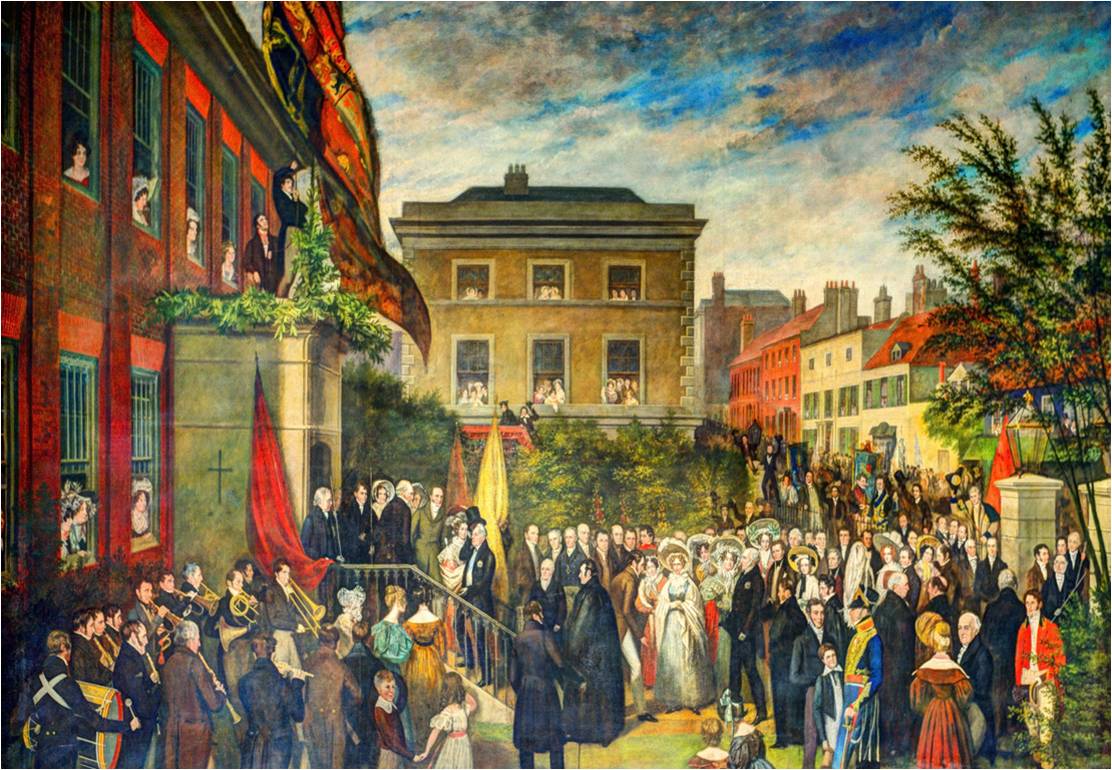
“The town had the honour of a visit, in 1830, from William IV and his queen, Adelaide, who were entertained at The Friars. The members for the town, Sir John Shelley, Bart., and T. R. Kemp, Esq., with the chief officers of the borough, magistrates, and clergy assembled to welcome the royal guests, and a painting in oil, in which are portraits of the principal personages, was executed in commemoration of the event, and placed in the dining-room of the mansion, to the proprietor of which his Majesty granted the addition to his armorial bearings, of a lion borne in chief.”

William_IV_visit_to_The_Friars_painting

Visit by William IV to The Friars: painting in the Lewes Town Hall collection


7. Lewes School of Art successes

Source: 19 July 1873 Hastings and St Leonards Observer

LEWES. Lewes School of Art.—The works by the students of this School, which were sent to South Kensington in April for examination, have obtained a National Bronze Medal and fifteen third Grade Prizes. These awards have been made by Her Majesty’s Art Examiners.


John Kay

Contact details for Friends of the Lewes History Group promoting local historical events

Sussex Archaeological Society
Lewes Priory Trust

Lewes Archaeological Group and go to ‘Lectures’
Friends of Lewes
Viva Lewes

Facebook:   https://www.facebook.com/LewesHistoryGroup
Twitter: https://twitter.com/LewesHistory


Posted in Agricultural History, Art & Architectural History, Cultural History, Economic History, Education History, Lewes, Local History, Social History | Comments Off on Lewes History Group: Bulletin 60, July 2015

Lewes History Group: Bulletin 59, June 2015

Please note: this Bulletin is being put on the website one month after publication. If you would like to receive the Bulletin by email as soon as it is published, please contact the Membership Secretary about joining the Lewes History Group, and to renew your membership at the start of the calendar year.

  1. Next Meeting, Monday 8 June: Graham Mayhew ‘A monk at Lewes Priory’
  2. Postcard of the Priory ruins, with grazing sheep
  3. Lewes artwork on Ebay
  4. A James Lambert Watercolour at Auction
  5. Lewes Prison in 1861
  6. 6. The Elephant & Castle (by Mark Eade)
  7. A new Ouse Footbridge
  8. A new Church Hall for South Malling


  1. Next Meeting            7.00 p.m. for 7.30 p.m.                      Monday 8 June

     Graham Mayhew       ‘A day, a year, a lifetime: a monk at Lewes Priory’

Graham Mayhew will give us in his talk a fascinating insight into the lives of the monks of St Pancras Priory based on his research for his recent definitive book about St Pancras Priory, Lewes, ‘The Monks of St Pancras’. He will describe the monks’ daily routine, the festivals and special occasions that marked the passing of each year, and the principal stages of a monk’s career. Taking the life of one mid-15th century Lewes monk as an example, he will trace his career from his entry into Monks Horton, Kent, one of Lewes’s subsidiary priories, through to his arrival at Lewes as a priest and his subsequent rise to becoming chamberlain, responsible for all of Lewes Priory’s properties in England and his ultimate appointment as prior of Lewes. The talk will explain the relationship between Lewes Priory and its daughter houses and its role as the mother house of the Cluniac Order in England, its vast church providing the setting for the fullest and most elaborate expression of the Cluniac liturgy in the British Isles. Graham will outline a typical day at Lewes as well as exploring the annual calendar of feasts and some key annual events such as Easter and Christmas, showing how the priory church and monastic buildings were used on major feast days and other important events in the life of the monastery, and will conclude with a brief assessment of the personal qualities expected of a prior of Lewes.

As usual the meeting will be at the King’s Church building, Brooks Road, and all will be welcome. Coffee and biscuits will be served from 7 pm.


  1. Postcard of the Priory ruins, with grazing sheep

Priory_Ruins_Lewes_sheep_postcard


  1. Lewes artwork on Ebay

Kasparian_Lewes_and_the_Ouse

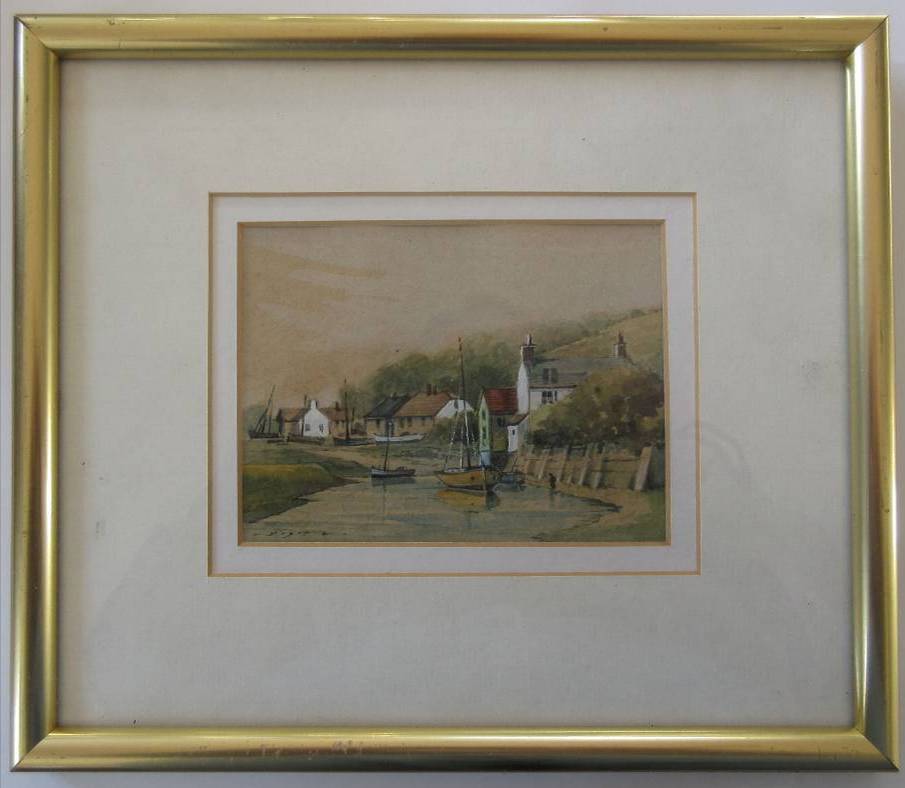
This watercolour entitled ‘Lewes & the Ouse’ by Hagop Kasparian, dated June 1991, shows a classic view of the approach to Cliffe from the south, sadly changed by new construction currently underway.

Garratt_All_Saints_Centre_Friars_Walk_Lewes

This modern print by Ruth Garratt, features the All Saints Centre, Friars Walk


  1. A James Lambert Watercolour at Auction

Part of the collection of the late Ian Askew of Wellingham, Ringmer, was auctioned by Dreweatts at Newbury in April. Lot 206 was this watercolour by James Lambert the elder of Lewes (1725-1788). Signed and dated 1786, it shows the west view of Lewes Castle. It sold for £300.

Lambert_Lewes_Castle_1786


  1. Lewes Prison in 1861

The 1861 census lists as resident in the prison in St Anne’s parish the governor (John Sanders aged 62, a Cornishman), the chaplain (Rev Richard Burnet, 54, born in Dublin), a matron, a porter and nine warders – 6 male and 3 female. The governor, chaplain, porter and one warder were accompanied by their families. There were a total of 210 prisoners, 160 men and boys, 47 women and girls and 3 infants. The three toddlers were described as prisoners, but each accompanied a woman with the same surname. The youngest prisoner was John Durrant, a bootblack aged 12, but 5 boys and one girl were under the age of 15. There were another 38 older teenagers – indeed for females the most common age group was 15-19. For both genders more than half the prisoners were under the age of 30. The oldest prisoners were an Irish shoemaker and a carpenter from Ripe, both aged 75, but only 5 men and one woman were over 60. Just 10 prisoners, nine males (including the 12 year old bootblack) and one female were natives of Lewes.

Some of the men are ascribed occupations one might not expect to meet in prison. There were two surgeons (one specified as FRCS), a surgeon dentist, an attorney, an architect, a brewer, an auctioneer, a master mariner, a furniture broker and a retired dancing master. There were a scatter of tradesmen – a farmer, a ‘farmer and bather’, a builder, a butcher, a baker, a grocer, a linen draper, a lime burner, a cabinet maker, a wheelwright, a blacksmith, a licensed victualler and a contractor of mail carts. Perhaps less surprising were a horse dealer, a selection of hawkers and hucksters (of both genders) and no less than 8 soldiers, plus a soldier’s wife aged 16.


  1. The Elephant & Castle (By Mark Eade)

Elephant_and_Castle_Pub_Lewes_glass_plate_photo

This old image of the Elephant & Castle comes from one of a batch of about 20 glass plates discovered abandoned in a shed by a previous resident. The photograph was posted on the Lewes Past Facebook page in April. Note the cattle trough – see Bulletin no.30. At the date the photograph was taken the cattle market was held down near the Pells.


  1. A new Ouse footbridge

The 2 November 1934 Sussex Express noted that work had commenced on a new footbridge over the River Ouse at South Malling. The bridge was being erected by Sir Frank Sanderson, baronet, of Malling Deanery.


  1. A new Church Hall for South Malling

The 9 November 1936 Sussex Express recorded that Sir Frank Sanderson, baronet, M.P., and Lady Sanderson of Malling Deanery had made an offer to provide South Malling with a new church hall as a Coronation gift.


John Kay

Contact details for Friends of the Lewes History Group promoting local historical events

Sussex Archaeological Society
Lewes Priory Trust

Lewes Archaeological Group and go to ‘Lectures’
Friends of Lewes
Viva Lewes

Facebook:   https://www.facebook.com/LewesHistoryGroup
Twitter: https://twitter.com/LewesHistory


Posted in Art & Architectural History, Ecclesiastical History, Legal History, Lewes, Local History | Comments Off on Lewes History Group: Bulletin 59, June 2015