Lewes History Group: Bulletin 17, (10 December 2011)

1.   Next Meeting on Monday 12 December:  Christmas Meeting
2.   An early aerial view of Lewes
3.   Old Houses at Lewes
4.   From Alice Dudeney’s Lewes Diary
5.   Watercolours of Lewes Castle in 1785 by Samuel Hieronymous Grimm
6.   Lewes Great Sheep Fair, 1850
7.   
Mary Anne Berry’s Christmas, 1847
8.  
Lewes History Group meeting dates for 2012


1.  Christmas meeting at 7.30 p.m. on Monday 12 December 2011

     Ian McClelland                  ‘The impact of the Railway on Lewes’

     Paul Myles            ‘Film: Rodin in Lewes – The Kiss comes home’

Our Christmas meeting will feature two talks by members. The coming of the railway often had a dramatic effect on the area’s trade and history. Ian McClelland has been exploring its impact on Lewes, and will give us an account of this work in progress. After the interval Paul Myles will show us a film recording a piece of more contemporary history, the story of the Rodin exhibition in the Town Hall that featured the return to this town of his famous ‘Kiss’ sculpture.

As this is our Christmas meeting, we will be offering mulled wine and mince pies in the interval between the two talks, instead of coffee and biscuits before the meeting.

2.  An early aerial view of Lewes
early_Lewes_aerial_view

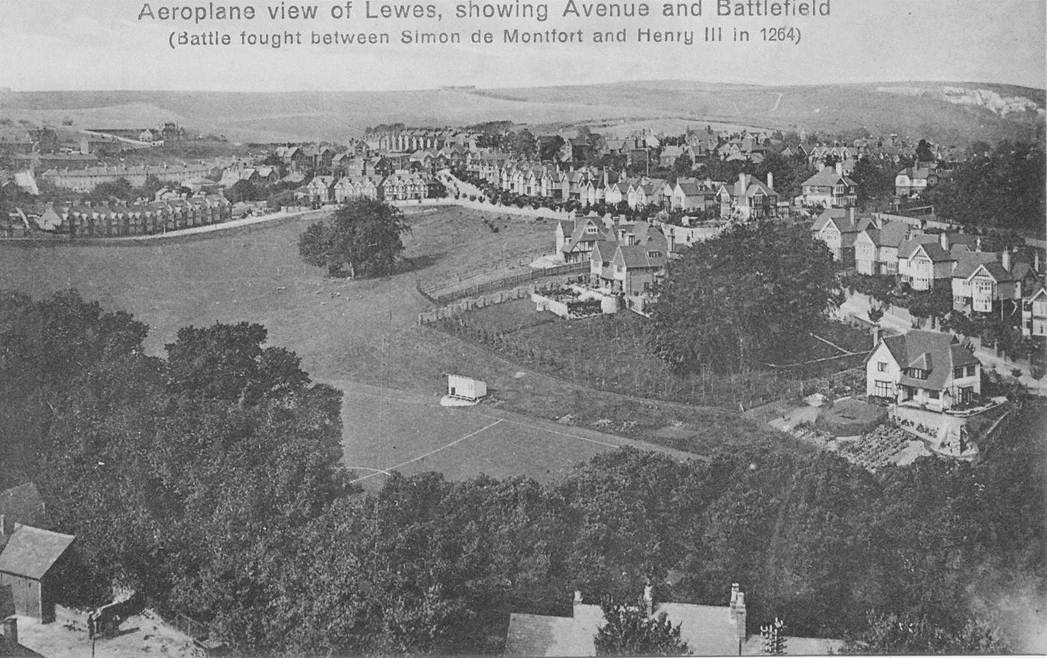
This aerial view of Lewes shows the Paddock (laid out with a football pitch), The Avenue & Bradford Road, in a postcard published in the Brighton Palace Series offered for sale on eBay in October. If you enlarge the image you can also see the former Lewes Union workhouse (behind the houses on Bradford Road), Leicester Road (is only one side built?) and the Victoria Hospital.

3.  Old Houses at Lewes
 Richter_drawing_of_Lewes

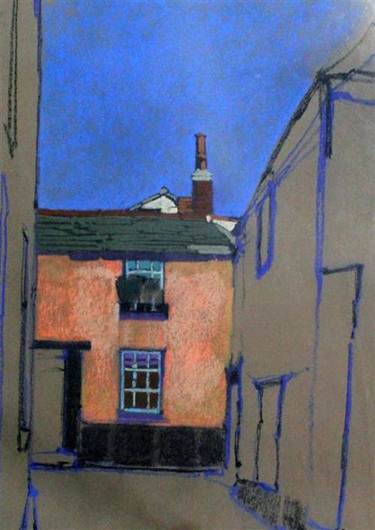
This pastel drawing, catalogued as by Herbert Davis Richter (1874-1955) was offered as lot 2208 at Gorringe’s 11 December 2011 Lewes auction, with an estimate of £500-£800.

Anyone recognise the view?

4.  From Alice Dudeney’s Lewes Diary

6 January 1943. The fourth winter of the war, and everybody fed up, with not being fed at all! It is very cleverly managed, but we are being kept just above starvation level. And I, who have never cared much for food, in fact bored by it, feel I can no longer stand these make-shift meals, these horrible messes and mouldy bread that tastes like chaff.

20 January 1943. The big raid on Lewes. At 12, when I was peaceful in bed [with flu], the most terrific bangs. The bed and the house shook. I was stunned, and so defenceless undressed. Winnie came rushing up with some loving incoherence about “dying together”! A plane rushed past the window, flying very low. The black shadow of it shut out the light. I shall always think of the Angel of Death, and the ‘beating of its wings’. I shall never see a blackbird fly past my window without remembering. Three more followed, very close and low, they seemed to be at the window pane. More bangs, rushings, vibrations. I expected the house to go. Then silence. We learned later that two people were killed and many injured. We, and the Lucas’s, have escaped with broken windows. Winnie came up with my supper at nine and the news that they “couldn’t dig out poor old Mrs Digweed”. (They did in the end).

21 January 1943. People were so kind …. all called to see if I was all right. I insisted to Dr Irvine that I must dress and come down, that to lie up there and be buried alive was too ghastly a thought. So I am down here, feeling an awful rag.

22 January 1943. The most awful devastation in the town, especially in North Street, New Street and New Road. The Stag Hotel burnt to the ground and Stevensons the corn chandler has lost his windows, with almost the last lovely fanlights left in Lewes. All the people have got to clear out of St Martin’s Lane, which was also hit. I sat in my chair all day, half asleep, but jumping like a shot rabbit if even a cinder dropped out of the fire.

Source: Diana Crook (ed) ‘Mrs Henry Dudeney, A Lewes Diary, 1916-1944’, Tartarus Press, (1998).

5.  Watercolours of Lewes Castle in 1785 by Samuel Hieronymous Grimm

Source: British Library online collection

A view of Lewes Castle and the Bray Mount from Mr Shelley’s Paddock
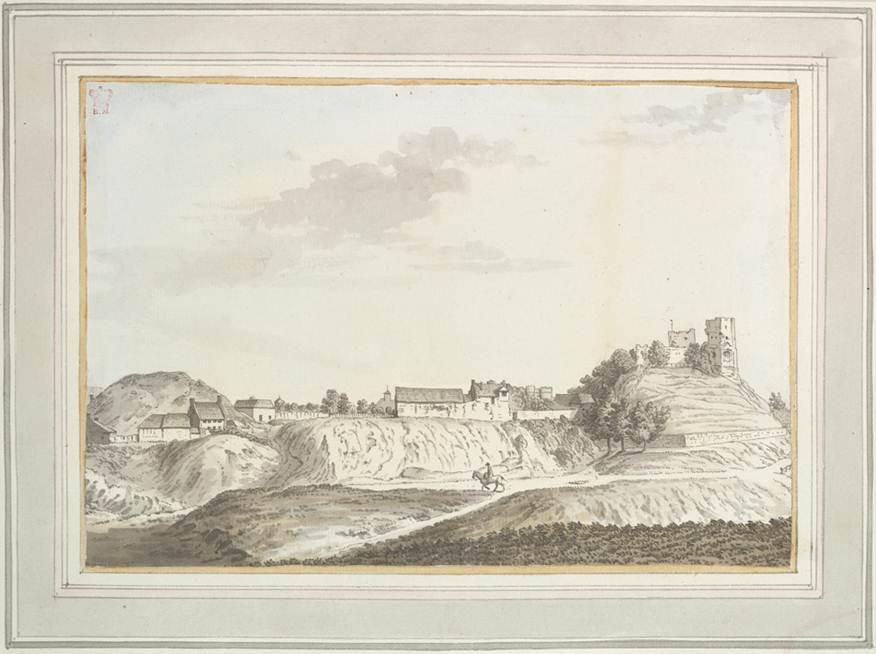
The view from Mr Shelley’s garden
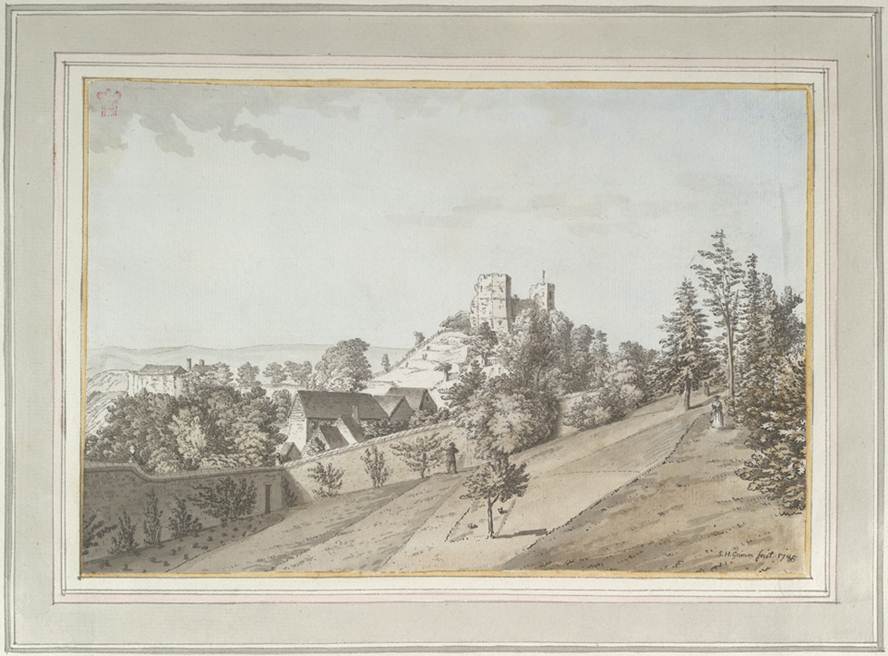
Grimm_Lewes_Castle_from_Shelley's_Garden

6.  Lewes Great Sheep Fair, 1850

The Sheep Fair was held annually on the Downs above the town every September. The flocks presented for sale arrived on foot, many of them making their way through the town streets.
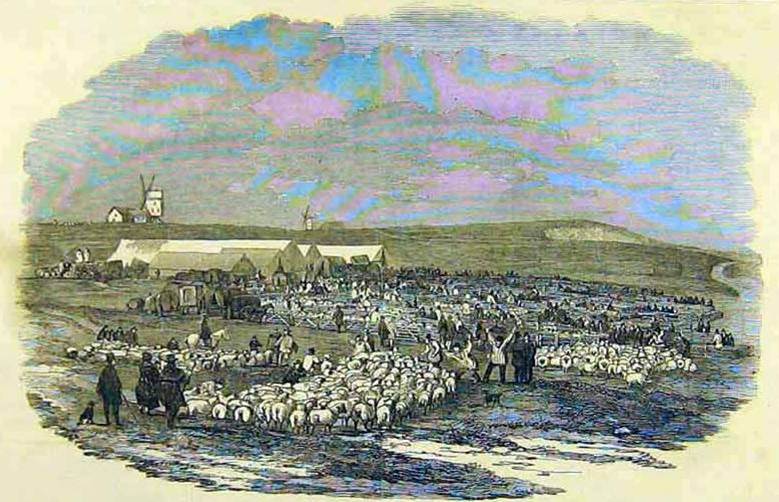
Lewes_Great_Sheep_Fair

Source: The Illustrated London News, 28 September 1850

7.   Mary Anne Berry’s Christmas, 1847

Saturday 25 December 1847. Christmas Day. Richard spent it here. He gave us the turkey we had for dinner. We went to see Grandpapa Wille in the afternoon. He was very poorly. Text in the morning Hebrews chapter 3. Richard is staying the night at Norlington [Farm, Ringmer], as Mr Thos. Knight is gone to see his grandson at Tunbridge.

Monday 27 December 1847. Papa, Uncle Henry, Jane [her sister] and I went to Brighton by train. We found George & Ann in bed, as they had the influenza slightly. Papa took Jane & I to hear Mr Gate’s new organ, with the double action. It certainly is an admirable invention. We left Jane at Brighton – Aunt Sophia has invited her to stay until her health is re-established. We returned by the last train. Richard was returned from the Prayer Meeting. He had tea with Harriet [another sister of Mary Anne’s], as he found it very lonely at Norlington, keeping house while his Uncle and Aunt were at Tunbridge. The grandson is the attraction now. Mrs T. Knight is quite foolish over it. I understand Aunt Morris had a son. Papa called, going to Chapel.

Source: Mary Anne Berry’s unpublished diary. She was a daughter of builder and developer James Berry, who lived in the large house below the Coombe in Malling Street. Richard Knight, her intended husband, was a Barcombe farmer’s son. They attended Tabernacle.

8.   Lewes History Group meeting dates for 2012

Dates for our meetings next year will be:

Monday 9 January          Monday 16 April       Monday 9 July              Monday 8 October

Monday 13 February       Monday 14 May       no August meeting        Monday 12 Nov.

Monday 12 March           Monday 11 June      Monday 10 September  Monday 10 December

John Kay


–
Posted in Agricultural History, Biographical Literature, Cultural History, Lewes, Local History, Social History | Comments Off on Lewes History Group: Bulletin 17, (10 December 2011)

Meeting – Monday 12 December, 7:30pm

Christmas Meeting featuring short talks about members’ research projects:

Ian McClelland – Impact of the Railway on Lewes

 ∞ Interval with seasonal refreshments ∞

Paul Myles – Film: Rodin in Lewes – ‘The Kiss Comes Home’

Our Christmas meeting will feature two talks by members. The coming of the railway often had a dramatic effect on the area’s trade and history. Ian McClelland has been exploring its impact on Lewes, and will give us an account of this work in progress. After the interval Paul Myles will show us a film recording a piece of more contemporary history, the story of the Rodin exhibition in the Town Hall that featured the return to this town of his famous ‘Kiss’ sculpture.

As this is our Christmas meeting, we will be offering mulled wine and mince pies in the interval between the two talks, instead of coffee and biscuits before the meeting.

Venue: The new King’s Church building on Brooks Road, Lewes. (Between Tesco car park and Homebase)

See the Meetings page for a list of  forthcoming monthly talks organised by the Lewes History Group.


–

Posted in Art & Architectural History, Economic History, Lewes, Social History, Transport History | Comments Off on Meeting – Monday 12 December, 7:30pm

Lewes History Group: Bulletin 16, (11 November 2011)

1.   Next Meeting on Monday 14 November:  John Kay: ‘John Whitfeld the Smuggler’
2.   The view over Lewes from Malling Down
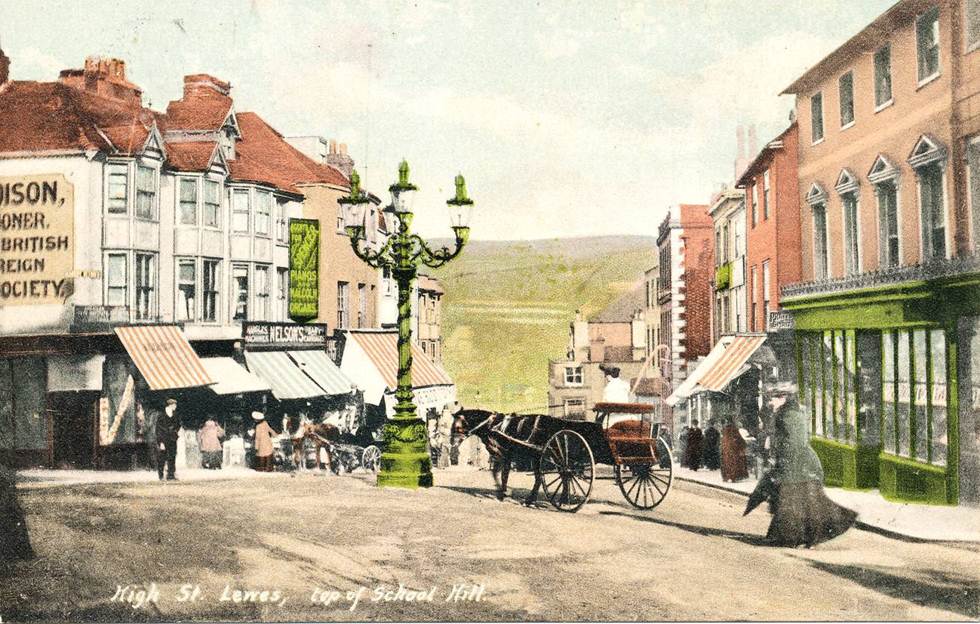
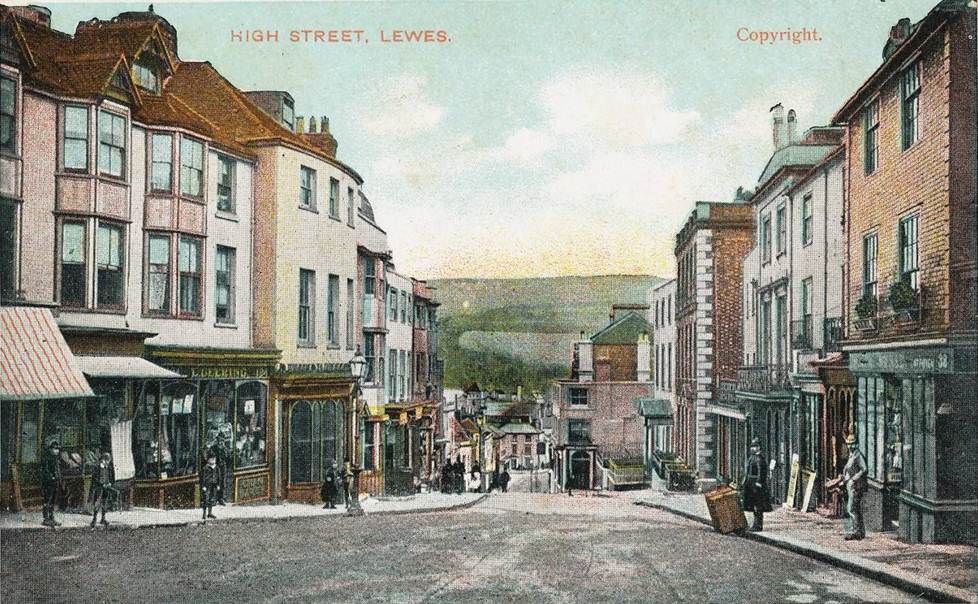
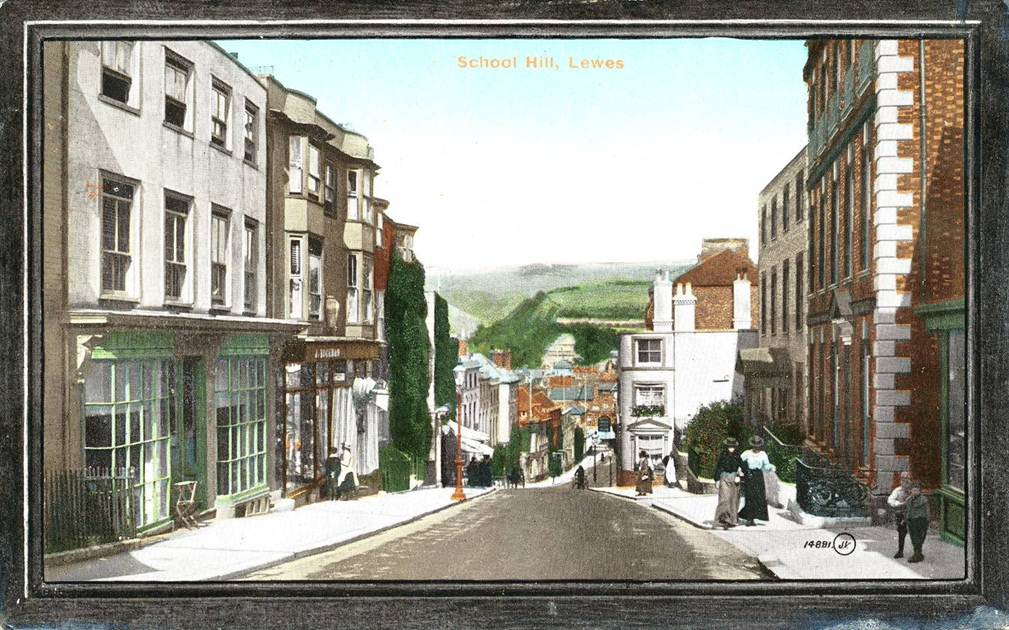
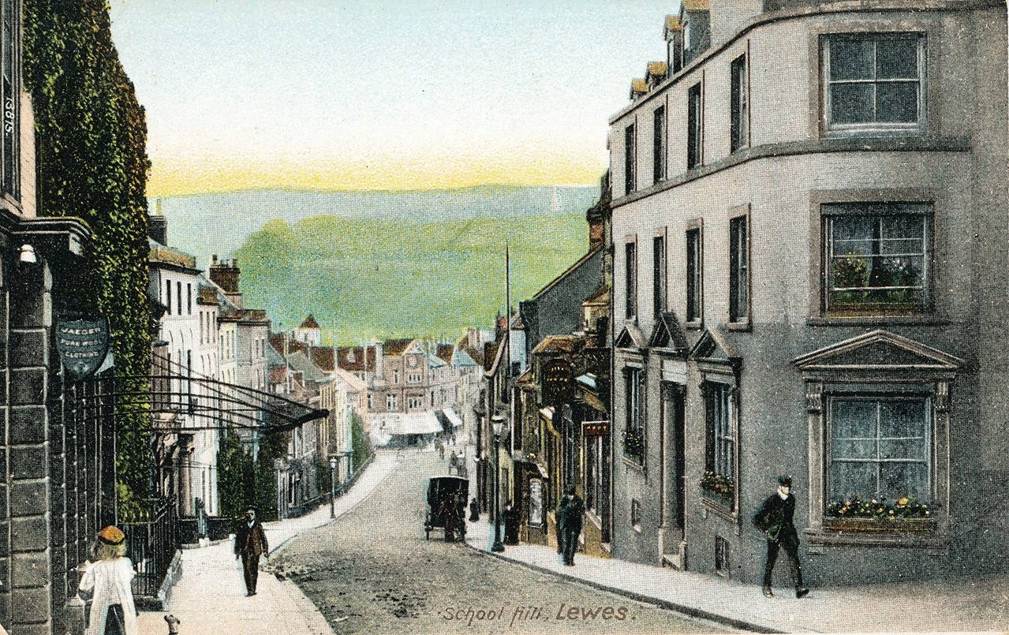
3.   Views down School Hill a century ago
4.   The Lewes Constables’ view of Bonfire, 1834
5.   Mary Ann Berry’s view of Bonfire, 1847
6.   Memories of Lewes collected by U3A
7.   Lewes the Tank Engine
8.   The Miller’s Walk

 1.  Next meeting at 7.30 p.m. on Monday 14 November 2011

     John Kay                       ‘John Whitfeld the Smuggler and his Lewes Club’

For over 30 years John Whitfeld played a key role in the commercial and political life of Georgian Lewes. Appearing from nowhere, he established himself as a merchant, political fixer, ironmaster, wreck-salvager, country gentleman and churchwarden, before suddenly selling up and disappearing without trace. What was the real story behind all the rumours that abounded about the true source of his wealth and influence?

This is a change to the advertised programme.

2.  The view over Lewes from Malling Down

In the foreground is Malling Street, following its original route into South Street, with its main commercial buildings set back behind the houses. The Phoenix Ironworks are across the empty Malling Brooks, where Aldi has recently joined Tesco.

3.  Views down School Hill a Century Ago


These four views are all taken from hand-coloured Edwardian postcards, so the colouring was not the original, but added to the photographs during production at the artist’s discretion.

4.  The Lewes Constables’ view of Bonfire, 1834   (Contributed by Ann Holmes)

BOROUGH OF LEWES
ONE GUINEA REWARD

Whereas, on Saturday night last, a large Rocket was lighted and thrown through the bed-room window of Mr Maxfield’s house in the High street of the Borough of Lewes, whereby the curtains were set on fire; whoever will give information of the person who let off the said rocket, shall, upon conviction, receive the above Reward. We hereby caution persons to desist from disturbing the peace of the Borough of Lewes, by setting off squibs, rockets, crackers, or other fire-works; or the lighting of tar barrels, as effectual means will be taken to bring all such offenders to justice.
GEO. BAILEY
J. C. MADGWICK               Constables
Borough of Lewes, Nov. 3, 1834
Source: 3 Nov 1834 Sussex Weekly Advertiser

5.  Mary Ann Berry’s view of Bonfire, 1847

Diary entry, Friday 5th November: “The Magistrates headed by Lord Chichester and urged on by Peter Bacon, Billy Button, etc, determined to put an end to Bonfire fun in this town. Accordingly they swore in the greater part of the respectable householders as special constables, sent for 60 London police in addition to 60 of the County police and shut up all the beer shops. About 12 last night and 1 this morning several men were bringing a lighted tar barrel down the High St. The police put a chain across, they rushed down and were tripped up by it. The handcuffs were put on and their wearers put in the Station house. This damped the ardour of the “Bonfire Boys”, and with the exception of the street being cleared by the police at Lord Chichester’s command, the driver of the mail being thrown out from his horses taking fright with a rocket, and Papa’s carter boy being put in the Station house for picking up a stone – it was presumed to throw at the police – the town was very quiet. The police were joked at rather severely tho’ some rogues had a flaming tar barrel in a boat on the river. Young Verral went to the police apparently in a great rage, telling them it was their duty to prevent the river being set on fire. I spent the evening with Harriet at Aunt Sophia’s.”

6.  Memories of Lewes collected by U3A                                                            (Contributed by Joy Preston)

Each memory below is from a different informant:

“We used to go to the Cinema de Luxe on Saturdays, and in those days we used to go round and earn a few pennies to go. One thing we used to do, we’d stand at the bottom of Chapel Hill. There weren’t many people lived there then, but we used to wait for them with their shopping and then carry their shopping. We used to get a penny or whatever for that. Or we’d find jam jars and you’d take three large jars – 2lb jars – and you could get in, or you’d take six 1lb jars, and they used to have a basket up at the cinema where you go in, and old Fatty Briggs used to sit there and watch you put them in. “Right, you can put them in, you can go,” and that’s how we’d go to the cinema.”

“My mother ran from her home what was then known as a Registry Office. And my mother would very often say, “I’ve managed to suit Lady So-and-so with a maid.” And it was nothing for me to return home from school to find perhaps a Daimler outside the house with a liveried chauffeur – p’raps two! And I would creep in, and my mother’s office as it was called was in the front room of the house. And my mother would come out and say, “You’ll have to be good and quiet, I’ve got Lady So-and-so in the office”, or the Honourable Mrs So-and-so – they were all titled – “and she’s interviewing”, you know, a candidate, you know, for a maid – some poor little soul.”

“When I think about Malling Street there’s very little of it left now, it’s completely changed. There are some original houses there that bring back memories but the industry has gone, the shops have gone, the smells have gone and the sounds have gone.”

Further information about the Lewes U3A Oral History Collection


7.  Lewes the Tank Engine

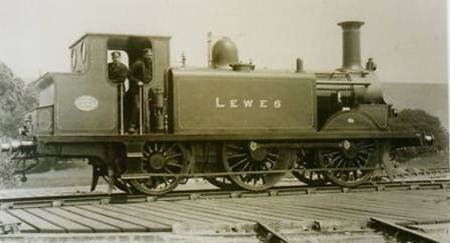
The London, Brighton & South Coast Railway 0-4-2 Class D tank engines were its workhorses used to pull local trains and for shunting. In all 125 were built, between 1873 and 1887, most of them at Brighton railway works. Engines in this class were named after local towns and villages, including Lewes. The last of the class was scrapped in 1951 – none survive.

8.   The Millers Walk                             (Contributed by Paul Myles)

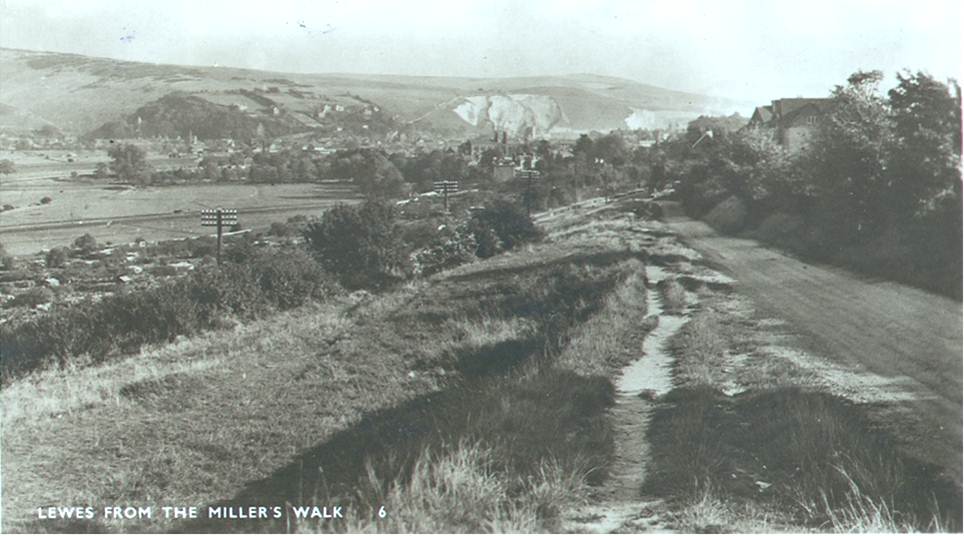
This relatively modern postcard of ‘The Miller’s Walk’ was offered on eBay in October, and acquired by Paul Myles. It shows Hill Road, where he lives, but which looks rather different today.

John Kay


–

Posted in Cultural History, Lewes, Local History, Oral History, Social History, Transport History | Comments Off on Lewes History Group: Bulletin 16, (11 November 2011)