Where to find Lewes Directories, 1812-1974

Directories such as Pike’s, and Kelly’s listed an area’s businesses, traders, and professionals, and also residents by address. They pre-dated the telephone directories which later took over some of their functions.

Directories provide a snapshot of communities throughout time, and are very valuable for finding information between censuses. However, the information contained in them is likely to be slightly out of date, and could be somewhat inaccurate.

There are collections of Lewes directories at The Keep, Lewes Library, and the Sussex Archaeological Society’s library. No one location has all the Lewes directories published over time, so the Lewes History Group has stepped in to compile a list of where you might find particular directories, arranged by year. This is now available on our Bibliography page on Lewes Directories.

The listing has been compiled using a combination of catalogue searches, and checking of holdings at each location.


Posted in Uncategorized | Comments Off on Where to find Lewes Directories, 1812-1974

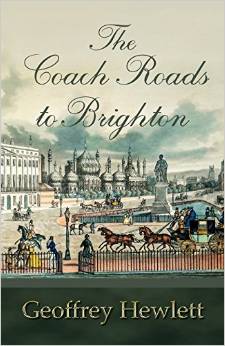
New book – Geoffrey Hewlett: The Coach Roads to Brighton


Before motorways and bypasses, before the advent of cars and even trains, horse-drawn vehicles carried the British people all around the country. From pedlars to clerks to the Prince Regent himself, the old coach roads led the way, and while the coach traveller certainly made their journey in less comfort than today’s car passenger, they also felt the benefits of a less altered landscape, the sound of birdsong and the scent of the breeze.

The very first stage coach service from London to Brighton was started by J. Batchelar of East Grinstead who had been running a service between London and Lewes for some time. In 1756 the increasing importance of Brighthelmstone encouraged him to run some of his Hewlett_The_Coach Roads_to_Brighton book covercoaches from London beyond Lewes, over the Jugg’s Road, to reach the coast. Lewes remained a major stop for the coaches, and toll houses still stand in Offham and beside the main road north of Malling Hill.

Geoffrey Hewlett’s book will be of local interest to Lewes readers, as well as giving information on the development of the Brighton roads as a whole.

Based on the author’s detailed study of the coach roads and his own experiences of walking the length of each of them in turn, The Coach Roads to Brighton details the histories of each of the old routes from London to the coastal town of Brighton, including the Lewes route.


More details available at Amazon


Posted in Uncategorized | Comments Off on New book – Geoffrey Hewlett: The Coach Roads to Brighton

The Tudor and Early Stuart Country House c1500-1640 – Saturday 9 May 2015

A Sussex Archaeological Society Day Conference

By 1640, as the country began its slide towards the Civil War which effectively ended the reign of Charles I, many country house owners in Sussex and elsewhere had taken advantage of the preceding long period of stability to extend existing houses or build new ones, increasing prosperity and bringing about greater awareness of European fashions.

A considerable number of these houses survive in Sussex, although many have been substantially altered and a few, such as Wiston and Firle, greatly reduced in size because they were simply too big. Some were demolished in the later 1700s and early 1800s due to the amalgamation of large estates. Halland and Michelgrove (in the parish of Clapham) were amongst these.

SAS_Tudor_Conference_leafletThe themes of this conference include how and why these houses were built and paid for, the influences on their design and setting and the rules (or ordinances) used to help the big households to run smoothly and no doubt to help accommodate the costly favour of a Royal visit. The impact of alterations and changes in role will be explored by the case studies of specific houses during the afternoon.

Venue: King’s Church, Brooks Road, Lewes, BN7 2BY

Booking and details: Sussex Archaeological Society web page

Link to programme


Posted in Uncategorized | Comments Off on The Tudor and Early Stuart Country House c1500-1640 – Saturday 9 May 2015