
Please note: this Bulletin is being put on the website one month after publication. If you would like to receive the Bulletin by email as soon as it is published, please contact the Membership Secretary about joining the Lewes History Group, and to renew your membership at the start of the calendar year.
- Future LHG Meetings
- Walter Hindes Godfrey: biographers sought
- “The Madgwick Letters” (by Chris Lawson)
- The ‘Lewes Adventure’
- Agricultural Society Awards
- The old burial mound at St John-sub-Castro
- Captain Swing’s visit to Lewes
- The Historic England Lewes Archive
- Anne of Cleves House
- Future Meetings: no LHG meetings until further notice
Given the demographic of our membership, the Lewes History Group will not be running any more evening meetings or other events until we receive government advice that it is safe to do so. King’s Church has a much younger demographic, but they too have decided to close their building until further notice. We have formally cancelled our April and May meetings, but things are not looking good for our June or July meetings either.
The May meeting was the scheduled launch date for the next planned LHG publication, a multi-author history of the Pells area of Lewes, with the planned talk explaining part of the new research that has been done. That meeting has been provisionally rescheduled for September, providing normal life has resumed by then. 2020 is the centenary of the 1920 gift of the Pells Ponds to the people of Lewes as a public pleasure resort. The donor was Wynne E. Baxter, who had served as the first mayor of the Borough of Lewes back in 1881.
These Bulletins will continue to arrive in your inbox.
- Walter Hindes Godfrey: biographers sought
Bulletin no.115 included a brief biography of the distinguished Lewes conservation architect and historian Walter Hindes Godfrey CBE (1881-1961). It was noted that a substantial but largely unexplored archive of his professional and personal papers are now housed at The Keep, including a biographical sketch by his daughter-in-law. We enquired whether any LHG member would be interested in exploring this archive, but to date no one has responded.
Sy Morse-Brown, chair of the Lewes Priory Trust, commented that both Walter Godfrey and his son Emil were particularly concerned with the Priory. The Trust holds an Emil Godfrey Memorial Lecture each year, and they are still in touch with Emil’s daughter Bella Hobson, who also contacted us. Richard Andrews, the architect who advises the Priory Trust, is a partner in the practice of Carden & Godfrey, which W.H. Godfrey founded. Sy would be interested in helping to explore this archive. Do we have other members who would be interested in joining in? Please contact Sy: symb@mac.com.
- “The Madgwick Letters” (by Chris Lawson)
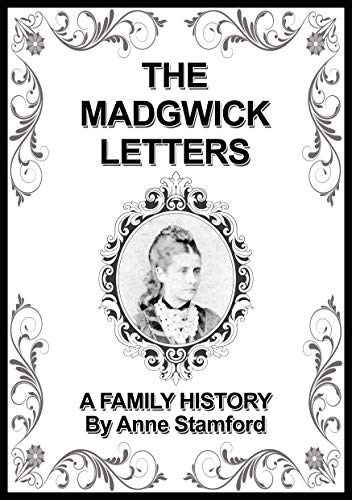 At the heart of this book are a series of letters that were written not for publication but by a young woman to her fiancé in Lewes in the 1870s. They make for a delightful read! She’s witty, teasing and full of her own opinions – not at all what I’d expected from that period. She seems to judge the strength of his love for her by the frequency and length of his letters as much as anything he actually says! Alas, his letters have not survived in the family records the way hers have done.
Mary Matilda (Mattie) Madgwick’s family were prosperous farmers in Alciston and John Parsons (1842-1918), a son of the Lewes stone, slate and timber merchant John Latter Parsons, was in the family business in Lewes. She was a decade his junior. The letters give a good feel for the kind of lives such people lived. The train is invaluable for quick transport to and from Lewes, with horses for the country roads. Long walks are the norm as well. John’s business is not so demanding as to prevent him staying at the farm for weekends – once the engagement is official and her parents agree. Once married, they lived in Priory Crescent in Southover, and had a full family life. The book outlines some of the subsequent family history.
The book has been produced by a descendant of the couple, now living in Somerset where I knew her. It has various illustrations and family trees in it. Apart from the interest of the letters, it’s a good addition to local histories. ‘The Madgwick Letters’, by Anne Stamford, is available online as a £4.50 paperback or on Kindle.
- The ‘Lewes Adventure’
On 29 June 1732 the Wealden ironmaster John Fuller, who shipped cannon made at his Heathfield Furnace through Lewes to Woolwich, wrote to his Woolwich agent:
“I received yours of the 24th instant and will take care the Guns shall be gotten ready as soon as possible, some of which are now at the waterside, but Ambrose Galloway informs me that the seamen will not stirr without a protection, I must therefore desire you to get a protection for Thomas Diplock Master of the Lewes Adventure sloop of New Haven Burden 100 tons with 4 men and one boy for six months please to direct it to Mr Ambrose Galloway at Lewes.”
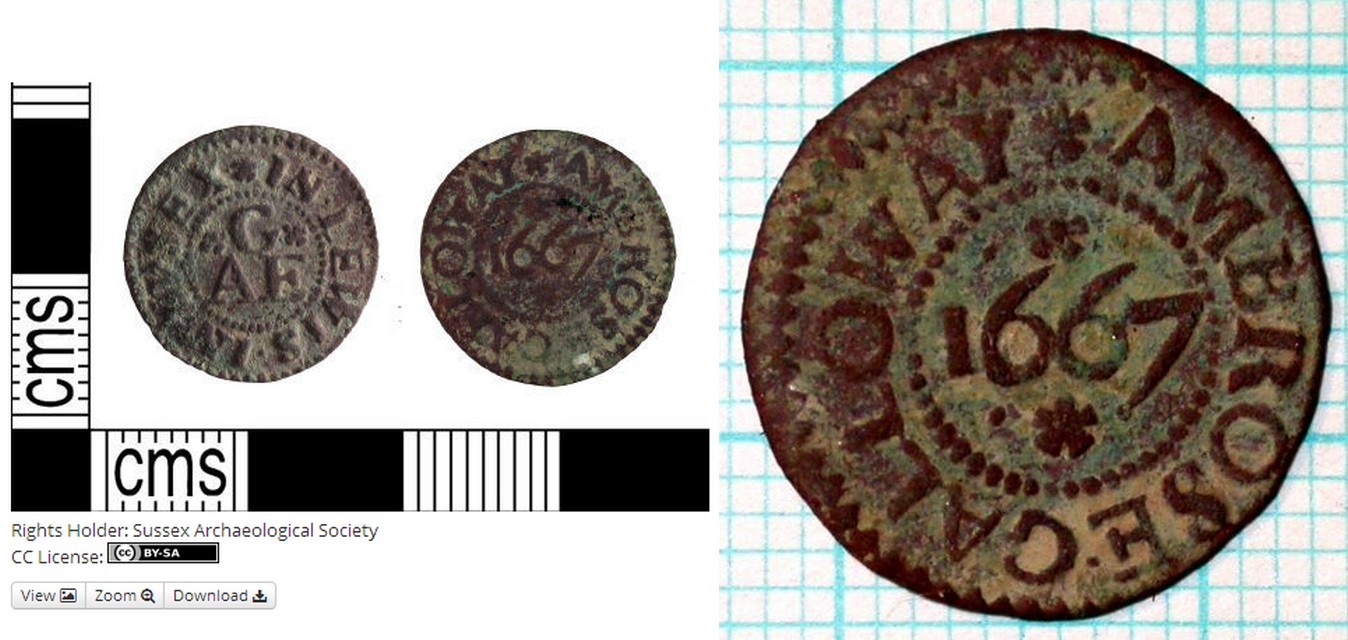
The ‘protection’ needed was an Admiralty certificate of exemption for the crew from the attentions of the government press gang. Ambrose Galloway’s Lewes wharf was immediately downstream of the bridge, opposite Bear Yard. John Fuller had written to him the previous day, promising to ask for the protection, though without much hope of success. The merchant Ambrose Galloway was a leading Lewes Quaker but does not seem to have had scruples about his role in the arms trade.
Sources: David Crossley & Richard Saville (eds), ‘The Fuller Letters, 1728-1753’, Sussex Record Society vol.76 (1991), letters 134 & 135.
- Agricultural Society Awards
The 27 October 1797 edition of Saunder’s News-Letter carried an account of the list of awards made by the local Agricultural Society to labourers in the Lewes area. Mary Harman of Southover won the top award of 4 guineas for the wives or widows of labourers who had spent the greatest number of days in the year ending 2 October 1797 engaged in day work in the fields. Her total was 160 days. Lewes women also won the two top awards for the greatest length of service in the same household while maintaining a good character. Hannah Davey, who had spent 51 years in the service of Mr Weller of Lewes was awarded 4 guineas, while Margaret Randall, who had spent a mere 42 years as servant to Mr Rogers of Southover, had to be content with two guineas.
- The old burial mound at St John-sub-Castro
Stuart Billington’s new guidebook to St John-sub-Castro, one of the three Trinity churches in Lewes, records that there used to be two ancient mounds in the old churchyard. The smaller of the two was taken down in 1779 when Rev Peter Guerin Crofts the elder was rector, and its materials were used to raise the floor levels of the old Saxon church and to fill in the depression where its chancel, demolished in 1587, had been. The larger mound occupied the space where the present 1839 church, built by Peter Guerin Crofts the younger stands, so it had to be removed before building could start.
The 25 May 1839 Sussex Agricultural Express carries a brief report of what was found.
“They came to large piles of chalk, so arranged as to afford spaces for a human skeleton each, which were protected by a wall of chalk and filled up with ditch clay: presently they came to what the workmen termed an ‘oven’, or a rude construction of a steined vault; and when they reached the centre of the crown of the Mount they exposed a circle of burnt earth, of two rods diameter, around the sides of which were a few burnt human bones, and a large quantity of boars’ and other animal bones, also burnt. On the east side an urn of baked clay was found, also a spearhead or iron weapon; showing that the Mount was an ancient British barrow, and that long before Christianity was introduced into England, St John’s church yard was a scite for Druidical sepulchres.”
Source: Stuart Billington, ‘A guide to the story of St John sub Castro’ (2019), p.16. Online version
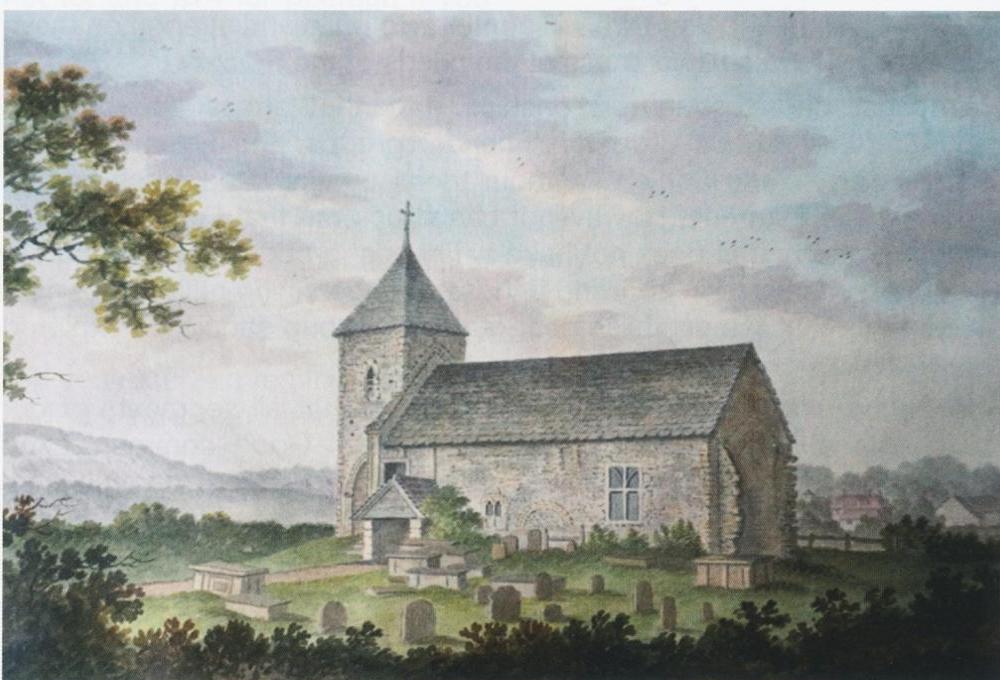
This picture of St John-sub-Castro church, painted by James Lambert before the 1779 alterations, shows the remains of the old chancel, and the entrance porch at the west end of the nave. In 1779 the entrance was moved to the tower. This picture is from the Sussex Archaeological Society collection, and was published in the December 2016 Sussex Past & Present, no.140, p.4.
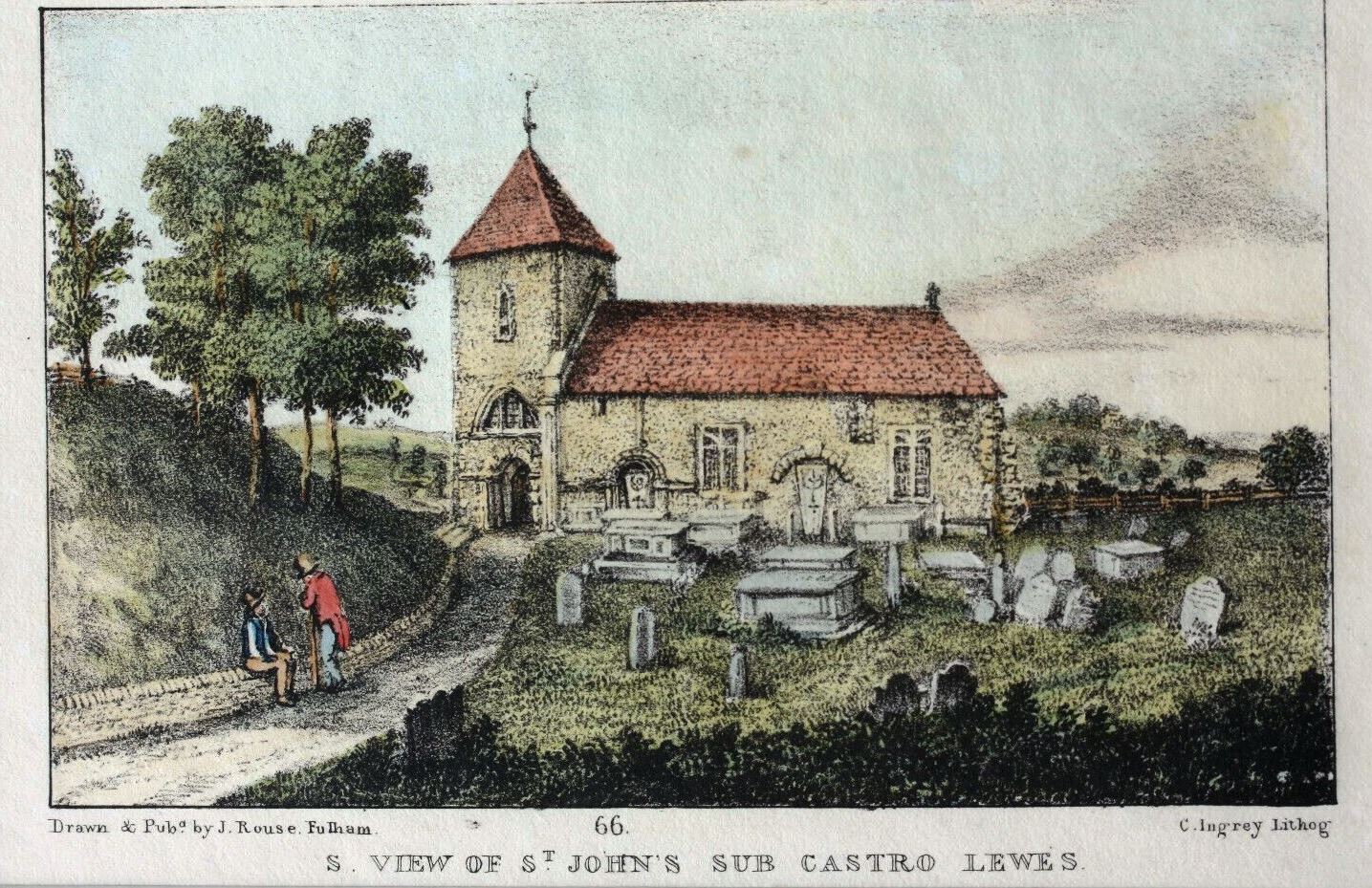
This later print of St John-sub-Castro is from James Rouse, ‘The Beauties and Antiquities of the County of Sussex’ (1825), and was offered for sale on ebay in November 2019. Part of the mound removed in 1839, when the old church was demolished and replaced, can be seen to the left.
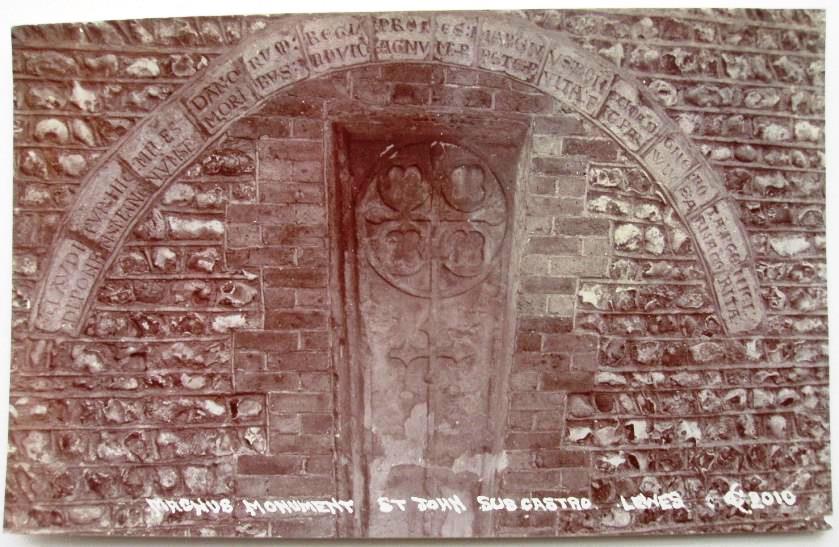
This postcard by A.H.C. Corder of Brighton shows the Magnus memorial that originally stood in the chancel of the old church. After the chancel was demolished it was saved by John Rowe and others, and placed in the external wall of the nave. In 1839 it was transferred to the external wall of the new church.
- Captain Swing’s visit to Lewes
In early November 1830 the newspapers were busy reporting the October visit to Lewes paid by King William IV and his wife Queen Adelaide. Three weeks later they were full of altogether darker news, the spread from Kent across southern England of the Captain Swing riots. The fifteen years after Waterloo had been years of steadily increasing rural poverty, as the English agricultural economy struggled to compete with cheap food imports from Europe. A run of poor harvests due to bad weather did nothing to help. Farmers had prospered during the war but were no longer able to cover the rents demanded by the landlords (mostly still at wartime levels), the tithes they were obliged to pay the established church, the wages of their men and the costs of the parish-run social security system of the Old Poor Law.
The post-war return home of the soldiers and sailors and the burgeoning population led to increasing rural under-employment. Labourers with families were caught in a poverty trap, unable to earn enough to cover even a basic diet and dependent on the Poor Law for everything else. Young single men were especially liable to unemployment – as they received less per week for parish labour, the farmers, who were also the main rural ratepayers, gave preference in employment to the married men. The last straw seems to have been the introduction of new threshing machines, as hand-threshing by flail was the main winter work (and the only under cover winter work) for most of the labourers.
The Captain Swing riots had two main aspects. The first was large gatherings of rural labourers demanding substantial increases in wages. In the Lewes area a married labourer with a family was typically paid 1s 8d per day, or 10 shillings for a six-day week, but the usual demand was for a 50% increase, to half a crown per day. Many of the farmers, who knew very well how their men lived, were sympathetic but expected their landlords and the church to reduce their demands to make it possible. No doubt they also felt vulnerable – a rural parish might have just a handful of farmers living on scattered farms but hundreds of labourers, some of them ex-servicemen and all skilled in the daily use of sharp and pointed implements. The second element was more openly threatening – anonymous letters, often signed ‘Captain Swing’ and some at least surprisingly literate, threatening lives and property unless wages were increased and threshing machines destroyed. These threatening letters were backed up by enough actual arson attacks on vulnerable hay and corn stacks, barns and occasionally even houses, to make the threats credible. In the Kent and Sussex landscape a burning barn could be visible over a very wide area. It did not help farmers’ morale that the fire insurance offices got together to announce that no insurance would be effected where any threshing machine was kept or any discontent was known to exist.
The national press in the third and fourth weekends of November 1830 were full of reports of ‘Captain Swing’ outrages across the south-east of England. Many included reports from Lewes that included both of the elements above.
Firstly it was reported that on Monday 15 November about 100 labourers had come towards Lewes from the direction of Ringmer compelling every labourer they met to join them. Their first target appears to have been Lower Stoneham Farm, where the men employed by Stephen Grantham, a breeder of prize-winning Southdown sheep, were reportedly satisfied with their employer and refused to join in. The men were not armed in any way but it was feared that they would enter the town to free some men incarcerated in the House of Correction for similar activities the previous week, and it was known that many Lewes labourers were keen to join them. In fact the Lewes men were not allowed to join in, and the labourers continued to visit other nearby farms, demanding and often getting acceptance of their demands for higher wages. Later that day they gathered on Ringmer Green to meet the local farmers headed by the magistrate Lord Gage (whose Firle estate extended into Ringmer), who agreed to meet them again two days later.
By Wednesday 17 November the number of labourers assembled on Ringmer Green had grown to 150-200. Lord Gage headed a dozen or so farmers and village tradesmen assembled in the parish poorhouse. The labourers were admitted into the workhouse yard to separate them from a crowd of curious visitors who had travelled out from Lewes to observe events, where they waited patiently for the vestrymen to reach their decision. When they learned that wages for married labourers were to be increased to 2s 3d per day in winter and 2s 6d per day in summer, with corresponding rates of 1s 9d and 2s 0d per day for single men, they gave three cheers. They retired to the local inn where they received some beer for which the onlookers raised a subscription, and then quietly dispersed – though not before destroying a much hated grindstone used for parish labour when there was nothing more profitable to do that stood in front of the poorhouse. Similar meetings with similar conclusions were held that same week in other parishes including Laughton, Hamsey, Cooksbridge and Barcombe. Outcomes were not so happy where the local landowners tried to use soldiers to put down the men. Lord Liverpool was roughly treated at Uckfield, and when Sir Godfrey Webster led a troop from Battle to suppress an assembly at Mayfield, the men initially dispersed but just went on to Rotherfield instead.
The following night, Thursday 18 November, the Lewes sky was lit up just before midnight by a barn on fire at Lords Place Farm, Southover. This was within the former Priory grounds, and just behind Southover church. The town was alerted by cries of fire and the ringing of bells. Almost the entire town turned out to help and both the Borough and the Cliffe fire engines attended, but the fire was well established. It was reported that it was started by a fireball similar to a Roman candle, that had fallen on some stacks. No one was in any doubt that it was an arson attack. Their efforts did save some nearby stacks and most of the livestock, but the barn itself, full of wheat and farm equipment, two nearby stacks and one calf were destroyed. Mr Parker, landlord of the White Lion, fell from a stack and broke his leg, but Gideon Mantell from Castle Place was on hand to set it and help carry him home. Mr Robinson of the Lewes Arms also suffered a considerable injury.
The farmer, Mr James Morris, was not a particularly obvious target. He was a comparatively small farmer, and his farm equipment did not include a threshing machine. An East Anglian newspaper reported that he was a most industrious and deserving man who always paid his men well. More typical perhaps was another barn fire that same night at a large downland farm at East Dean, where a threshing machine was destroyed along with the barn’s store of wheat.
The Borough officers, headed by the constables George Adams and George Grantham junior met on the following afternoon and it was decided to establish a burgher-guard of special constables, to start patrolling the town from that evening. Similar meetings were held in Cliffe and Southover. It was reported that on the Saturday a man named Howell and “a woman passing for his wife” had been apprehended and brought into Lewes in the custody of the constable and headborough of Southover on suspicion of having fired the premises. The newspaper reporting this was indignant: “They are committed !!! On what evidence?”. Arson at this time was a capital offence. The following week’s Sussex Advertiser carried an advertisement from the Lewes constables that a reward of £200 would be paid for information leading to the conviction of the incendiary. There was also a letter from James Morris of Southover thanking all the Lewes people who had helped at the fire and especially the Borough and Cliffe officers who had sent their fire engines.
Gideon Mantell confided his view to his diary: “No one can detect the perpetrators: many suppose it is the work of some agents of a political party: perhaps in a few cases it may be so, but to me it appears more likely to be effected by the peasantry, who have for years been ground to earth by their masters.” His political reference is probably to the radical writer and journalist William Cobbett, who was touring southern England in the autumn of 1830, speaking at Lewes on 18 October, and who was later tried but acquitted of fomenting the Captain Swing riots. The use of a Roman candle to start the fire does rather suggest a local might have been responsible.
Sources: 18 November 1830 Brighton Gazette; 20 November 1830 Hampshire Advertiser; 20 November 1830 London Courier & Evening Gazette; 22 November 1830 Sussex Advertiser; 26 November 1830 [London] Evening Mail; 27 November 1830 Huntingdon, Bedford & Peterborough Gazette; Verena Smith (ed), ‘The Town Book of Lewes, 1702-1837’, pp.279-281; E. Cecil Curwen (ed), ‘The Journal of Gideon Mantell’, pp.87-88; Eric Hobsbawm & George Rude, ‘Captain Swing’.
- The Historic England Lewes Archive
Those members who have joined the Lewes Past Facebook group will have been fascinated by the images of Lewes as it used to be posted there by member Anna Cornwall. These photographs from the Historic England collection were made by local enthusiasts and deposited with Historic England’s predecessors to ensure their survival. The photographs are of different ages, many as recent as the 1960s, when Lewes was a very different town.
 This view of the Riverside warehouses on Railway Lane is from 1970. Historic England ref: BB76/7614
Click on image to go to the Historic England website for a larger zoomable image, and more information.
 This view of St John’s Street is undated. Historic England ref: BB93/9060
Click on image to go to the Historic England website for a larger zoomable image, and more information.
- Anne of Cleves House
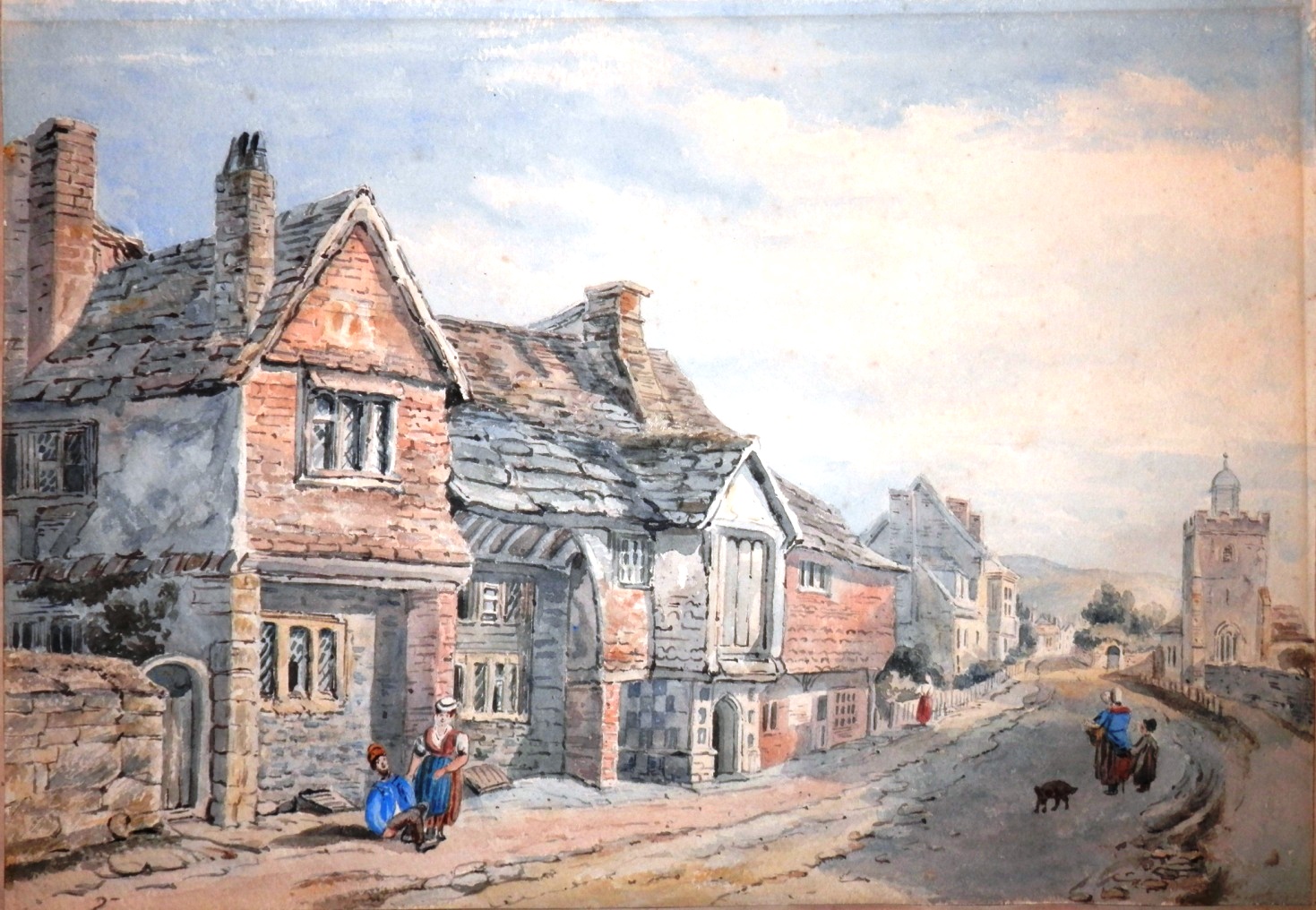
This image of Anne of Cleves House is shown on ronsartblog. It is unsigned but attributed on the website to a late-Victorian artist called Octavia Dodson, c.1880.
The usual sources have no information about an artist called Octavia Dodson, but she is easy to trace via Familysearch. Octavia Dodson (1825-1905) descended from a prominent Sussex clerical family, who were rectors of Hurstpierpoint throughout the18th century. However her father, a son of the last Dodson rector, became a Lichfield wine merchant and had a large family of daughters – her Christian name derives from her position in the family. Of independent means, the Victorian censuses find her living with unmarried elder sisters and other relatives in Lichfield in 1851 & 1861, but in Fletching in 1871, in Hastings in 1891 & back in Fletching in 1901. She died at Clinton Lodge, Fletching. Her elder sister Ellen, brought up by an aunt married to the Vicar of Ringmer, had married Henry Peter Crofts, son of Rev Peter Guerin Crofts of Malling House, Rector of St John-sub-Castro, and later owner of the Crofts family Sompting Abbott estate on the Downs near Lancing. A cousin became the first Lord Monk Bretton of Coneyboro, Barcombe. However, was Octavia Dodson really the artist? To my eyes the style of this painting looks at least half a century earlier than 1880.
John Kay
Contact details for Friends of the Lewes History Group promoting local historical events:
Sussex Archaeological Society
Lewes Priory Trust
Lewes Archaeological Group and go to ‘Lectures’
Friends of Lewes
Viva Lewes
The Arts Society: Uckfield & Lewes – meets 2nd Wed. Guests £7 per talk
Lewes History Group Facebook, Twitter




 Lewes History Group